
Do You Need a Mold Inspection Before Buying a Condo in South Florida?
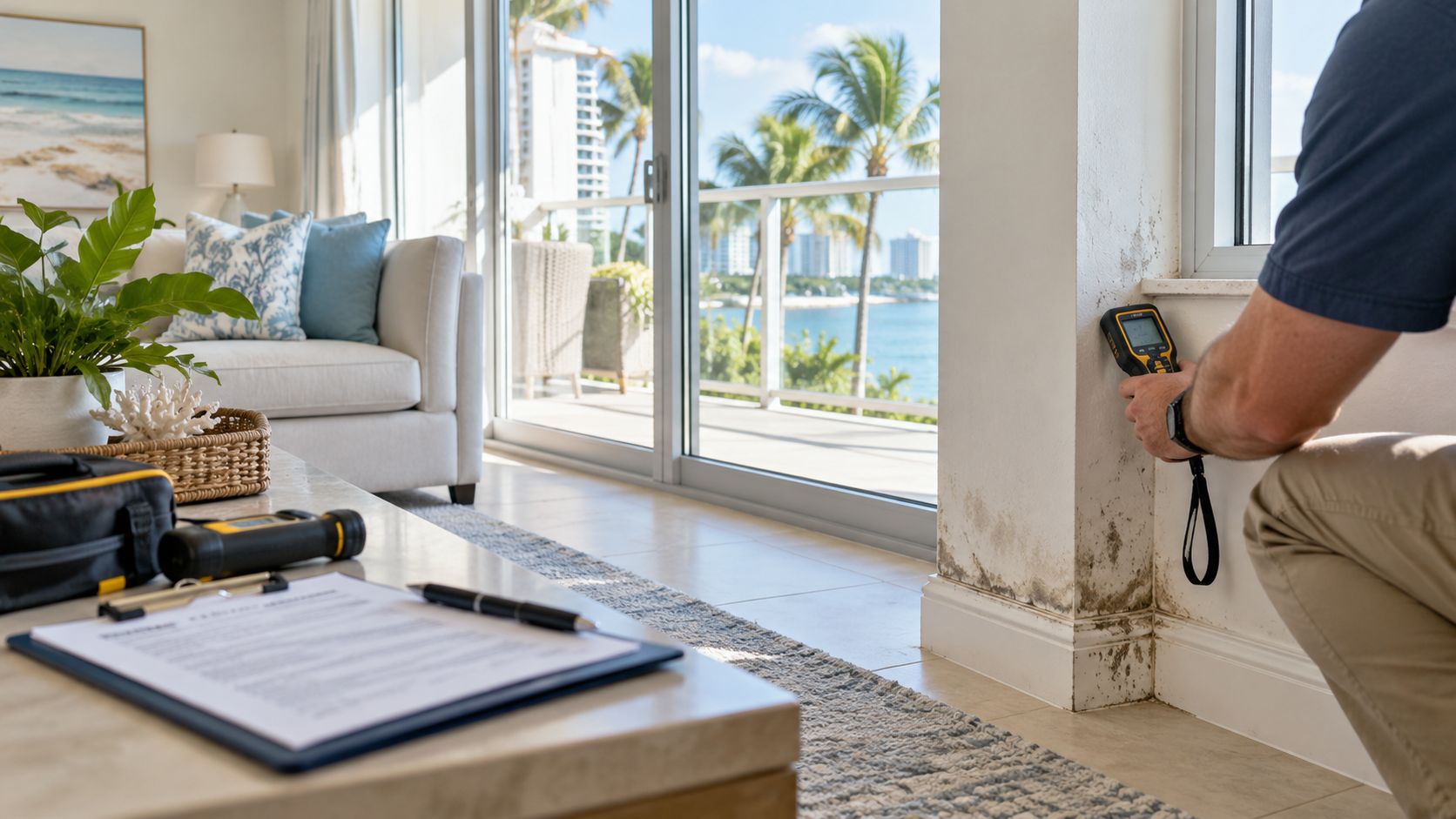
A mold inspection is not legally required for every South Florida condo purchase, but an independent assessment can be useful when the unit has signs of moisture, a history of leaks, musty odors, visible staining, unclear repair history, or other conditions that deserve a closer look before closing.
A Florida home inspection and a mold assessment are not the same service. Florida law defines home inspection services as a limited visual examination of readily accessible installed systems and components of the home, and condominium common areas are excluded from the statutory definition of the individual unit being inspected. Buyers should therefore confirm the scope of any general inspection and decide whether a separate professional mold assessment would add useful information.
In a condo, moisture can involve more than what is visible inside the unit. Plumbing lines, windows, balconies, air-conditioning equipment, ceilings, neighboring units, and building-envelope conditions can all play a role. An assessor can evaluate accessible areas within the agreed scope, while investigation of common elements or neighboring spaces may require separate permission, coordination, or access.
For buyers considering condos in South Florida, including communities throughout Miami-Dade, Broward, Palm Beach, and Monroe counties, the goal is not to guarantee a mold-free property. The goal is to gather better information about the unit’s visible conditions, moisture concerns, and whether additional testing or investigation is warranted before you make a purchase decision.
When Should You Consider a Mold Inspection Before Buying a Condo?
A separate condo mold inspection may be worth considering when something about the unit suggests past or current moisture problems. The strongest reason is not simply that the property is in South Florida, but that the walkthrough, disclosures, repair history, or inspection findings give you a specific reason to investigate further.
Water stains, repeated repairs, musty odors, recent renovations, or unclear explanations for damaged finishes can all justify asking more questions. Even a unit that looks freshly painted can still have a history of moisture that is worth understanding before you close.
Warning Signs to Look for During a Condo Walkthrough
During the walkthrough, focus on conditions that may point to water intrusion or previous dampness rather than trying to identify mold by appearance alone.
- Musty or damp odors: Especially in closets, bathrooms, utility areas, or near HVAC equipment.
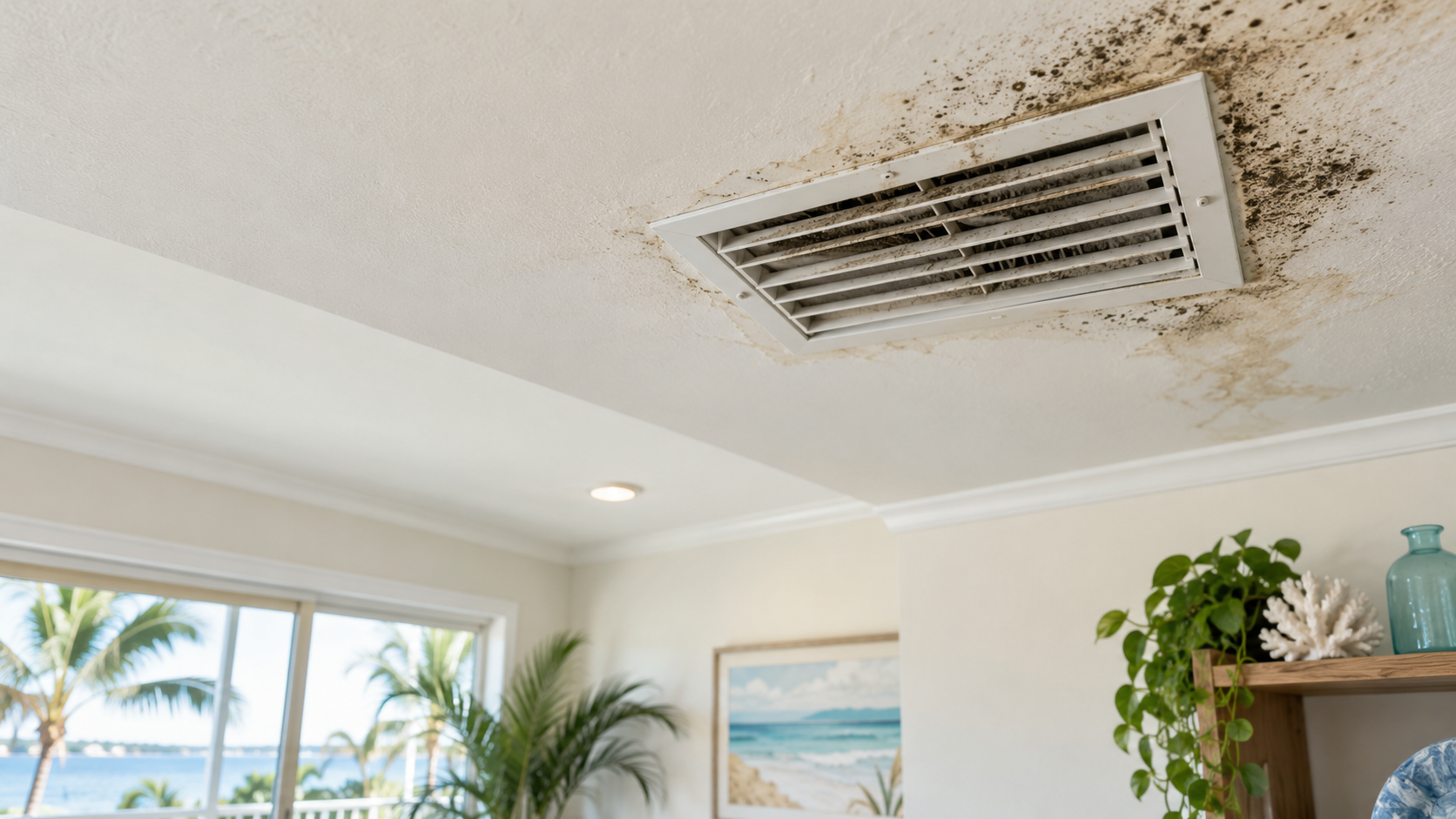
- Water stains or repaired ceiling areas: These may indicate a past plumbing, roof, or unit-above leak.
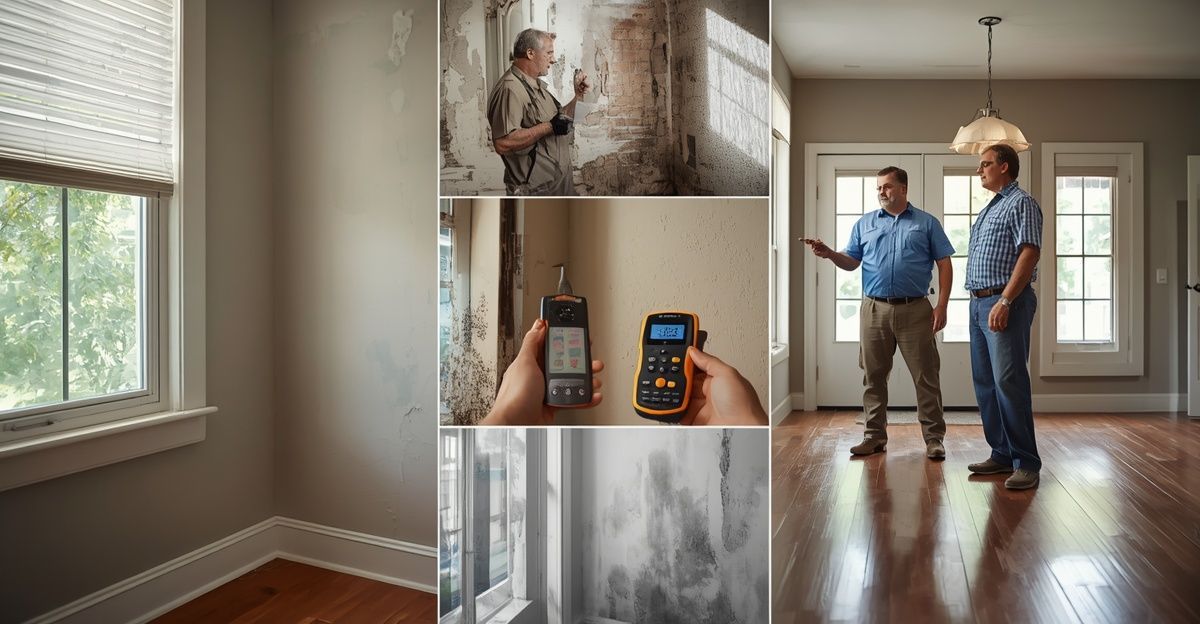
- Bubbling paint or swollen baseboards: These can be signs that finishes have been exposed to moisture.
- Warped flooring or damaged cabinetry: Moisture can affect materials even after a leak has stopped.
- Fresh paint in isolated areas: This is not proof of a problem, but it can be reasonable to ask why the area was repaired.
- Unclear repair history: Ask whether the seller knows of previous leaks, moisture events, or mold-related work in the unit.
If several warning signs are present, the next step is to clarify what your general inspector is evaluating and whether a separate mold assessment would provide useful additional information. Our guide to signs you may need a mold inspection provides more examples without turning every cosmetic defect into a mold concern.
Does a Standard Condo Inspection Include a Mold Assessment?
Not necessarily. In Florida, a home inspection is defined as a limited visual examination of readily accessible installed systems and components of the home. A mold assessment is a different regulated service focused on evaluating mold-related conditions, moisture concerns, and, when appropriate, sampling or other mold-specific investigation.
Some home inspectors may note visible mold-like growth, moisture damage, or other concerns within their inspection scope, while others may offer separate services or recommend a licensed mold assessor. Buyers should not assume that the words 'home inspection' automatically include a full mold assessment.
Questions to Ask About Your Inspector’s Scope
Before the inspection, ask what will and will not be included so you understand whether a separate mold-related evaluation is needed.
- Will you document visible moisture damage or mold-like growth?
- Do you use moisture meters or thermal imaging, and for what purpose?
- Is mold assessment included, offered separately, or outside your scope?
- Will the inspection cover only the unit, or are any limited common elements included?
- What areas may be inaccessible because they belong to the association or another unit?
- If you find a moisture concern, will you recommend a specialist?
If you decide to hire a separate mold professional, Florida regulates mold assessors through DBPR. Holistic Environmental Solutions provides independent assessment and testing and does not perform mold remediation, helping keep the evaluation role separate from the cleanup role.
Where Can Moisture Problems Develop in a Condo?
Moisture problems in a condo can develop inside the unit or originate from systems and building components that extend beyond it. Because condos share walls, floors, ceilings, plumbing pathways, and sometimes HVAC or exterior-envelope components, the visible symptom inside one unit may not reveal the full source.
An assessor can evaluate accessible areas within the agreed inspection scope, but a complete investigation may sometimes require access to a common element, mechanical area, roof, exterior wall, neighboring unit, or other space that the buyer does not control. Access should be coordinated through the appropriate owner, association, property manager, agent, or other authorized party.
Areas an Assessor May Evaluate
Inside the unit, the assessment may focus on places where moisture is more likely to appear or where the walkthrough has already identified a concern.
- Plumbing areas: Under sinks, around toilets, showers, tubs, water heaters, supply lines, and appliance connections.
- Windows and exterior walls: Especially where staining, failed seals, condensation, or prior repairs are visible.
- Ceilings: Particularly below bathrooms, mechanical spaces, roofs, terraces, or neighboring units.
- Balcony and sliding-door areas: Where exterior water intrusion can sometimes appear as interior staining or dampness.
- Air-conditioning equipment: Including accessible condensate areas and nearby materials.
- Cabinetry and flooring: Where swelling, staining, soft materials, or odors may indicate prior moisture.
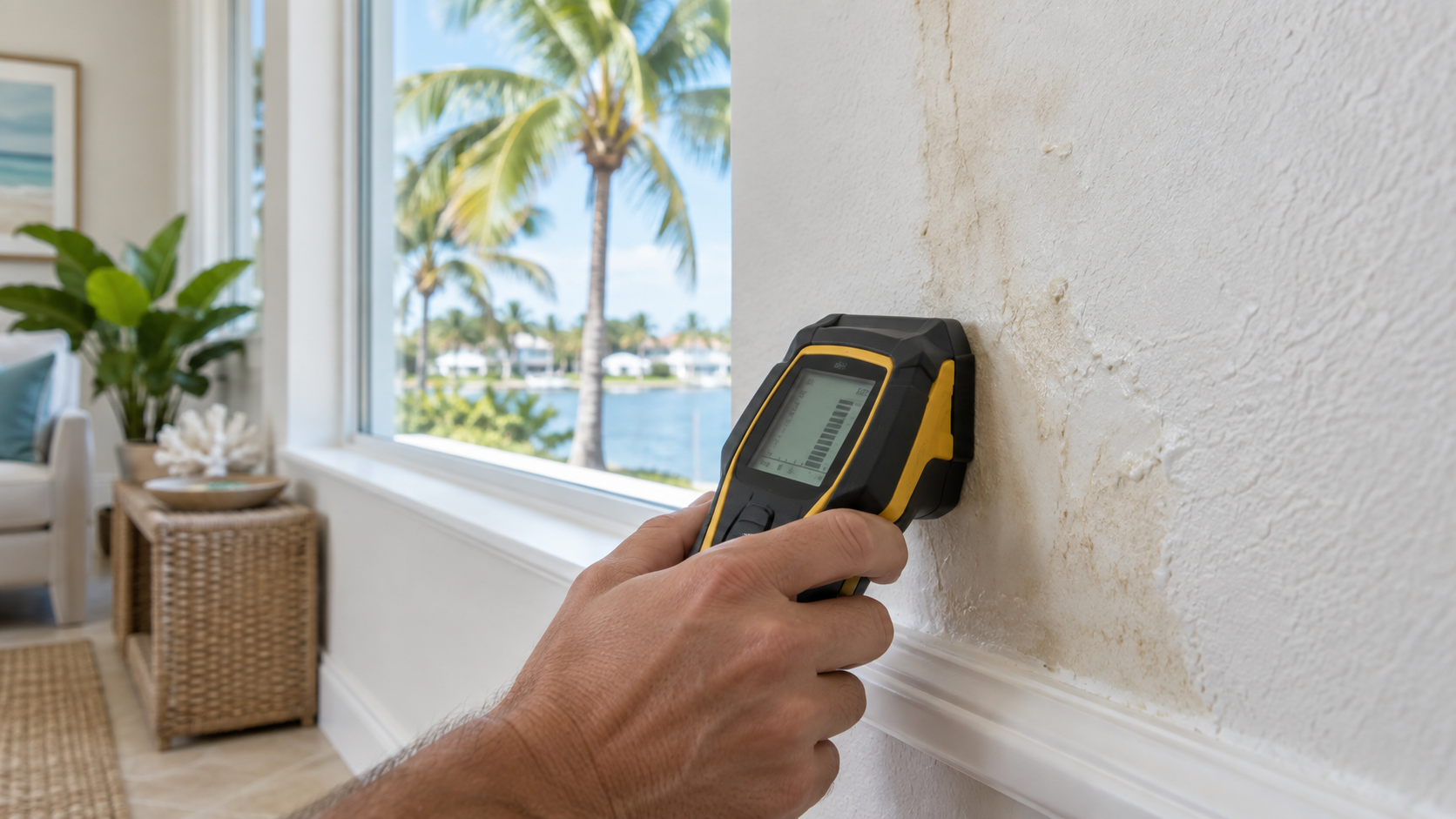
If the source or extent of a damp area is unclear, moisture mapping and readings can help document moisture patterns in accessible building materials. These findings can then guide questions about whether access beyond the unit is needed.
What Does a Professional Condo Mold Inspection Involve?
A professional condo mold inspection combines property history, visual observations, and moisture evaluation to understand whether conditions inside the unit support a mold concern. The assessment is limited to the scope agreed upon, the areas that are accessible, and the conditions present on the day of the inspection.
Laboratory sampling is not automatically necessary in every condo. EPA guidance notes that visible mold often does not require sampling, and when sampling is used it should answer a specific question rather than serve as a generic pass-or-fail test.
Visual Findings, Moisture Readings, and Testing When Appropriate
The exact process depends on what the assessor finds and what the buyer is trying to understand before the purchase.
- Property history: Known leaks, flooding, repairs, prior mold work, and recurring moisture concerns can guide the assessment.
- Visual observations: Stains, damaged materials, visible growth, condensation, and repair patterns are documented when accessible.
- Moisture measurements: Readings can help compare suspect materials with similar unaffected areas.
- Thermal imaging: Surface-temperature patterns may help guide closer moisture evaluation but do not directly detect mold.
- Sampling when appropriate: indoor mold testing may include air or surface sampling when it would provide useful additional information.
- Written findings: The report reflects what could be observed and measured within the inspection scope at that time.
Because no inspection can guarantee that every concealed area is free of mold, buyers should read the report as evidence about the conditions evaluated, not as a guarantee about every inaccessible cavity or future condition. For more detail on measurement tools, see what moisture meters can tell you.
What Should You Ask the Seller and Condo Association?
Before closing, buyers can ask questions that help explain the unit’s water and repair history. The goal is not to assume that every seller or association has every record, but to gather whatever documentation and context are available so the inspector can better understand prior conditions.
Florida condominium law requires certain disclosures and documents in residential condo sales, and applicable milestone inspection, turnover inspection, and structural integrity reserve study materials may also be part of the buyer’s document package. Those building-level documents are not substitutes for a unit-specific mold assessment, but they can add useful context about the property.
Information That Can Help Explain Previous Water Damage
Ask your agent, seller, association, or property manager what information is available and relevant to the unit or building.
- Known leak history: Ask about plumbing leaks, roof leaks, window intrusion, AC condensate problems, or water from neighboring units.
- Repair documentation: Invoices, contractor reports, photographs, or permits may help explain what work was performed.
- Prior mold assessment or remediation records: If they exist and can be shared, review what area was evaluated and what work was completed.
- Insurance or water-loss information: When available, this may help clarify the timing and extent of a prior event.
- Association or building reports: Applicable milestone, turnover, or reserve-study documents may provide broader building context.
- Access arrangements: Ask early if the assessor may need permission to view a mechanical room, common element, roof area, or another location outside the unit.
A buyer should avoid assuming that past repair paperwork proves current conditions are unchanged. Records can explain history, while the current assessment documents what is observable and measurable during the inspection.
When Should You Schedule the Assessment Before Closing?
Schedule the mold assessment early enough that you have time to review the findings before making decisions tied to your purchase. The exact timing depends on your contract, inspection period, building access, and any additional permission needed to evaluate areas outside the unit.
Do not rely on a generic deadline from an article. Coordinate with your real estate agent, attorney if applicable, inspector, and other transaction professionals so the assessment fits the actual terms of your purchase agreement.
Coordinate Access and Allow Time to Review Findings
A little planning can make the inspection more useful and reduce delays when the unit is part of a larger building.
- Confirm the inspection window: Review the contract and transaction timeline with the appropriate real estate professional.
- Arrange unit access: Make sure the inspector can enter the unit and any agreed accessible areas.
- Ask about common-area access early: Building management or the association may need notice or permission for certain spaces.
- Provide available history: Share relevant leak, repair, or prior assessment information with the assessor.
- Leave time to review the report: Findings may raise follow-up questions or the need for another specialist.
- Avoid scheduling at the last possible moment: Access or additional evaluation can take time even when the assessment itself is straightforward.
If you are comparing providers, our guide on how to choose a mold inspection company can help you understand what to ask before booking.
What Happens If Mold or Elevated Moisture Is Found?
If the assessment finds visible mold, elevated moisture, or another condition that needs attention, the next step depends on the source, location, extent, and access limitations. The finding does not automatically tell the buyer whether to proceed with the purchase or who is responsible for repairs.
Responsibility in a condominium can depend on the governing documents, the specific component involved, the cause of the problem, the purchase contract, and the circumstances. Buyers should use the inspection findings as factual information and then discuss repair, access, transaction, or legal questions with the appropriate professionals.
Use the Findings to Understand the Next Steps
The report may help identify what additional work or information is needed before the buyer feels comfortable moving forward.
- Identify the moisture source: A plumber, roofer, HVAC contractor, building-envelope specialist, association, or another professional may need to investigate the cause.
- Clarify the affected area: Additional access may be needed if the concern appears to extend beyond the unit.
- Consider remediation planning: If professional cleanup is needed, mold remediation protocols can provide a documented scope of work for the remediation contractor.
- Review test results in context: If laboratory sampling was performed, use the property findings and sample locations to interpret the results. See how to read mold test results.
- Verify completed remediation when appropriate: post-remediation verification can evaluate whether the treated area meets the established completion criteria.
The value of the assessment is that it gives the buyer documented information to use in the decision-making process. It does not replace the purchase contract, condominium documents, or advice from the professionals handling the transaction.
Frequently Asked Questions About Condo Mold Inspections
Condo buyers often have questions that go beyond whether visible mold is present. Shared building systems, limited access, previous repairs, and the purchase timeline can all affect what an assessment can realistically evaluate.
These answers focus on the inspection itself. They do not assign repair responsibility or create legal rights, because those questions depend on the governing documents, contract, access permissions, and circumstances.
Should I get a mold inspection if the condo looks clean?
A clean appearance does not automatically mean a separate mold assessment is necessary, but it also does not reveal every past or hidden moisture condition.
- Consider the unit’s leak and repair history.
- Pay attention to musty odors, stains, bubbling finishes, or warped materials.
- Review any concerns raised by the general home inspection.
- Consider a mold assessment when specific moisture or mold questions remain.
The decision should be based on the property’s actual conditions and history, not simply on whether the finishes look new.
Does a musty smell always mean mold?
No. A musty odor can be associated with mold, but it can also come from damp materials, ventilation issues, or other moisture-related conditions.
- Identify where the odor is strongest.
- Look for past leaks or current moisture sources.
- Check accessible HVAC, plumbing, and exterior-wall areas.
- Use moisture evaluation to guide further investigation when appropriate.
A persistent unexplained odor is a reason to investigate, not proof by itself that mold is present.
Does every condo need air sampling?
No. Laboratory sampling is not necessary in every condo mold assessment.
- Visible mold may already provide enough information to focus on moisture and corrective action.
- Sampling may help when the source or extent of a concern is unclear.
- The sampling plan should answer a specific inspection question.
- Results should be interpreted with the physical findings, not in isolation.
The assessor should recommend sampling only when it adds useful information to the evaluation.
Can an inspection evaluate neighboring units or common areas?
Only if those areas are within the agreed scope and lawful access has been arranged. A buyer’s unit inspection does not automatically provide access to neighboring units or condominium common areas.
- Ask whether the suspected source appears to extend beyond the unit.
- Coordinate needed access through the appropriate owner, association, manager, or authorized party.
- Document inaccessible areas and inspection limitations.
- Use the accessible findings to determine whether broader investigation is warranted.
In a condominium, access can be just as important as the testing tools when the suspected source is outside the unit.
Can previous remediation records replace a current assessment?
Not necessarily. Prior records can explain what was found and what work was performed at that time, but they do not automatically establish current conditions.
- Review the date and scope of the prior work.
- Check whether the original moisture source was addressed.
- Compare the prior affected area with current signs or concerns.
- Consider a current assessment when conditions have changed or questions remain.
Historical documentation is useful context, while a current inspection evaluates the accessible conditions present now.
Does a mold inspection guarantee there is no hidden mold?
No. A mold inspection cannot guarantee that every concealed or inaccessible area is free of mold.
- The report is limited to the agreed scope and accessible areas.
- Moisture meters and thermal imaging have technical limitations.
- Hidden cavities may not be opened during a non-invasive assessment.
- The findings reflect conditions observed at the time of inspection.
A good report should clearly explain its scope and limitations so the buyer understands what was evaluated and what remains unknown.
Schedule a Condo Mold Inspection in South Florida
Buying a condo is a significant decision, and unexplained moisture or mold concerns can make the process more complicated. An independent condo mold inspection can help document accessible conditions inside the unit, evaluate moisture concerns, and determine whether additional testing or investigation may be appropriate before closing.
Holistic Environmental Solutions provides independent mold assessment, moisture evaluation, mold testing, remediation protocols, and post-remediation verification throughout Miami-Dade, Broward, Palm Beach, and Monroe counties. Buyers looking for a mold inspection in Fort Lauderdale or a mold inspection in West Palm Beach can use the local service pages for additional area-specific information.
Contact Holistic Environmental Solutions Before Your Purchase
If your walkthrough, inspection, repair history, or seller disclosures leave you with questions about moisture or mold, contact Holistic Environmental Solutions before your transaction moves forward. An independent assessment can help you better understand the conditions inside the condo, identify areas that may need closer evaluation, and give you clearer information to review before closing. We primarily serve Miami-Dade, Broward, Palm Beach, and Monroe counties, and we may also be able to assist with properties outside those areas depending on location and availability.
Call (786) 580-9374 to speak with our team and request a quote or schedule your condo mold inspection. You can also book your condo mold inspection online and receive 10% off your mold inspection when you schedule through the website.
About Holistic Environmental Solutions
Holistic Environmental Solutions provides independent mold assessment and environmental testing services throughout South Florida, including Mold Assessment Services, Indoor Mold Testing, Air Quality Testing, Moisture Mapping & Readings, Remediation Protocols, and Post-Remediation Verification. Our team serves Miami-Dade, Broward, Palm Beach, and Monroe counties, helping property owners better understand mold, moisture, and indoor air quality concerns with clear, objective findings.
Florida Licensed Mold-Related Services Assessor #MRSA5496
Recent Posts