
Mold Around AC Vents: When Should You Get an Inspection?
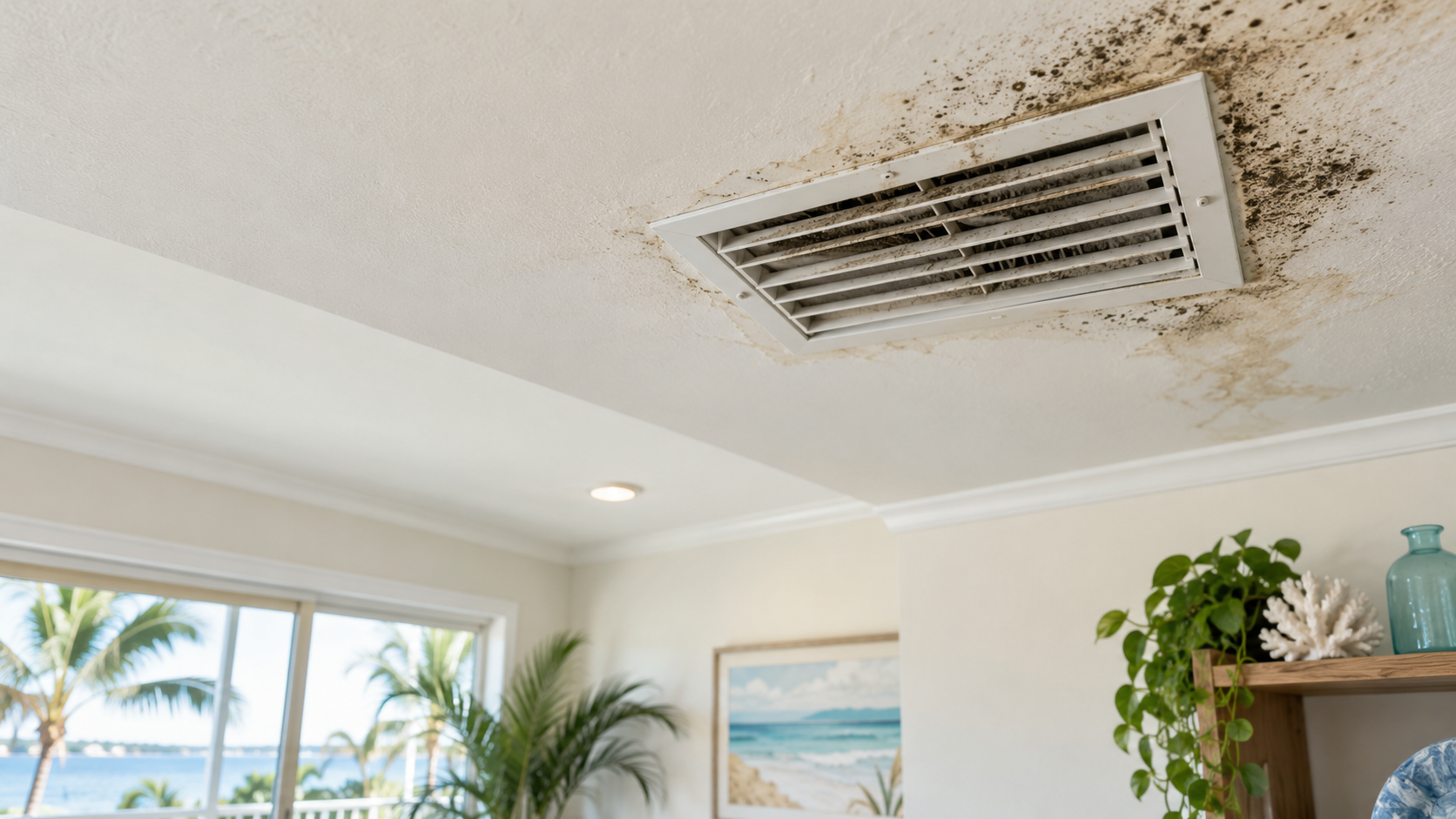
Dark spots around an AC vent are not automatically mold. Dust, staining, condensation-related residue, and suspected microbial growth can look similar, so appearance alone is not enough to identify what is on the vent or nearby drywall.
An inspection may be worth considering when the discoloration keeps returning, the area stays damp, condensation forms around the register, nearby drywall or paint begins to deteriorate, or a musty odor develops. In South Florida, warm humid air meeting a sufficiently cold vent or nearby surface can create condensation, which is why both the environmental conditions and the HVAC system may need attention.
Holistic Environmental Solutions provides independent environmental assessment rather than HVAC repair, duct cleaning, or mold remediation. A professional mold assessment may combine visual observations, moisture evaluation, property history, and indoor mold testing when sampling would answer a specific question.
This guide explains what dark marks around vents may mean, why condensation forms, when to schedule an inspection, what an assessor can evaluate, and when an HVAC contractor may be the right professional to address the underlying mechanical issue.
Are Dark Spots Around AC Vents Always Mold?
No. Dark spots around air-conditioning vents are not always mold. Dust can collect where air moves across the register and surrounding ceiling or wall, and condensation can leave staining or create damp conditions that make the area look suspicious.
EPA guidance also cautions that a substance that looks like mold may not be mold and that professional evaluation or laboratory analysis may be needed for confirmation in some situations. The useful question is not simply what color the spot is, but whether moisture, recurring discoloration, or other conditions suggest a problem that deserves closer investigation.
Clues That Deserve a Closer Look
A vent cover can get dirty without indicating a mold problem, but certain patterns make a closer evaluation more reasonable.
- Recurring discoloration: Marks that return soon after normal surface cleaning may point to an unresolved moisture or airflow condition.
- Visible condensation: Water droplets or repeated dampness around the register can create conditions that deserve further investigation.
- Nearby material damage: Peeling paint, soft drywall, swollen finishes, or staining suggest the concern extends beyond ordinary dust.
- Musty odor: A persistent odor near the vent can be useful context, but it does not identify mold by itself.
- History of leaks or HVAC moisture: Previous condensate, roof, plumbing, or humidity problems can change how the area should be evaluated.
If the concern is more than a dirty register, a professional mold assessment can help document the visible conditions and decide whether moisture measurement or targeted sampling would add useful information.
Why Does Condensation Form Around Air-Conditioning Vents?
Condensation forms when humid air contacts a surface that is cold enough for water vapor to turn into liquid water. Trane describes the same basic process around HVAC systems: warm or humid air meets a cold surface, and water droplets can form.
In South Florida, persistent indoor humidity can make vent condensation more noticeable, but the exact cause should not be diagnosed from a photograph or blog article. Airflow, duct insulation, leakage, equipment operation, indoor humidity, and the temperature of the register or nearby building materials may all affect whether condensation develops.
Moisture Conditions an Inspector or HVAC Contractor May Investigate
Environmental assessment and HVAC service answer different questions, so the appropriate professional depends on what the inspection is trying to determine.
- Indoor humidity: Persistent high humidity can increase the likelihood of condensation on cold surfaces.
- Register and surrounding surface temperature: Cold metal or nearby materials may collect moisture when humid air reaches them.
- Duct insulation and sealing: Department of Energy building guidance notes that properly insulated ducts in unconditioned spaces help prevent condensation.
- Airflow or equipment concerns: A qualified HVAC contractor can evaluate mechanical operation, airflow, condensate drainage, insulation, and duct conditions.
- Moisture in nearby building materials: moisture mapping and readings can help document whether the drywall, ceiling, or surrounding materials show elevated moisture.
Condensation is therefore a moisture clue, not proof of mold and not proof that the whole duct system is contaminated. The next step is to look at how often it happens, whether the surrounding materials are changing, and whether the condition keeps returning.
When Should You Schedule a Mold Inspection for Vent Discoloration?
Consider a mold inspection when vent discoloration is persistent, recurring, or associated with moisture conditions that are not explained by ordinary dust. One isolated mark on a dry vent cover may not require a mold assessment, but repeated dampness, odors, or damaged surrounding materials justify a closer look.
The goal of the inspection is not to assume the vent is contaminated. It is to evaluate the accessible area, document moisture-related conditions, and determine whether the concern appears localized or whether another professional should investigate the HVAC or building source.
Warning Signs Beyond a Dirty Vent Cover
The following conditions provide more context than color alone and can help determine whether an independent assessment is appropriate.
- Condensation that keeps returning: Repeated moisture suggests the underlying humidity or mechanical condition has not been resolved.
- Discoloration spreading onto drywall or ceiling: This can indicate that surrounding materials are being affected.
- Soft, bubbling, or peeling finishes: Material changes can signal moisture beyond surface dust.
- A persistent musty odor: If the odor is strongest near the HVAC area or returns when the system runs, document that pattern for the assessor.
- Previous leaks or water damage: A history of moisture helps explain why the area may need more than a visual check.
- Marks that quickly return after cleaning: Recurrence can indicate that the condition supporting the discoloration is still present.
Homeowners who are unsure whether their concern has crossed the line from routine cleaning to an inspection can also review signs you may need a mold inspection.
What Does a Mold Inspector Check Around AC Vents?
A mold inspector evaluates the accessible vent area and surrounding building materials rather than treating a dark mark as a diagnosis. The assessment can include what the inspector can see, what the homeowner has observed over time, and whether the nearby wall or ceiling shows moisture-related changes.
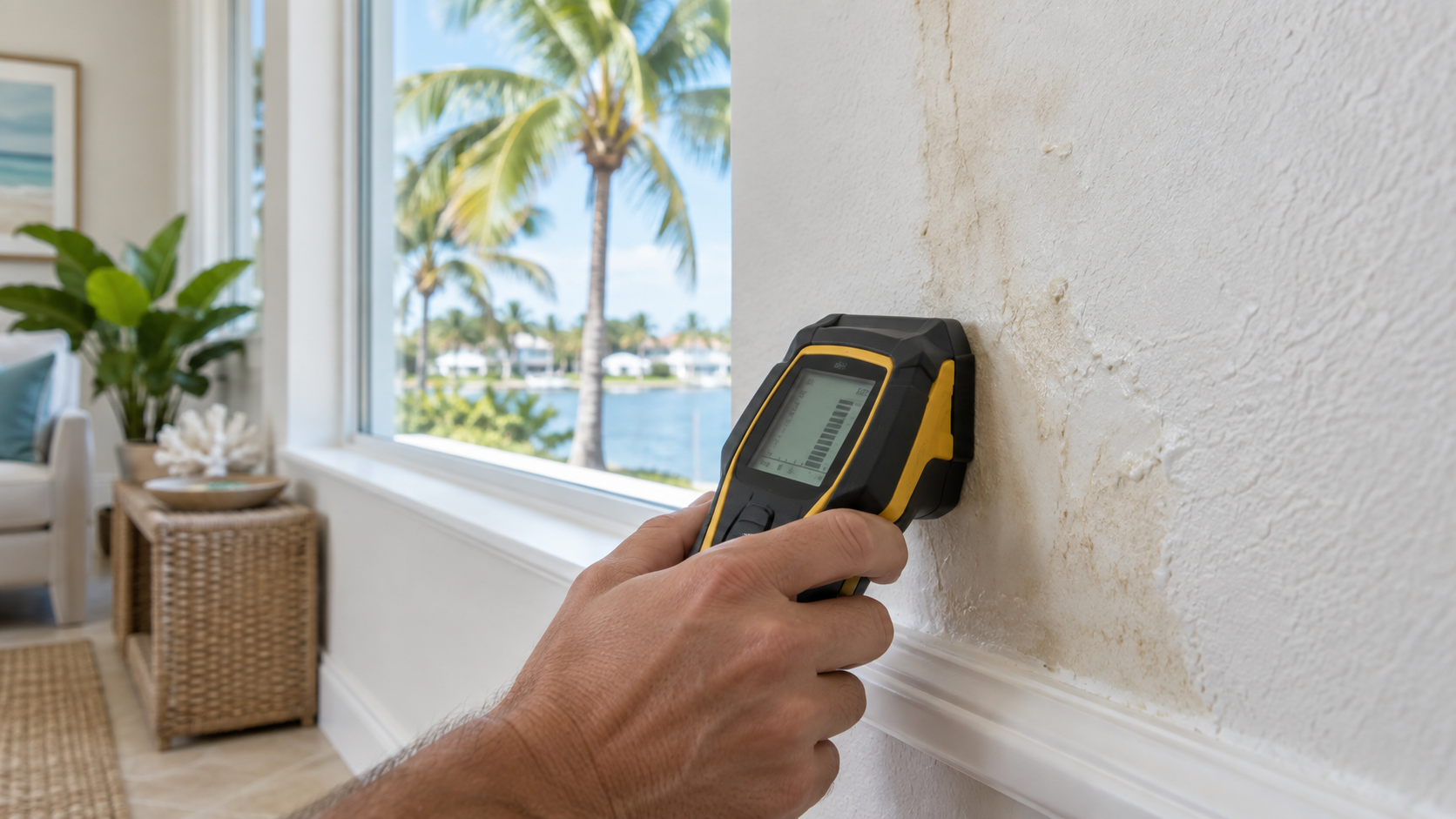
Moisture meters and thermal cameras may help guide the investigation, but neither tool directly identifies mold. Thermal imaging shows surface-temperature patterns, and moisture readings indicate material moisture conditions. Sampling may be considered when it would answer a specific question that the visual and moisture findings cannot resolve.
Visual Evaluation, Moisture Readings, and Testing When Appropriate
The exact scope depends on access, the location of the vent, and the conditions present during the appointment.
- Visible conditions: The inspector may document dust patterns, staining, suspected growth, condensation, and damage to nearby finishes.
- Moisture evaluation: Readings can help determine whether surrounding drywall or ceiling materials are wetter than comparable unaffected areas.
- Thermal patterns: A thermal camera can identify surface-temperature differences that may guide closer moisture checks, but it cannot see mold or see through walls.
- Property history: Information about humidity, prior leaks, condensate problems, roof issues, or recurring marks can help explain what the inspector sees.
- Sampling when appropriate: indoor mold testing may include targeted air or surface sampling when the results would add useful information.
- Access limitations: An environmental assessor cannot automatically inspect every interior part of the HVAC system or inaccessible duct run.
For a deeper explanation of the tools used to evaluate damp building materials, see what moisture meters can tell you. The inspection findings then help determine whether the issue looks localized or whether HVAC evaluation is also needed.
Does Mold Around One Vent Mean the Entire AC System Is Affected?
No. A suspicious mark or even confirmed mold near one vent does not establish that the entire duct system is contaminated. EPA notes that many sections of an HVAC system may not be accessible for visible inspection and that a substance that looks like mold may require expert evaluation or laboratory confirmation.
The location and extent need to be evaluated separately. A condition at one register could involve local condensation, nearby drywall, dust accumulation, a localized moisture source, or an HVAC condition, and none of those possibilities should be generalized to the entire system without evidence.
Why the Location and Extent Need Separate Evaluation
The most useful next step is to define what has actually been observed rather than assume that one vent represents every duct and HVAC component.
- One register is one observation point: Conditions can differ from room to room and from one vent to another.
- Accessible surfaces do not represent hidden duct interiors: Internal duct conditions may require evaluation by an HVAC professional with appropriate access.
- Surrounding drywall may be the affected material: Moisture around a register can involve the ceiling or wall rather than the full air-distribution system.
- Air sampling has limits: airborne mold testing can provide information about spores present in sampled air, but it cannot pinpoint the exact physical source by itself.
- Duct cleaning is not automatically required: EPA does not recommend routine duct cleaning simply because dust is present, and the need for cleaning depends on specific conditions.
A careful assessment keeps the conclusion proportional to the evidence. That also helps homeowners decide whether the next call should be to an environmental assessor, an HVAC contractor, or both.
Should You Call a Mold Inspector or an HVAC Contractor?
Call a mold inspector when you need an independent environmental assessment of suspected growth, moisture in surrounding building materials, or questions about whether testing would be useful. Call an HVAC contractor when you need the mechanical system, ductwork, insulation, airflow, condensate drainage, or equipment operation evaluated or repaired.
The roles are complementary. Holistic Environmental Solutions can document environmental conditions and mold-related concerns, but the company does not repair HVAC equipment, clean ducts, or perform mold remediation. A qualified HVAC contractor addresses system performance and mechanical causes that may be contributing to condensation or dampness.
How Environmental Assessment and Mechanical Repairs Differ
Knowing which question you need answered can help you contact the right professional first and avoid asking one service provider to perform work outside its role.
- Environmental assessor: Evaluates visible conditions, moisture patterns, property history, and sampling needs.
- HVAC contractor: Evaluates airflow, equipment operation, condensate drainage, insulation, duct sealing, and mechanical repairs.
- Both may be appropriate: A recurring condensation problem can require mechanical correction while the surrounding building materials are independently assessed for moisture or suspected mold.
- Independent findings can guide the next step: A professional mold assessment can document what is present around the vent without selling HVAC repair or mold removal.
If the discoloration is paired with a persistent odor but nothing obvious is visible elsewhere, the related guide on a musty smell without visible mold can help explain why the source may require broader investigation.
What Should You Do Before Cleaning Suspected Mold Around a Vent?
Before cleaning or disturbing a suspicious area around a vent, document what you are seeing and note whether the condition is recurring. That information can be useful if you later need an environmental assessment or HVAC evaluation, especially when condensation, staining, or odors come and go.
Do not spray chemicals into the duct system, dismantle HVAC equipment, or disturb inaccessible components based on a visual guess. If the concern is on the register cover or nearby drywall, the safest next step is to determine whether you are dealing with routine dust, ongoing moisture, or a condition that needs professional evaluation.
Practical Steps Before Professional Evaluation
These steps help preserve useful information about the condition without turning the homeowner into the diagnostician or service technician.
- Photograph the area: Take clear pictures before cleaning so you can show how the marks appeared and where they were located.
- Note when condensation appears: Record whether it happens continuously, only during very humid weather, or only while the AC is running.
- Track recurrence: If you clean an ordinary dusty surface and the marks quickly return, note the timing and pattern.
- Look for surrounding material changes: Stains, peeling paint, swollen drywall, or soft finishes provide useful context.
- Avoid disturbing inaccessible HVAC components: Internal equipment and ductwork should be evaluated by the appropriate professional.
- Schedule the right evaluation: Use an environmental assessor for mold and moisture questions and an HVAC contractor for mechanical concerns.
Once the condition is documented, the next question is often one of the common homeowner questions below: whether dust can resemble mold, whether condensation proves mold is present, and whether duct cleaning is actually needed.
Frequently Asked Questions About Mold Around AC Vents
Dark marks around vents are easy to overinterpret because several different conditions can look similar. The questions below separate what can be concluded from appearance alone from what requires moisture evaluation, HVAC diagnosis, or mold testing.
The answers are intentionally narrow. A vent concern should be evaluated based on its location, recurrence, moisture conditions, accessible evidence, and the specific question the homeowner needs answered.
Can dust around an AC vent look like mold?
Yes. Dust and particulate buildup can create dark gray or black marks around registers, especially where airflow deposits particles on the surrounding surface. Appearance alone cannot reliably identify mold.
- Look at whether the material wipes away like ordinary dust.
- Note whether the mark returns quickly after routine cleaning.
- Check for condensation, staining, or damage in the surrounding material.
If the marks are paired with dampness, odors, or material damage, an assessment can help determine whether the concern goes beyond normal dust accumulation.
Does condensation around a vent prove mold is present?
No. Condensation shows that moisture is forming on or near a cold surface, but it does not prove mold is present. Persistent moisture can create conditions that deserve attention, especially if surrounding building materials remain damp.
- Track how often condensation occurs.
- Check whether paint, drywall, or ceiling materials are changing.
- Have mechanical causes evaluated by an HVAC contractor when appropriate.
The moisture condition should be addressed even when mold has not been confirmed.
Why do dark marks return after cleaning?
Recurring marks can return because dust continues to deposit around the register, because condensation keeps forming, or because another moisture-related condition remains unresolved. The recurrence itself does not identify the substance.
- Document how quickly the marks return.
- Note whether recurrence coincides with AC operation or humid weather.
- Look for moisture or material damage around the same area.
A recurring pattern provides useful evidence for deciding whether an HVAC evaluation, environmental assessment, or both are appropriate.
Can mold near an AC vent affect surrounding drywall?
Moisture around a vent can affect the surrounding drywall or ceiling material, and damp porous materials can support mold growth. The presence and extent of mold cannot be determined from the vent cover alone.
- Inspect accessible nearby finishes for stains or soft material.
- Use moisture readings when the drywall or ceiling is suspected to be damp.
- Consider targeted testing only when it would answer a specific question.
The surrounding building material should be evaluated separately from the duct system itself.
Will air sampling identify where the problem is coming from?
Not by itself. Air sampling can provide information about spores in the sampled air, but it cannot pinpoint the exact physical source of mold or moisture.
- Sample location and timing affect what the result represents.
- Results need to be interpreted with the visual and moisture findings.
- An outdoor or comparison sample may provide context when appropriate.
If sampling is performed, use the property findings to interpret the report rather than expecting the laboratory result to identify the source. Our guide on how to read mold test results explains that context in more detail.
Does every suspected mold problem require duct cleaning?
No. EPA does not recommend routine air-duct cleaning simply because household dust is present, and a suspected mark around one vent does not establish contamination throughout the system.
- Confirm what condition is actually present before deciding on cleaning.
- Use an HVAC professional when internal ductwork or equipment needs mechanical evaluation.
- Correct moisture conditions that contributed to any confirmed mold growth.
Duct cleaning, mold testing, and remediation should each be recommended for a specific reason rather than treated as automatic responses to a dark mark around a vent.
Schedule a Mold Inspection in South Florida
If dark spots around an AC vent keep returning, condensation is affecting the surrounding wall or ceiling, or a musty odor develops near the HVAC area, Holistic Environmental Solutions can provide an independent environmental assessment to help document the visible conditions, evaluate nearby moisture, and determine whether mold testing would add useful information. Holistic serves Miami-Dade, Broward, Palm Beach, and Monroe counties as primary service areas, with additional Florida locations available by request.
Call
(786) 580-9374 for a quote or to schedule an inspection, or
book online for 10% off your mold inspection. If you are located outside the four primary counties, contact the team to confirm availability in your area.
About Holistic Environmental Solutions
Holistic Environmental Solutions provides independent mold assessment and environmental testing services throughout South Florida, including Mold Assessment Services, Indoor Mold Testing, Air Quality Testing, Moisture Mapping & Readings, Remediation Protocols, and Post-Remediation Verification. Our team serves Miami-Dade, Broward, Palm Beach, and Monroe counties, helping property owners better understand mold, moisture, and indoor air quality concerns with clear, objective findings.
Florida Licensed Mold-Related Services Assessor #MRSA5496
Recent Posts