
Can a Moisture Meter Detect Mold? What Moisture Readings Really Tell You
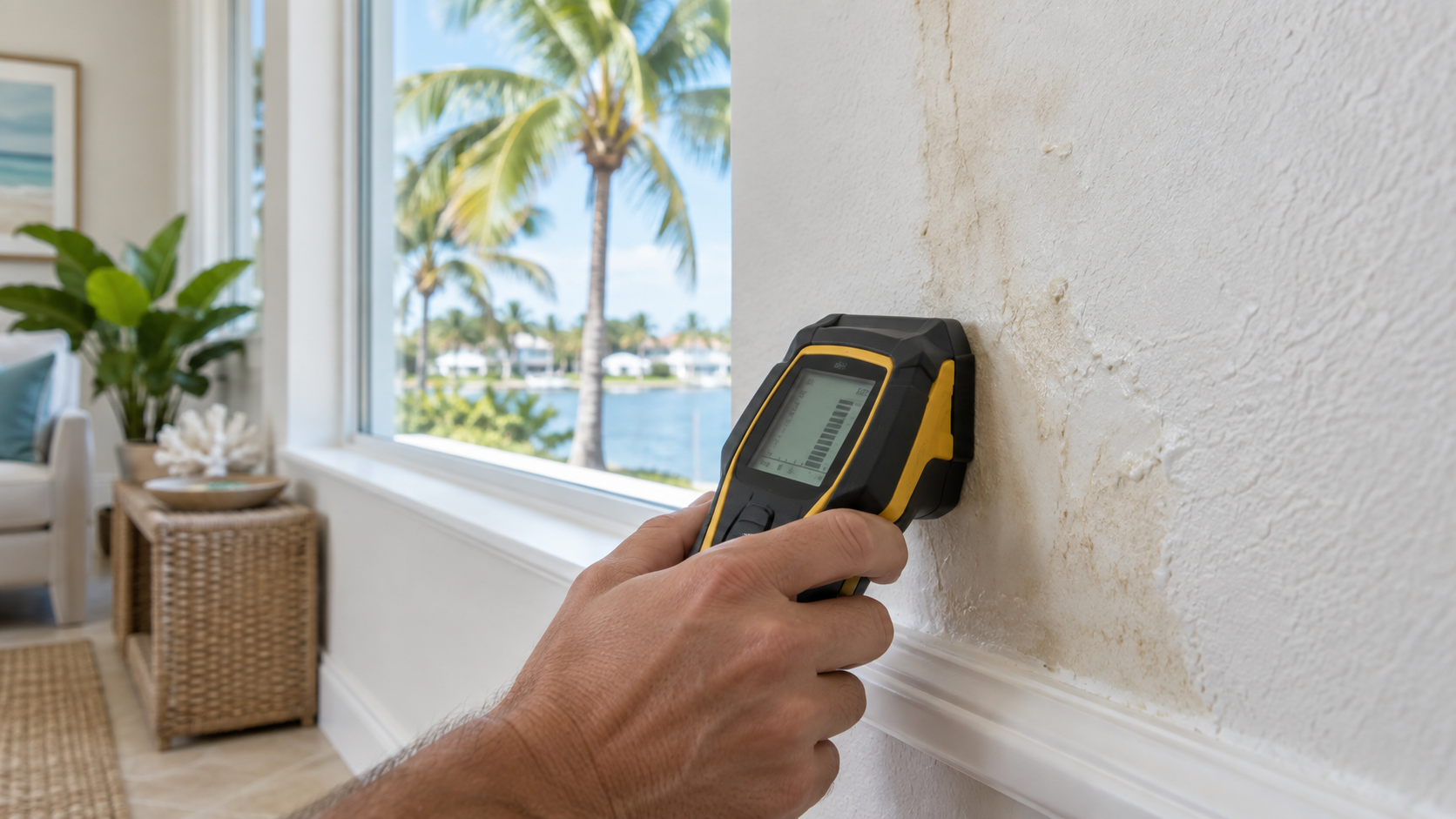
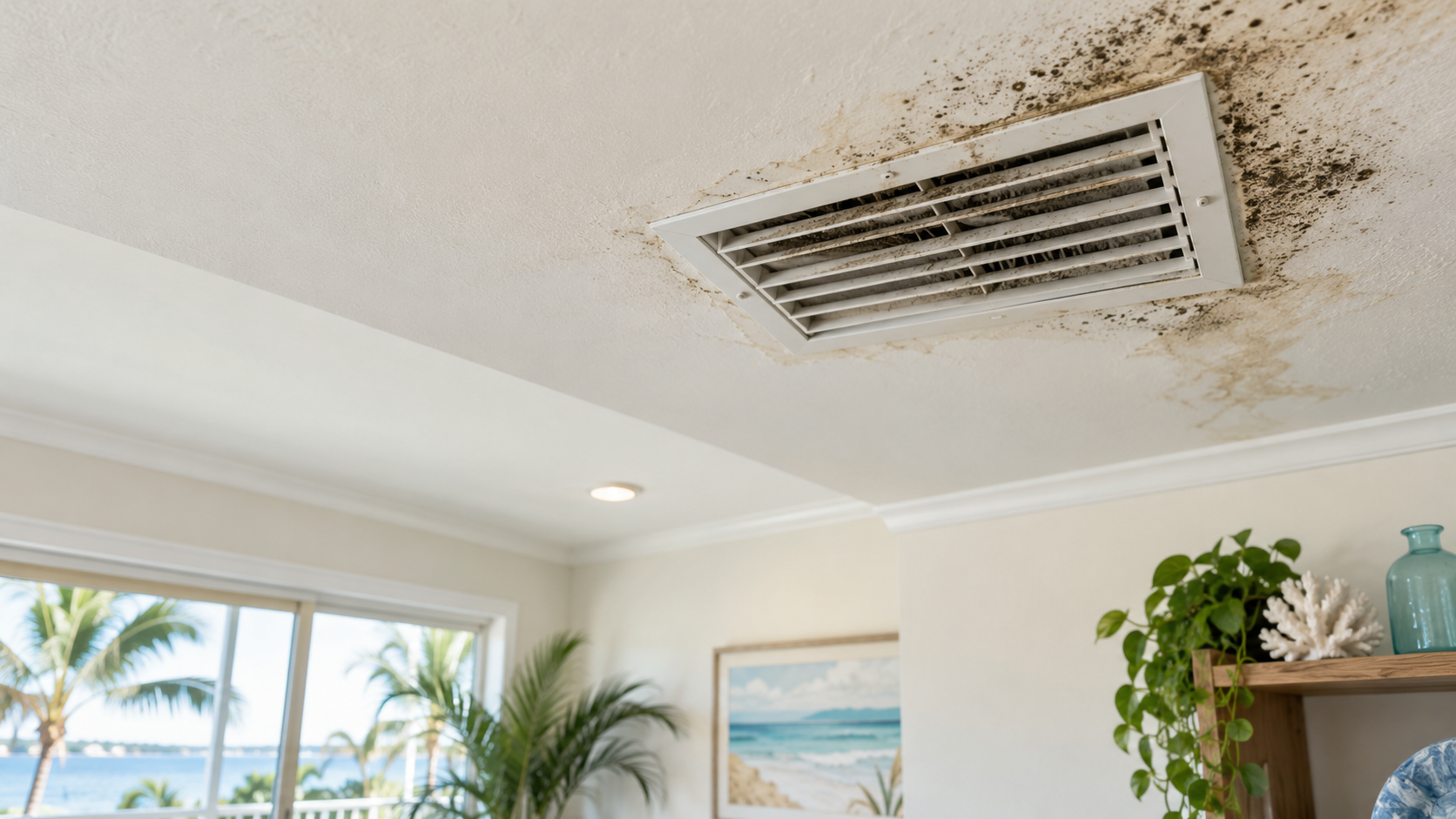
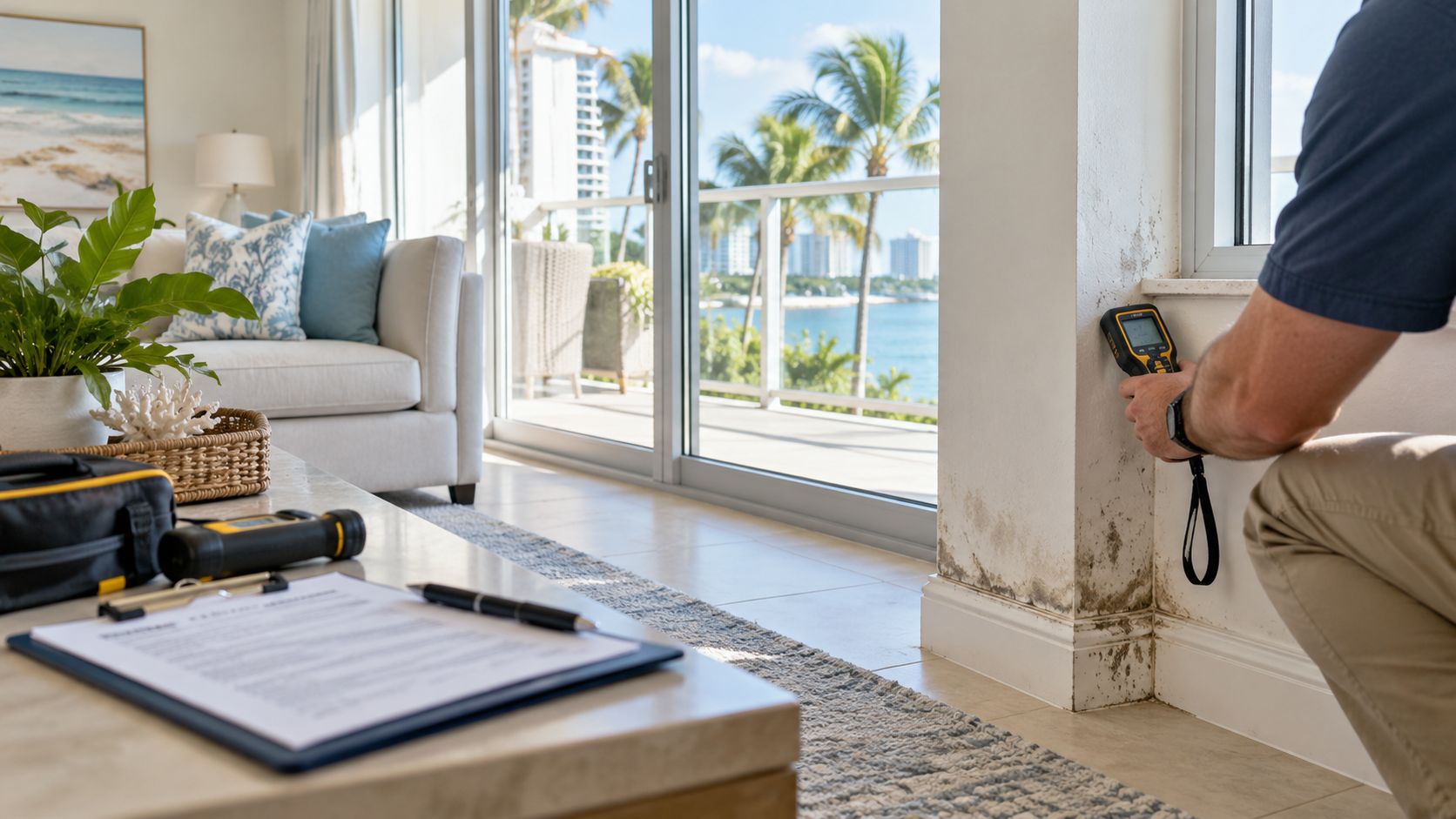
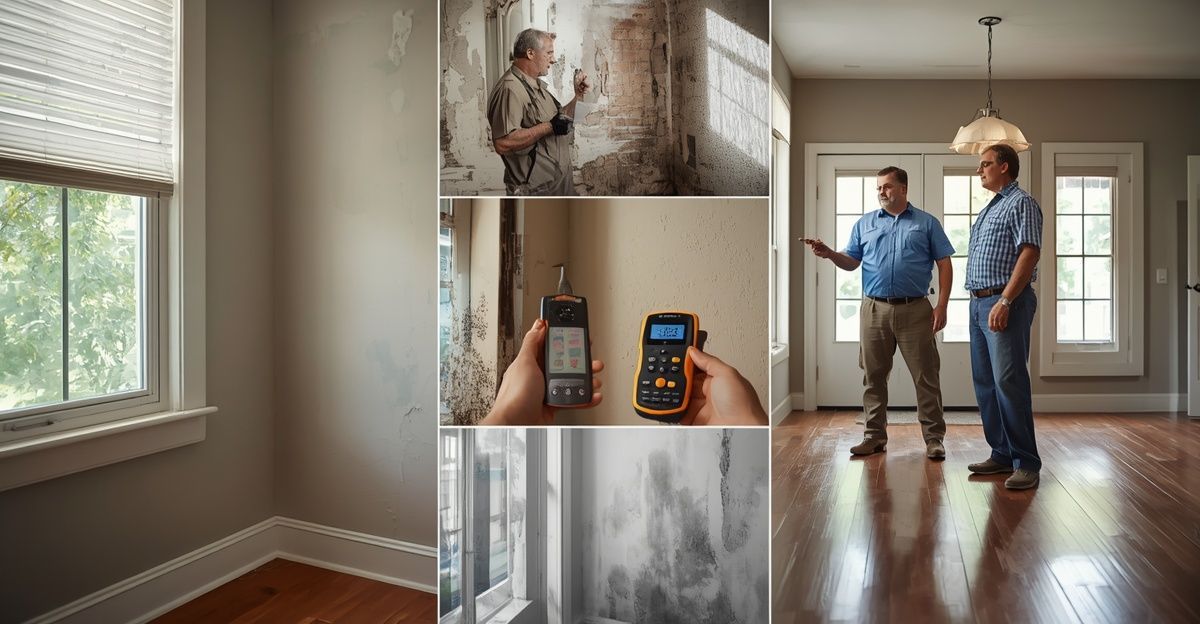
A moisture meter cannot detect mold directly. It measures or indicates moisture conditions in building materials, and elevated moisture can help an inspector identify areas where mold growth may be more likely or where further investigation is warranted.
That distinction matters because a high moisture reading does not prove mold is present, and a low reading does not automatically rule out previous water damage or existing mold. Moisture readings depend on the type of meter, its settings, the material being tested, the depth of the reading, and surrounding conditions. Professional interpretation focuses on patterns and comparisons rather than one universal number.
For South Florida property owners, moisture evaluation can be especially useful after roof leaks, plumbing problems, storms, flooding, condensation, or recurring humidity concerns. Holistic Environmental Solutions uses moisture measurements as part of a broader assessment that may also include visual observations, property history, thermal imaging, and sampling when appropriate. Learn more about professional moisture mapping and mold assessment services.
This guide explains what moisture meters actually measure, what elevated readings may mean, why low readings have limitations, how thermal imaging complements moisture measurements, and when moisture findings may justify a professional mold assessment or testing.
Can a Moisture Meter Detect Mold?
No. A moisture meter does not identify mold, mold spores, or a particular mold species. Its purpose is to measure or indicate moisture conditions in a material, which can help an inspector locate damp areas that deserve closer evaluation.
Moisture matters because mold growth requires water or moisture. EPA guidance emphasizes moisture control as the key to controlling indoor mold growth. A meter can therefore help identify one of the conditions that may support mold, but it cannot confirm that mold is present.
What a Moisture Meter Can and Cannot Tell You
- Can: Help identify areas that are wetter than surrounding or known-dry materials.
- Can: Help map the extent of a moisture pattern after a leak or water intrusion event.
- Can: Help guide where an inspector should look more closely or take confirmatory readings.
- Cannot: Identify mold by itself.
- Cannot: Determine whether a specific mold species is present.
- Cannot: Replace the broader context of a property inspection, moisture history, and sampling when sampling is actually needed.
If a moisture pattern is found alongside visible growth, a musty odor, recurring staining, or a history of water damage, a broader
mold assessment services evaluation can help determine what additional steps make sense.
What Does a High Moisture Reading Mean?
A high moisture reading means the instrument detected a higher moisture condition than the reference or expected condition for the material being evaluated. It does not automatically mean the material contains mold, and the number should not be interpreted without knowing which meter, scale, material, and measurement method were used.
Many meters use different scales for different building materials. Some provide actual moisture-content percentages only when calibrated for a specific material, while others use comparative or relative scales. Manufacturer guidance commonly recommends establishing a known-dry baseline and comparing suspect areas with similar unaffected material.
Factors That Can Change the Meaning of a Reading
- Material type: Drywall, wood, plaster, masonry, tile assemblies, and other materials respond differently to moisture meters.
- Meter mode and calibration: A wood percentage scale is not the same as a relative scale used on non-wood building materials.
- Depth: Some instruments read shallow material while others are influenced by deeper layers or substrates.
- Nearby metal or conductive materials: These can influence some non-invasive moisture-meter readings and may require confirmation with another method.
- Comparison area: A reading becomes more useful when compared with a similar area that is known to be dry.
- Pattern: A cluster or gradient of elevated readings can be more informative than one isolated measurement.
This is why Holistic uses moisture measurements as part of
professional moisture mapping rather than treating one number as a universal pass-or-fail threshold. For a deeper look at how readings are used after a leak, see
moisture mapping after water damage.
Does a Low Moisture Reading Rule Out Hidden Mold?
No. A low moisture reading at one location and one moment does not prove that hidden mold is absent. A material may have dried after a previous leak, the meter may not be measuring the exact location of the past moisture, or the growth may exist in a nearby concealed area that was not sampled by the instrument.
Moisture conditions also change over time. A wall can be wet during a leak and later read dry after the water source stops, while evidence of prior water damage or mold may remain. That is why inspectors combine readings with visual signs, odors, the history of the property, and targeted sampling when the circumstances justify it.
Why a Single Low Reading Has Limits
- It is location-specific: The meter only evaluates the area where the reading is taken.
- It is time-specific: A reading reflects current conditions, not necessarily what happened days or weeks earlier.
- Hidden cavities may differ: Moisture may be present in insulation, framing, subflooring, or another layer that the selected reading does not adequately represent.
- Past moisture can still matter: A previously wet material can dry while signs of mold or material damage remain.
- Property clues matter: Stains, odors, soft materials, previous leaks, and recurring moisture can justify additional investigation even when one reading is low.
Homeowners dealing with persistent odors but no obvious source may also find our guide on a musty smell with no visible mold helpful. A moisture meter is one tool in the investigation, not a guarantee that every hidden condition has been ruled out.
How Do Inspectors Use Moisture Meters and Thermal Imaging Together?
Moisture meters and thermal cameras answer different questions, which is why inspectors may use them together. Thermal imaging detects surface-temperature patterns, while a moisture meter can help evaluate whether a suspicious area has elevated moisture compared with surrounding materials.
A thermal camera does not see mold and does not see through walls. FLIR explains that thermal cameras measure surface heat patterns and may reveal temperature differences caused by moisture under the right conditions. Those patterns then help guide where direct moisture readings or additional investigation should occur.
How the Two Tools Complement Each Other
- Scan for patterns: Thermal imaging can quickly identify unusual surface-temperature patterns across a larger area.
- Verify suspicious areas: Moisture-meter readings can be taken where the thermal pattern suggests a possible concern.
- Compare with dry areas: Similar unaffected materials can provide a useful baseline for comparison.
- Map the extent: Repeated readings can help document how far an elevated-moisture pattern extends.
- Decide what comes next: The combined findings can help determine whether the issue appears related to active moisture, prior damage, or a condition that needs another specialist to evaluate.
Used correctly, these tools help narrow the investigation without pretending to provide information they cannot. This combination is a core part of
professional moisture mapping when hidden moisture is suspected.
When Should Moisture Findings Lead to a Mold Inspection or Testing?
Elevated moisture does not automatically mean mold testing is necessary. The decision should depend on the complete set of findings, including visible growth, musty odors, recurring stains, how long materials may have been wet, the history of the water event, and whether the source has been corrected.
EPA guidance notes that mold growth is tied to moisture, but testing is not required in every situation. If visible mold is present, the key issue may be correcting the moisture source and addressing the affected materials. In other situations, sampling can add useful information when the source or extent of a concern is unclear.
Findings That May Justify a Broader Mold Evaluation
- Persistent musty odors: Especially when the source is not visible.
- Visible growth or recurring discoloration: Particularly when it returns after cleaning.
- Elevated moisture with a known leak history: Such as a roof leak, plumbing failure, storm intrusion, or flooding.
- Wet porous materials: Drywall, insulation, carpet, wood, or cabinetry may require closer evaluation depending on the event and duration.
- Unexplained moisture patterns: When the source or extent of the elevated readings is not clear.
- Questions that the inspection alone cannot answer: In those cases, indoor mold testing may be considered if it would add meaningful information.
What Should You Do After Elevated Moisture Is Found?
After elevated moisture is found, the next step is to identify and correct the source of the water. A moisture assessment can document where damp conditions are present, but the appropriate repair may require a plumber, roofer, HVAC contractor, building-envelope specialist, or water-damage professional depending on what is causing the problem.
Holistic Environmental Solutions provides independent assessment and testing, not water-damage restoration or mold removal. Once the source is addressed, the property can be reevaluated as needed to determine whether materials are drying appropriately and whether any mold-related concerns require additional assessment.
A Practical Next-Step Checklist
- Find the source: Determine whether the moisture is coming from plumbing, roofing, HVAC condensation, exterior intrusion, flooding, or another cause.
- Use the appropriate contractor: Have the source repaired and any necessary drying or restoration handled by the relevant qualified professional.
- Document affected areas: Keep track of where elevated readings were found and how those areas change after corrective work.
- Recheck when appropriate: Follow-up readings can help show whether moisture conditions are improving.
- Escalate if mold concerns remain: If there is visible growth, persistent odor, or another mold-related concern, mold assessment services may be appropriate.
If the moisture followed a recent flooding event, our article on
mold concerns after king tide flooding explains why drying time and hidden moisture matter after water enters a South Florida property.
Frequently Asked Questions About Moisture Meters and Mold
Moisture meters are useful investigative tools, but homeowners often expect them to answer questions they were not designed to answer. The FAQs below clarify what these instruments can show, what their limitations are, and when a broader moisture inspection or mold assessment may be useful.
The most important takeaway is that moisture readings need context. Meter type, material, settings, comparison areas, property history, and visible conditions all affect how the findings should be interpreted.
Can a moisture meter detect mold behind drywall?
No. A moisture meter can help identify elevated moisture within or behind drywall, depending on the instrument and mode, but it does not detect mold itself. Elevated moisture may justify closer inspection because moisture can support mold growth.
Can a wall feel dry while still containing moisture?
Yes. A surface can feel dry while moisture remains within the material or behind it. Professional meters can help compare suspect areas with known-dry areas and identify patterns that are not obvious by touch alone.
Is there one moisture reading that proves mold is present?
No. There is no universal moisture-meter number that proves mold is present across every material and instrument. Some scales are actual moisture-content measurements for specific materials, while others are comparative or relative scales.
Can a thermal camera confirm mold?
No. A thermal camera detects surface-temperature patterns, not mold. Temperature differences may help identify areas that deserve moisture measurements or further investigation, but they are not proof of mold.
Does every elevated moisture reading require mold testing?
No. An elevated reading should be interpreted with the source of the moisture, how long materials were wet, visible conditions, odors, and other findings. Mold testing is useful in some situations, but it is not necessary for every high reading.
Can a homeowner’s moisture meter replace a professional inspection?
A homeowner’s meter can be useful for screening or monitoring, but it does not replace professional interpretation when the source, extent, or meaning of the readings is unclear. Building materials, instrument modes, substrates, and surrounding conditions can all affect the result.
What if moisture is elevated but there is no visible mold?
The priority is to identify and correct the moisture source. Depending on the history of the property and other findings, an independent mold assessment may or may not be needed. The absence of visible mold does not by itself explain why the material is wet.
If laboratory mold testing is eventually performed, our guide on how to read mold test results explains why spore counts and mold types also need to be interpreted in context.
Schedule a Moisture Inspection in South Florida
If you are dealing with a leak, recurring water stain, unexplained dampness, storm-related water intrusion, or moisture readings you are not sure how to interpret, a professional moisture inspection can provide clearer information about the conditions inside the property. Holistic Environmental Solutions serves Miami-Dade, Broward, Palm Beach, and Monroe counties with independent moisture evaluation, mold assessment, and testing services.
Our team can use visual observations, moisture measurements, thermal imaging, property history, and additional testing when appropriate to help you understand where elevated moisture is present and whether a broader mold concern needs to be investigated. Because Holistic does not perform mold removal or water-damage restoration, the assessment remains focused on documenting conditions and helping you understand the appropriate next step.
Get Clear Answers About Hidden Moisture
Call (786) 580-9374 to speak with Holistic Environmental Solutions, or book online for 10% off your inspection. If you want to learn more about how the service works before scheduling, visit our professional moisture mapping page.
About Holistic Environmental Solutions
Holistic Environmental Solutions provides independent mold assessment and environmental testing services throughout South Florida, including Mold Assessment Services, Indoor Mold Testing, Air Quality Testing, Moisture Mapping & Readings, Remediation Protocols, and Post-Remediation Verification. Our team serves Miami-Dade, Broward, Palm Beach, and Monroe counties, helping property owners better understand mold, moisture, and indoor air quality concerns with clear, objective findings.
Florida Licensed Mold-Related Services Assessor #MRSA5496
Recent Posts