
King Tide Flooding in South Florida: How Quickly Can Moisture Lead to Mold?

King tides have recently caused coastal flooding across parts of South Florida, including areas of Miami-Dade, Broward, and Palm Beach counties. These unusually high tides can push water into streets, low-lying neighborhoods, garages, ground-level rooms, and other vulnerable areas even when there is little or no rainfall. South Florida is also entering additional king tide periods this fall, making moisture intrusion an ongoing concern for property owners.
If king tide water entered your home or business, the most important question is not only whether the visible water is gone. Moisture can remain trapped behind walls, beneath flooring, inside drywall, around baseboards, and within other building materials after the surface appears dry. EPA and CDC guidance recommends cleaning and drying or removing wet materials within 24–48 hours to help prevent mold growth.
For South Florida property owners, that makes the hours and days after tidal flooding especially important. Professional Moisture Mapping & Readings can help identify areas with elevated moisture that may not be visible, while Mold Assessment Services or Indoor Mold Testing may be appropriate when there are concerns about mold growth, musty odors, or materials that remained wet.
In this guide, we’ll answer the questions homeowners are likely asking after a king tide event: how quickly moisture can lead to mold, which areas of a property should be checked, how to tell whether materials are actually dry, when professional testing may be appropriate, and what to do if hidden moisture is found.
Can King Tide Flooding Cause Mold?
Yes. King tide flooding can contribute to mold growth when water enters a home or business and building materials remain damp. Even after standing water recedes, moisture can stay trapped inside drywall, flooring, baseboards, insulation, cabinetry, and other porous materials.
The risk is not only from what you can see on the surface. Moisture that remains hidden after tidal flooding can create conditions that support mold growth, especially in South Florida’s warm, humid environment. This is why drying affected materials quickly and checking for hidden moisture are both important after a king tide event.
Areas That May Stay Wet After King Tide Flooding
- Drywall and baseboards near ground level
- Flooring and subflooring
- Cabinets and vanities
- Wall cavities and insulation
- Areas around doors and windows
- Garages and ground-floor rooms
- Materials affected by water that entered through exterior openings
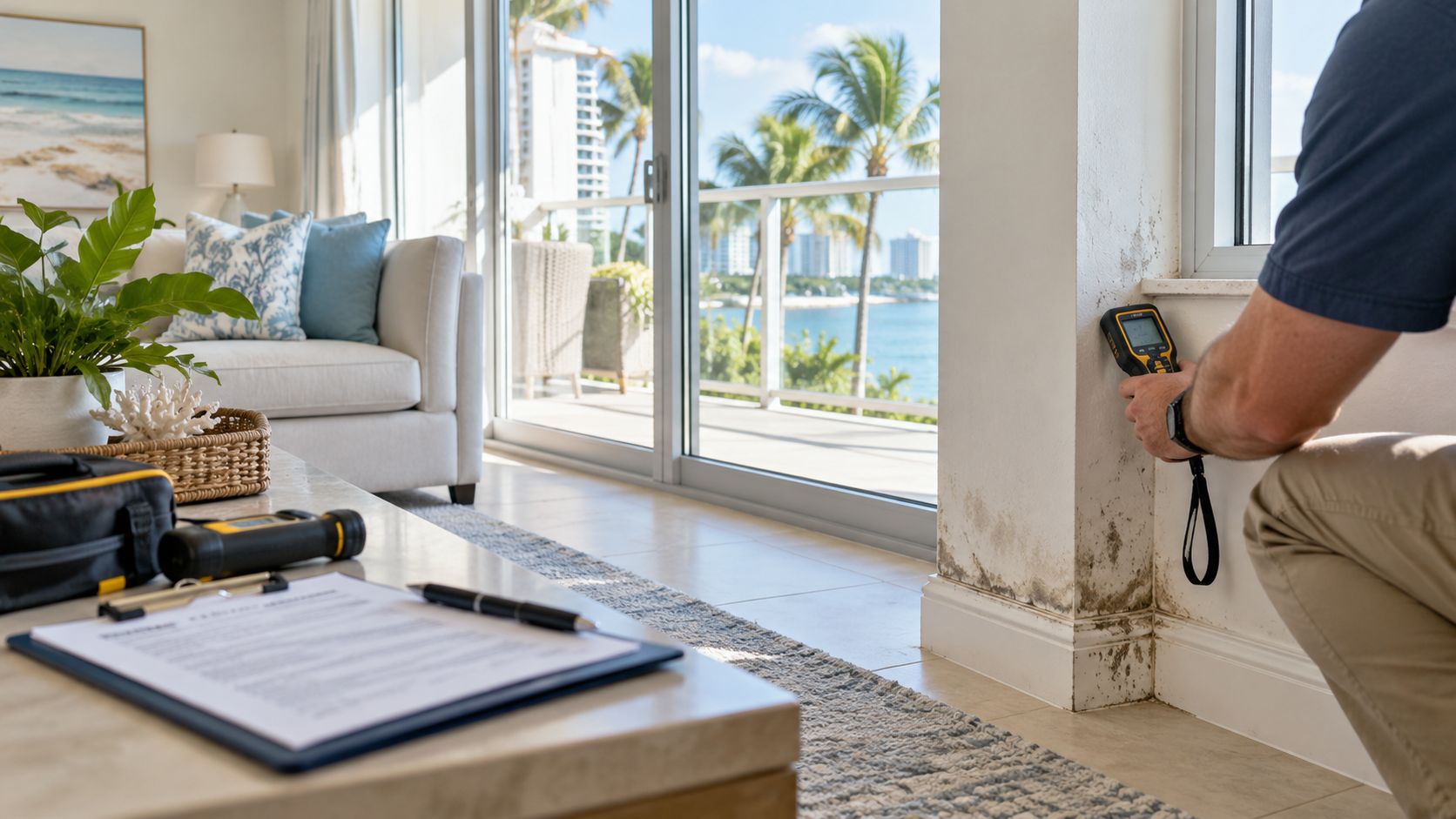
If you are unsure whether materials are actually dry, Moisture Mapping & Readings can help identify elevated moisture in areas that may not look wet from the surface. If there are also concerns about mold growth, a professional Mold Assessment Services evaluation can help determine whether additional inspection or testing is appropriate.
King tide water may disappear quickly from the street or floor, but moisture inside the property can remain much longer. The next step is understanding how quickly wet materials need attention before mold becomes a greater concern.
How Quickly Can Mold Grow After King Tide Flooding?
Mold can begin developing when building materials stay wet long enough, which is why the first 24 to 48 hours after flooding are especially important. EPA and CDC guidance recommends drying or removing wet materials within that window to help reduce the chance of mold growth.
That does not mean every damp wall or floor will automatically grow mold within exactly 24 hours. The actual risk depends on the material, temperature, humidity, how much water entered, and whether moisture remains trapped inside the structure.
What Can Increase Mold Risk After Flooding?
- Porous materials such as drywall, insulation, carpet, and wood
- High indoor humidity
- Warm temperatures
- Standing water that is not removed quickly
- Moisture trapped behind walls or beneath flooring
- Delayed drying after the water recedes
After a king tide event, the safest assumption is that materials that stayed wet may need closer evaluation, even if the surface now looks dry. Moisture Mapping & Readings can help identify areas where elevated moisture is still present, while Indoor Mold Testing may be considered if mold growth or indoor air concerns develop.
The key takeaway is simple: the faster wet materials are dried and hidden moisture is identified, the lower the chance that a moisture problem turns into a mold problem.
What Should You Check After King Tide Water Enters Your Home?
After king tide water enters a property, the first priority is not just removing the standing water. You also need to check which materials may have absorbed moisture and whether damp conditions remain in areas that are harder to see.
Even when floors and walls look dry, moisture can remain inside building materials. A careful inspection can help identify areas that need drying, monitoring, or further evaluation before mold has a chance to become a larger concern.
Areas to Inspect After King Tide Flooding
- Baseboards and lower sections of drywall
- Flooring, subflooring, and carpet padding
- Cabinets, vanities, and built-in furniture
- Wall cavities near exterior doors and windows
- Garages, storage rooms, and ground-floor spaces
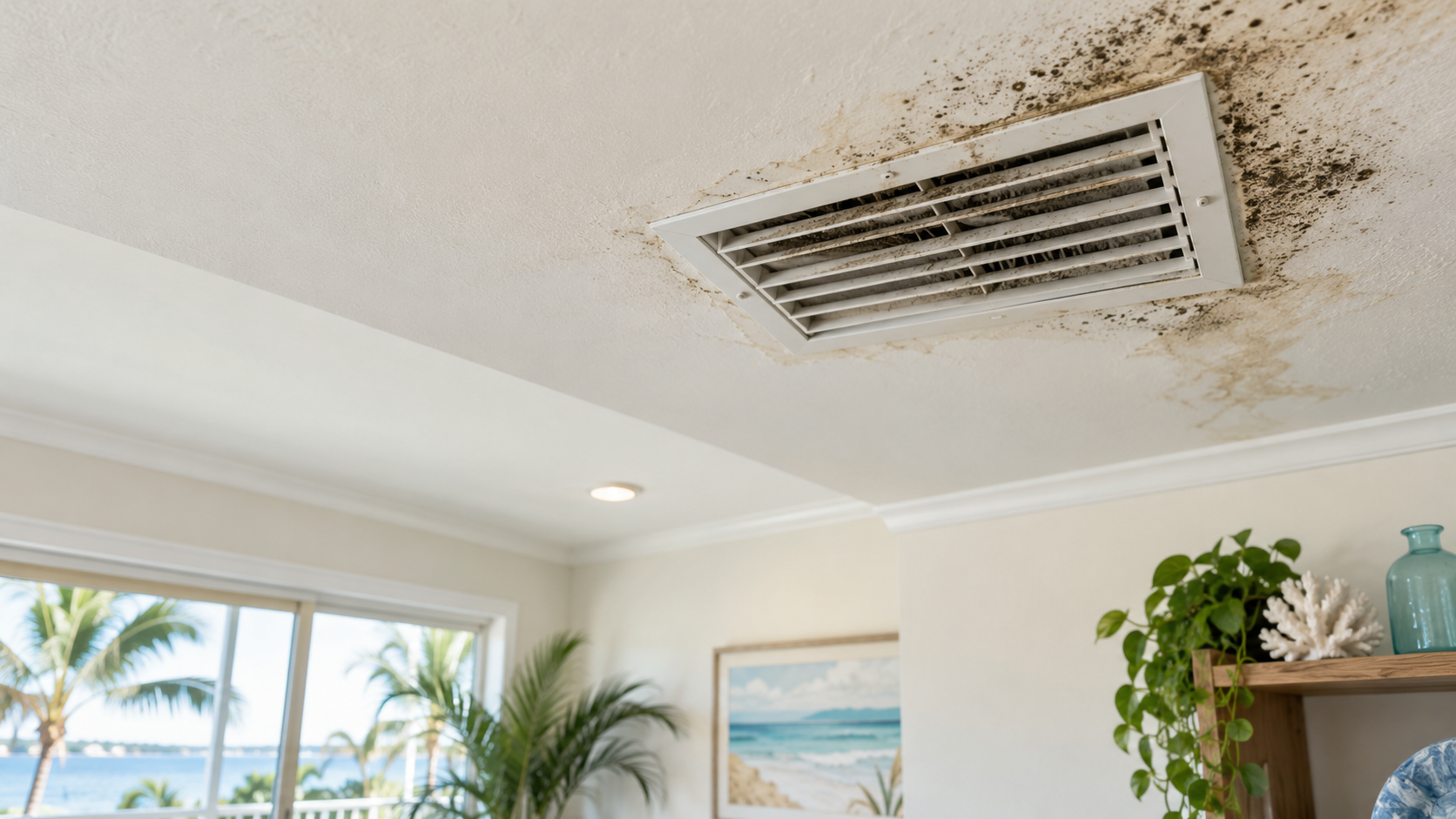
- HVAC areas and nearby insulation
- Any materials that stayed wet for several hours
If the affected areas are difficult to evaluate visually, Moisture Mapping & Readings can help identify elevated moisture that may still be present. If there are already musty odors, visible growth, or concerns about mold, a professional Mold Assessment Services evaluation may be appropriate.
The goal after king tide flooding is to confirm that the property is actually drying, not just that the visible water has receded. That distinction can make a big difference in preventing hidden moisture from turning into a mold problem.
How Do You Know If Walls and Floors Are Really Dry After King Tide Flooding?
Walls and floors can feel dry on the surface while still holding moisture underneath. After king tide flooding, that matters because drywall, wood, flooring, insulation, and other materials can absorb water and stay damp longer than expected.
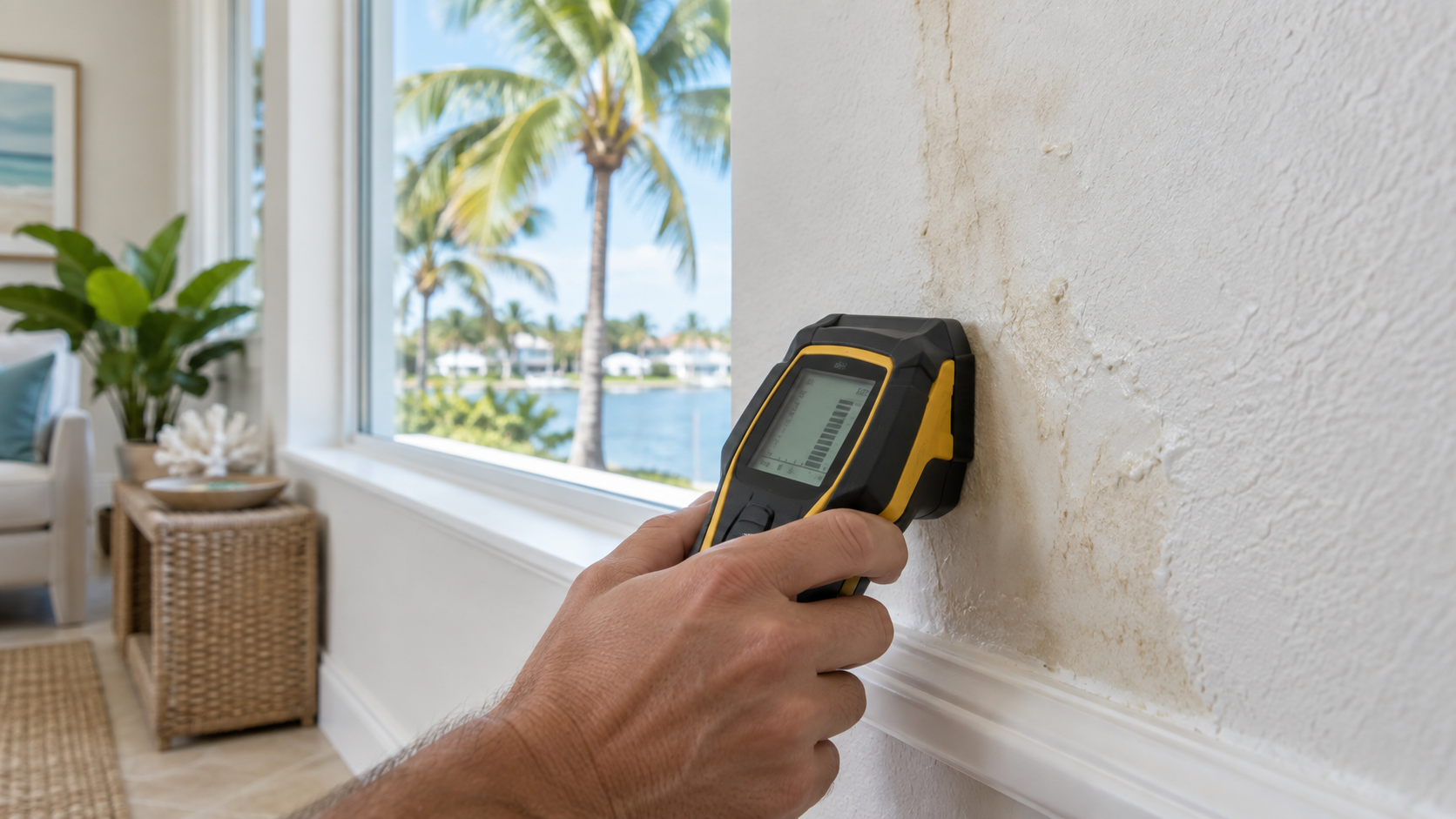
Visual checks alone may not be enough. Moisture meters and thermal imaging can help identify areas that still have elevated moisture, especially behind walls, beneath flooring, and around baseboards or exterior openings.
Signs Materials May Still Be Holding Moisture
- Flooring feels warped, swollen, or uneven
- Baseboards begin separating from the wall
- Paint bubbles, peels, or changes color
- Drywall feels soft or cool in certain areas
- Musty odors develop after the water recedes
- Condensation or dampness continues near windows or doors
- Moisture readings remain elevated compared with unaffected areas
Professional Moisture Mapping & Readings can help document where moisture is still present and whether the affected area is drying properly. If mold concerns develop alongside the moisture, Indoor Mold Testing may also be considered based on the conditions found.
The important thing is not to assume that “dry to the touch” means completely dry. After king tide flooding, confirming what is happening inside the materials can help prevent hidden moisture from becoming a longer-term mold issue.
When Should You Be Concerned About Mold After King Tide Flooding?
You should be more concerned about mold after king tide flooding when materials stayed wet for an extended period, hidden moisture remains, or new signs such as musty odors, staining, or visible growth begin to appear. Mold risk is higher when wet materials are not dried promptly or when water reaches porous materials like drywall, insulation, wood, or flooring.
Not every flooded area will automatically develop a mold problem, but the combination of moisture, South Florida humidity, and delayed drying can create favorable conditions. If the property was affected by tidal water and you are unsure how far the moisture traveled, a professional evaluation can help determine whether additional testing or moisture investigation is needed.
Warning Signs to Watch for After Flooding
- A persistent musty or damp odor
- Dark spots, staining, or discoloration on walls or ceilings
- Bubbling paint or soft drywall
- Warped flooring or swollen baseboards
- Moisture that remains elevated after drying efforts
- Visible mold growth
- Recurring dampness near doors, windows, or exterior walls
If these signs appear, a professional Mold Assessment Services evaluation can help document the conditions and determine whether Indoor Mold Testing is appropriate. If the main concern is still hidden moisture, Moisture Mapping & Readings can help identify areas that may require closer investigation.
The sooner moisture-related warning signs are evaluated after a king tide event, the easier it is to understand whether the problem is limited to damp materials or has progressed into a mold concern.
Should You Get Mold Testing After King Tide Flooding?
Mold testing may be worth considering after king tide flooding when moisture remained for an extended period, visible growth appears, musty odors develop, or the source and extent of the problem are unclear. Testing is most useful when it is part of a broader property assessment rather than used by itself.
A professional evaluation can help determine whether sampling would add useful information based on what happened during the flood event, which materials became wet, how quickly they dried, and whether hidden moisture is still present.
When Mold Testing May Be Helpful
- Musty odors develop after the water recedes
- Visible mold growth appears on walls, ceilings, flooring, or other materials
- Water reached drywall, insulation, cabinetry, or other porous materials
- Moisture remained trapped for more than a short period
- The property had previous moisture or mold concerns before the king tide event
- A Mold Assessment Services evaluation identifies areas where Indoor Mold Testing may provide additional information
Professional testing can help add context when visual inspection and moisture evaluation do not fully answer what is happening inside the property. The decision to test should be based on the actual conditions found, not simply on the fact that flooding occurred.
What Happens If Mold Is Found After King Tide Flooding?
If mold is found after king tide flooding, the next step is to understand how far the problem extends and whether moisture is still present. Mold growth should not be treated as only a surface issue if the affected materials were exposed to floodwater, water intrusion, or prolonged damp conditions.
A professional assessment can help document the visible mold, evaluate moisture levels, and determine whether a formal remediation plan is needed. Holistic Environmental Solutions does not perform mold removal, so the focus is on independent evaluation, testing, and documentation before a remediation contractor begins cleanup.
What May Happen Next
- The moisture source should be identified and corrected.
- The affected areas and materials may need to be documented.
- Moisture Mapping & Readings can help determine whether elevated moisture remains in walls, flooring, or other materials.
- A Mold Assessment Services evaluation can help define the scope of the concern.
- If professional cleanup is needed, a remediation protocol may be created for the remediation company to follow.
- After remediation, Post-Remediation Verification may be used to determine whether the treated area meets the established clearance criteria.
Finding mold after king tide flooding does not automatically mean the entire property is affected. The appropriate next step depends on how much water entered, how long materials remained wet, where moisture traveled, and what the assessment finds.
Frequently Asked Questions About King Tide Flooding and Mold
King tide flooding can leave homeowners with questions about drying, hidden moisture, and when mold becomes a concern. These answers address some of the most common questions South Florida property owners may have after tidal flooding.
Can king tide water cause mold even if it only entered briefly?
Yes. Even a short flooding event can allow porous materials such as drywall, flooring, insulation, and cabinetry to absorb moisture. The key issue is how quickly those materials are dried and whether hidden moisture remains after the visible water is gone.
How long can wet materials stay damp before mold becomes a concern?
EPA and CDC guidance recommends drying or removing wet materials within 24 to 48 hours to help reduce the chance of mold growth. That does not mean mold will always appear at exactly 24 or 48 hours, but the risk increases when materials remain damp.
Can mold grow behind walls after king tide flooding?
Yes. Water can enter wall cavities through doors, windows, exterior walls, baseboards, or other openings. Moisture Mapping & Readings can help identify elevated moisture in areas that may not be visible from the surface.
Should I test for mold immediately after flooding?
Not always. The first priority is removing water and drying affected materials. Indoor Mold Testing may be appropriate if visible mold appears, musty odors develop, moisture remains elevated, or the overall conditions warrant additional evaluation.
What if the floor looks dry but still smells musty?
A musty odor can indicate that moisture remains beneath flooring or in nearby building materials. A professional moisture evaluation may help determine whether hidden dampness is still present.
Does saltwater from a king tide change the mold risk?
The presence of saltwater does not eliminate the risk associated with wet building materials. Materials that absorb tidal water still need to be properly dried, evaluated, and addressed based on their condition.
Can a moisture inspection tell me if mold is already growing?
A moisture inspection can identify areas with elevated moisture, but it does not directly identify mold. If mold is suspected, a Mold Assessment Services evaluation or Indoor Mold Testing may provide additional information.
What should I do if mold appears after I already dried the area?
If mold appears after drying efforts, the property should be evaluated to determine whether moisture remains or whether affected materials require additional attention. If remediation is needed, an independent assessment can help document the conditions and appropriate next steps.
What South Florida Homeowners Should Do After King Tide Flooding
King tide flooding can leave behind more than visible water. Even after streets drain and floors appear dry, moisture may remain trapped inside walls, flooring, cabinetry, insulation, and other building materials. The most important step is confirming that affected areas are actually drying and watching for signs such as musty odors, staining, swelling, or visible mold growth.
For South Florida property owners, acting quickly can help prevent a short-term flooding event from becoming a longer-term moisture or mold problem. If you are unsure how far the water traveled or whether materials are still damp, a professional Moisture Mapping & Readings evaluation can help identify areas that may need further attention.
Schedule a Moisture or Mold Assessment in South Florida
Holistic Environmental Solutions provides Moisture Mapping & Readings, Mold Assessment Services, and Indoor Mold Testing throughout Miami-Dade, Broward, Palm Beach, and Monroe counties. If king tide flooding reached your home or business, our team can help evaluate moisture conditions, document areas of concern, and determine whether additional mold testing or investigation may be appropriate.
Call (786) 580-9374 or book online to receive 10% off your inspection when you schedule through the website. Getting clear information about the moisture inside your property can help you decide what next steps make sense before hidden damage becomes a larger issue.
About Holistic Environmental Solutions
Holistic Environmental Solutions provides independent mold assessment and environmental testing services throughout South Florida, including Mold Assessment Services, Indoor Mold Testing, Air Quality Testing, Moisture Mapping & Readings, Remediation Protocols, and Post-Remediation Verification. Our team serves Miami-Dade, Broward, Palm Beach, and Monroe counties, helping property owners better understand mold, moisture, and indoor air quality concerns with clear, objective findings.
Florida Licensed Mold-Related Services Assessor #MRSA5496
Recent Posts