
Our Services
Post-Remediation Verification & Mold Clearance Testing in South Florida
Independent post-remediation verification and mold clearance testing for South Florida homes and businesses. We evaluate whether treated areas meet the expected conditions for completion before reconstruction, reoccupancy, or project closeout.
What Is Post-Remediation Verification and Why Is It Important?
Post-remediation verification, often called PRV or mold clearance testing, is an independent evaluation performed after mold remediation to determine whether the treated area meets the established conditions for completion. The process may include a visual evaluation, moisture readings, and additional air or surface sampling when appropriate to document conditions after remediation and help determine whether the area is ready for reconstruction, reoccupancy, or project closeout.
How Mold Clearance Testing Works
Mold clearance testing is performed after remediation is complete and may include a visual inspection, moisture evaluation, and air or surface sampling when appropriate. Depending on the protocol and conditions present, the process may include visual inspection, moisture readings, air sampling, surface sampling, and laboratory analysis.
- Detailed Visual Inspection: Before any samples are taken, our certified technician conducts a thorough visual inspection of the contained work area. We look for any signs of remaining dust, debris, or visible mold that would indicate an incomplete cleaning. The area must be clear of all remediation-related materials.
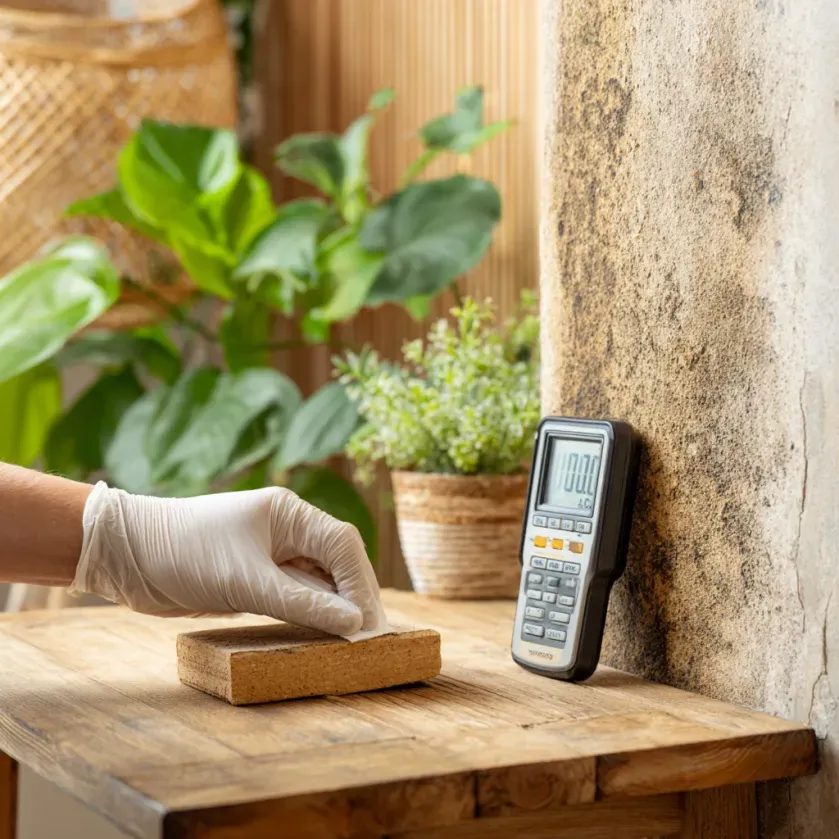
- Aggressive Air Sampling: To ensure a comprehensive test, we conduct aggressive air sampling. This involves using a leaf blower or fan to disturb the air within the contained area, forcing any settled mold spores back into the air where they can be captured by our sampling equipment. An air sample is taken from inside the containment and compared to an outdoor baseline sample—an important step in humid Florida environments.
- Surface Sampling: Where appropriate, we may collect surface samples (swabs or tape lifts) from previously contaminated areas. This helps verify that the surfaces have been cleaned effectively at a microscopic level.
- Moisture and Humidity Readings: We confirm that all materials within the work area have been thoroughly dried. Using moisture meters and hygrometers, we verify that moisture levels in structural materials and the air are back to normal, ensuring the conditions that led to mold growth in Florida are eliminated.
All samples are sent to an accredited third-party laboratory for analysis. The final report compares the indoor and outdoor samples to scientifically prove whether the post remediation verification in Florida has passed or failed.

When Should You Schedule Post-Remediation Verification?
Post-remediation verification is an important final step after professional mold remediation. It should be scheduled once the remediation contractor has completed the work, but before reconstruction, reoccupancy, or final project closeout when verification is required or appropriate. Throughout Florida, clearance testing can provide independent documentation of post-remediation conditions and help confirm whether the treated area meets the established criteria for completion.
After Any Professional Mold Remediation
This is the most common and critical time for clearance testing. It validates the contractor's work before you make the final payment.
Completing an Insurance Claim
Insurance companies often require a successful clearance report to close out a mold-related claim and release funds.
Finalizing a Real Estate Transaction
If mold remediation was performed as a condition of a sale, a passing PRV report provides the buyer with confidence and protects the seller from future liability in Florida's competitive market.
Following Tenant/Landlord Mandated Cleanups
An independent clearance test serves as unbiased proof that a landlord has fulfilled their obligation to provide a safe living environment in Florida rentals.
For Occupants with High Health Sensitivities
In homes with infants, elderly individuals, or those with compromised immune systems, PRV in Florida is a non-negotiable step to ensure the environment is safe.
When Mandated by a Remediation Protocol
A professionally written mold remediation protocol for your Florida property will always specify that passing clearance testing is the final step to successfully completing the project.
Why Mold Clearance Testing Shouldn’t Be Skipped
Skipping post-remediation verification can leave important questions unanswered about whether the treated area was properly cleaned, dried, and addressed according to the remediation scope. Independent verification can help document conditions before the project moves forward. Mold clearance testing provides an independent evaluation of the completed work and can help document conditions before repairs, reconstruction, or normal use of the space resumes.
Recurring Mold Growth
If the remediation was incomplete or the moisture source wasn't fixed, the humid Florida climate means that mold will inevitably return. This could result in paying for a second remediation project.
Ongoing Health Risks
Lingering mold spores can continue to impact the health of occupants, causing respiratory issues, allergic reactions, and other chronic symptoms, which are common concerns in Florida.
Invalidated Insurance Claims
An insurance company may refuse to pay a claim if there is no independent, third-party report to verify that the work was completed successfully in your Florida property.
Legal and Financial Liability
In a Florida real estate transaction, skipping clearance testing can lead to future lawsuits if the new owner discovers a persistent mold problem.
False Sense of Security
Believing your property is clean when it is not can delay further action, allowing hidden mold and moisture to cause more extensive structural damage over time in Florida's challenging environment.
Paying for Incomplete Work
You may end up paying a contractor in full for a job that failed to meet industry standards, leaving you with no recourse.
Professional clearance testing is your best assurance that the remediation was a success and your investment is protected.
Benefits of Independent Post-Remediation Verification
Independent post-remediation verification provides an objective evaluation of the treated area after remediation. It can help confirm whether visible conditions, moisture levels, and other completion criteria are acceptable before reconstruction or normal use resumes.
Our independent verification service offers key advantages, tailored for Florida homeowners and businesses. We deliver the data-driven confirmation needed to ensure your property has been restored to a safe and healthy environment—critical in the region’s humid and mold-prone climate.
Key Benefits:
Completely Unbiased Verification
Because we do not perform remediation, our findings are 100% objective. Our only goal is to provide you with accurate data about the condition of your Florida property.
Scientific Proof of Success
A passing clearance report is not an opinion—it is scientific evidence that the mold has been successfully removed and the air quality restored to normal levels in your Florida space.
Accountability for Your Contractor
Our testing holds your Florida remediation contractor accountable. It ensures they met the industry standard of care before you issue final payment.
Critical Legal and Financial Documentation
A PRV report is a powerful document for Florida real estate transactions, insurance claims, and legal disputes, protecting you from future liability.
Health and Safety Assurance
Our service provides peace of mind that your family, tenants, or employees are returning to a safe and healthy indoor environment in Florida.
A Definitive End to the Project
A successful clearance test provides a clear and final conclusion to a stressful remediation process, allowing you to move forward with confidence in Florida.
Don't guess if the job is done. Contact Holistic Environmental Solutions for professional post remediation verification and clearance testing in Florida.

Frequently Asked Questions About Post-Remediation Verification
Have questions about verifying a mold remediation project in Florida? This section provides expert answers to common inquiries about the post remediation verification process in the region, from what we test for to what happens if the test fails.
What is post-remediation verification?
Post-remediation verification, often called PRV or mold clearance testing, is an independent evaluation performed after mold remediation to determine whether the treated area meets the established conditions for completion. The process may include a visual inspection, moisture evaluation, and air or surface sampling when appropriate.
Is post-remediation verification the same as mold clearance testing?
Yes. Post-remediation verification and mold clearance testing generally refer to the same type of evaluation performed after remediation is complete. The purpose is to independently assess post-remediation conditions before reconstruction, reoccupancy, or project closeout.
When should mold clearance testing be performed?
Mold clearance testing should be performed after the remediation contractor has completed the work but before reconstruction or normal use resumes when verification is required or appropriate. If the project was completed using a written Mold Remediation Protocol, the verification can also evaluate whether the treated area meets the completion criteria outlined in that protocol.
Why should post-remediation verification be performed by an independent company?
An independent third party provides a separate evaluation of the remediation work rather than having the remediation contractor verify its own work. Holistic Environmental Solutions does not perform mold remediation, which helps maintain an independent assessment of post-remediation conditions.
What does post-remediation verification include?
Post-remediation verification may include a visual evaluation of the treated area, moisture readings, review of the remediation scope, and air or surface sampling when appropriate. If moisture concerns remain after remediation, Moisture Mapping may also help evaluate whether affected materials are still retaining elevated moisture.
What does “passing mold clearance” mean?
Passing mold clearance means the treated area meets the established completion criteria used for the project at the time of verification. Those criteria may include acceptable visual conditions, appropriate moisture levels, and testing results when sampling is part of the verification process.
What happens if the mold clearance test fails?
If the treated area does not meet the expected clearance criteria, additional cleaning, drying, removal, or corrective work may be needed. The remediation contractor can address the remaining concerns, and post-remediation verification can then be performed again after the corrective work is completed.
Can I tell if mold remediation was successful just by looking?
Not always. A room may appear clean while moisture or other conditions remain that are not obvious during a basic visual check. Independent PRV can include moisture evaluation and additional testing when appropriate to provide more complete documentation of post-remediation conditions.
Does passing mold clearance mean mold will never come back?
No. Passing clearance reflects the conditions observed at the time of post-remediation verification and does not guarantee that mold can never develop again. Future leaks, elevated humidity, condensation, or other moisture problems can create new conditions that support mold growth. If new moisture problems develop, Moisture Mapping or a new Mold Assessment may be appropriate.
How long does post-remediation verification take?
The length of a PRV appointment depends on the size of the remediated area, the scope of the project, and whether sampling is required. Smaller projects may require a focused evaluation, while larger or more complex remediation projects may take longer to assess properly.
How long does it take to get mold clearance test results?
If laboratory samples are collected, results are typically available after the laboratory completes its analysis, which may take a few business days depending on the type of testing performed. Once results are available, they should be reviewed together with the visual and moisture findings from the verification.
What is the difference between a mold inspection and mold clearance testing?
A mold inspection or Mold Assessment is performed to evaluate suspected mold, moisture, or indoor environmental concerns before remediation, while mold clearance testing is performed after remediation to evaluate the treated area. If mold is still being investigated rather than already remediated, Indoor Mold Testing may be the more appropriate starting point.
Do you provide mold remediation?
No. Holistic Environmental Solutions provides independent mold assessment, testing, moisture evaluation, remediation protocols, and post-remediation verification, but does not perform the remediation work itself. This separation helps preserve the independence of both the original assessment and the final verification.
Is post-remediation verification required after every mold remediation project?
Not every project is identical, so whether PRV is required can depend on the project scope, the remediation protocol, contractual requirements, insurance considerations, or other circumstances. Even when it is not specifically required, independent verification may provide useful documentation before the project is closed or reconstruction begins.