
Why Does My House Smell Musty if I Can’t See Mold?

Why Does My House Smell Musty if I Can’t See Mold?
A persistent musty smell can be frustrating when the walls, floors, and ceilings look clean. The odor may be coming from a damp area you cannot easily see, such as the space beneath flooring, inside a cabinet, or near a past leak. A smell alone cannot confirm mold or identify its source, but it is a reason to investigate moisture rather than cover up the odor.
In South Florida homes, rain, plumbing leaks, condensation, and indoor humidity can leave materials damp without an obvious puddle. If the smell keeps returning, a professional mold inspection can evaluate the area and look for moisture conditions that need attention. This guide explains where to check first, when an inspection makes sense, and how an inspector decides whether additional testing would be useful.
What should you check first when your house smells musty?
- Where the smell is strongest: Note whether it is concentrated in a closet, bathroom, kitchen, or room with a history of water damage.
- Signs of recent or past moisture: Look for stains, peeling paint, swollen baseboards, or damp materials.
- Plumbing and air-conditioning areas: Check beneath sinks, near appliances, and around vents for leaks or condensation.
- Whether the odor returns: A smell that persists after cleaning or becomes stronger after rain deserves closer investigation.
These observations can help you describe the problem, but they may not reveal moisture hidden inside building materials. Next, we’ll look at the common places a musty odor can come from when no mold is visible.
Where Can a Musty Smell Come From if There Is No Visible Mold?
A musty smell can come from moisture in an area that is difficult to see or reach. Water may remain beneath flooring, behind cabinets, or inside a wall after a leak, even when the exposed surface looks dry. The odor can also come from damp materials near an air-conditioning system, so finding the source matters more than guessing which room has mold.
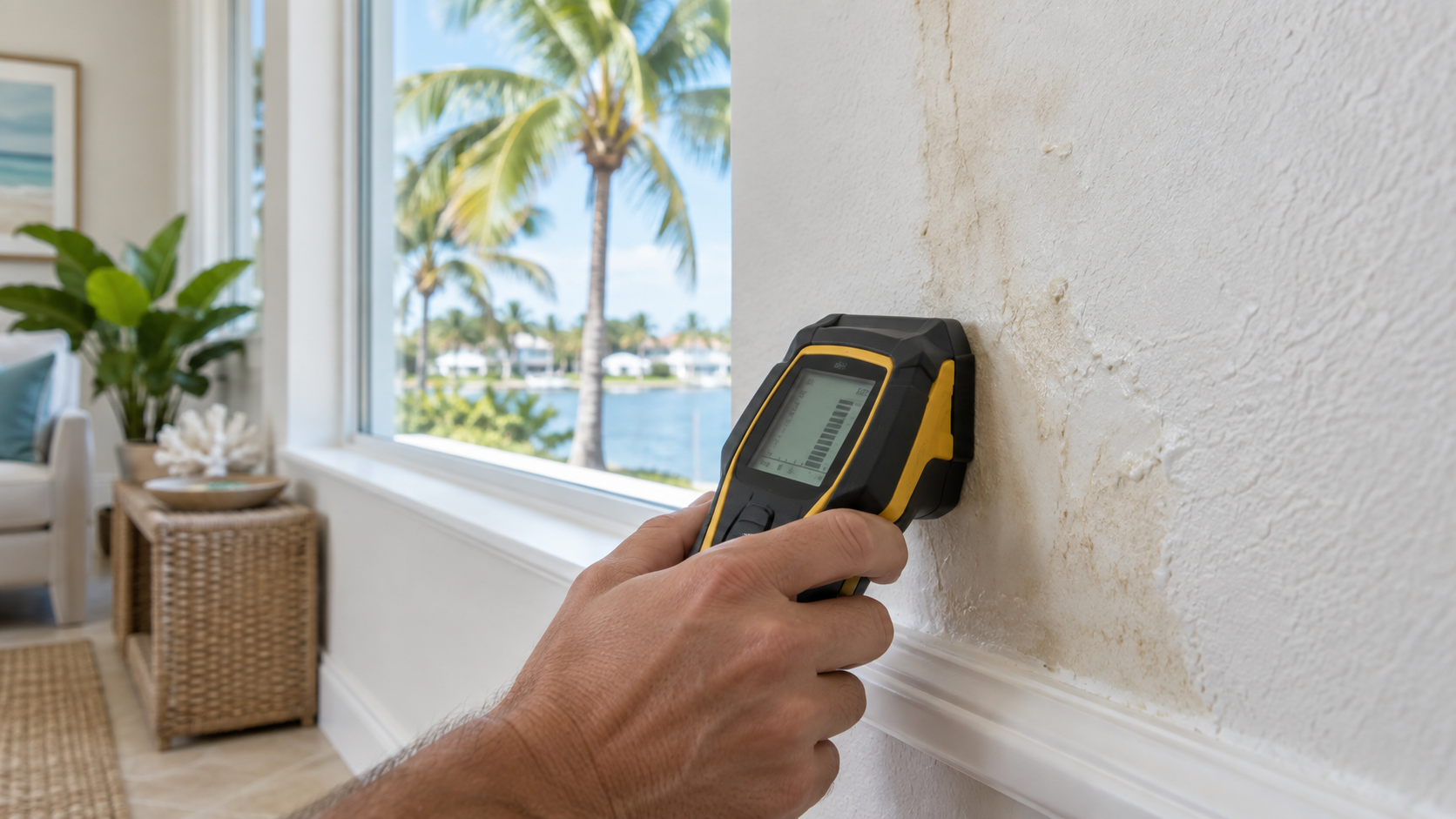
Start by noting where the smell is strongest and whether it changes after rain or when the air conditioning runs. Check for nearby clues such as staining, condensation, swollen trim, or a history of water damage. If you cannot locate the source, moisture mapping can help identify areas that need closer evaluation.
Places worth checking first
- Beneath sinks and around appliances: Slow plumbing leaks can leave cabinets or nearby materials damp.
- Around windows and exterior doors: Rainwater intrusion may affect trim or the wall beneath it.
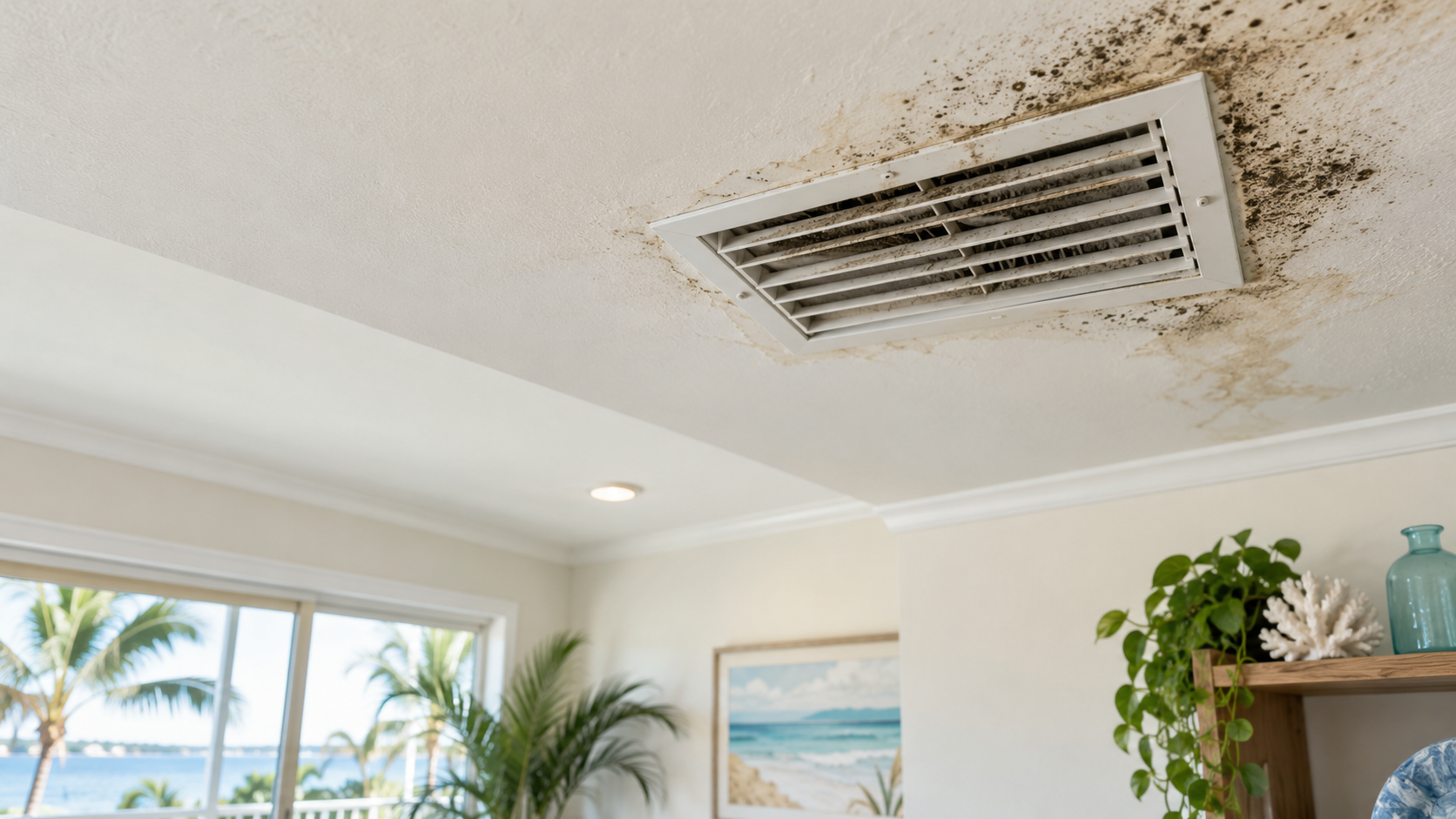
- Near air-conditioning equipment and vents: Condensation or drainage issues can create damp conditions.
- Below flooring and along baseboards: Moisture may remain trapped after a leak or spill.
- Ceilings and walls near past leaks: A repaired leak does not always mean every affected material dried completely.
A musty smell does not tell you exactly what is growing or where the moisture began. The next step is to look for patterns that help you decide whether to keep investigating yourself or schedule a professional inspection.
When Should You Schedule a Mold Inspection for a Musty Smell?
Consider scheduling an inspection when the odor persists, returns after cleaning, or is strongest near an area with past water damage. A musty smell alone cannot confirm mold, but a recurring odor with no clear source is worth investigating. An inspector can evaluate visible conditions and look for moisture that may be hidden beneath or behind surfaces.
You may also want an inspection if the smell becomes stronger after rain or when the air conditioning runs, especially if you notice staining or damp materials nearby. For homeowners in Davie, mold testing in Davie is available when an assessment indicates that sampling would provide useful information. The inspection findings help determine whether testing is appropriate and what needs attention next.
Signs it is time for a closer look
- The odor keeps returning after you clean or ventilate the room.
- You cannot find the source, even after checking accessible plumbing, windows, and air-conditioning areas.
- There was a previous leak or water event, and you are unsure whether affected materials dried completely.
- You see moisture clues such as recurring stains, condensation, or swollen baseboards.
- The smell is limited to one area, which may help an inspector narrow the investigation.
If you recognize one or more of these patterns, write down when and where you notice the smell before your appointment. Next, we’ll explain what happens during an inspection and how the findings guide the decision to test.
What Happens During a Mold Inspection for a Musty Smell?
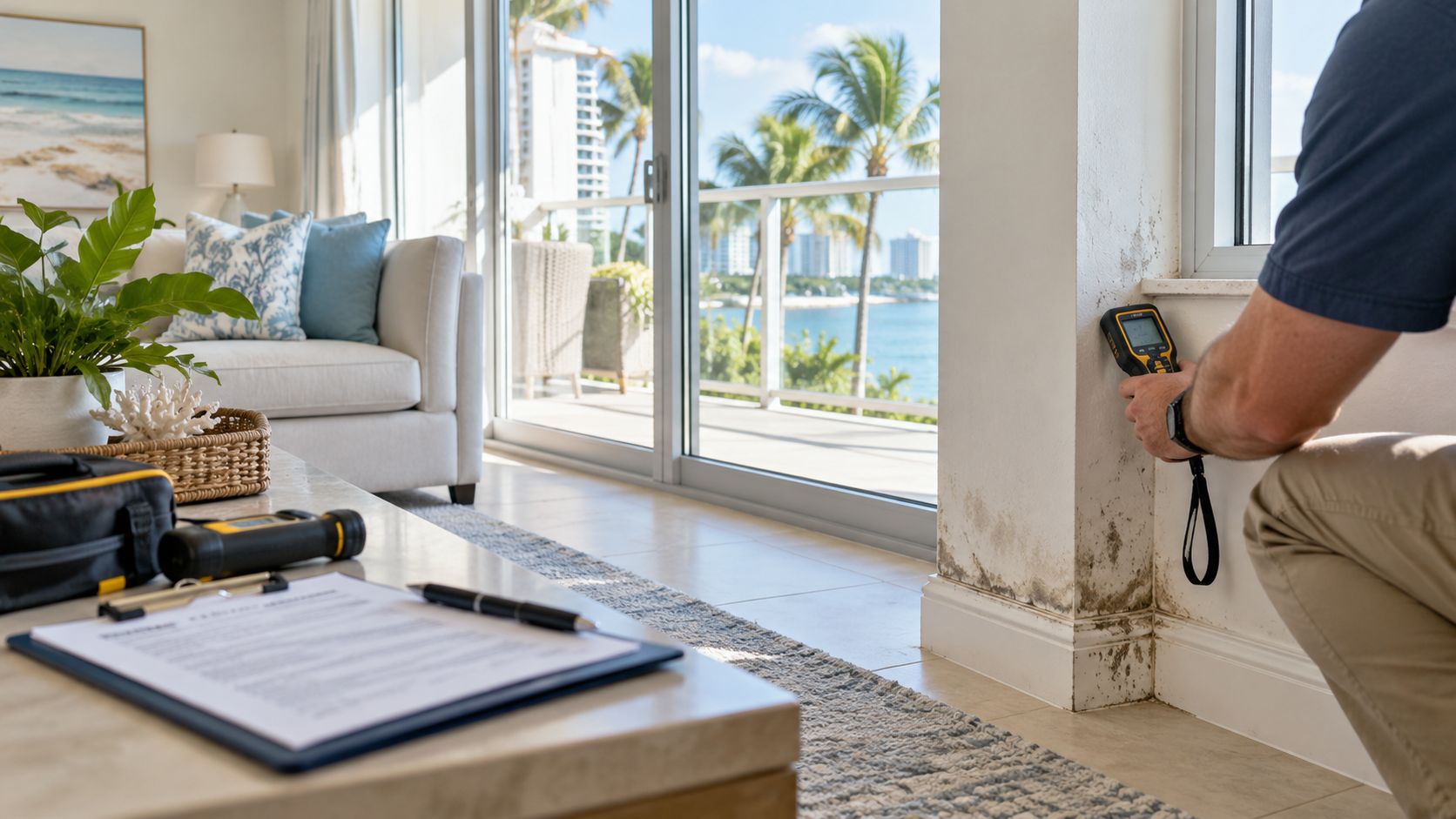
A mold inspection starts with the concern you have noticed: where the odor is strongest, when it began, and whether the property has had a leak or water damage. The inspector examines accessible areas for visible growth, staining, condensation, and other signs of moisture. This helps narrow down where the smell may be coming from, even if nothing unusual is visible at first glance.
The inspector may use moisture readings to identify materials that need closer attention. Those readings help locate damp conditions, but they do not confirm mold on their own. After evaluating the property, the inspector can explain the findings and whether indoor mold testing would provide useful additional information.
What should you tell the inspector?
- Where you notice the odor: Identify the rooms or specific areas where it is strongest.
- When it occurs: Mention if the smell is stronger after rain, when the air conditioning runs, or after a room has been closed.
- Any water damage history: Share details about past plumbing leaks, roof leaks, flooding, or appliance problems.
- Changes you have noticed: Point out recurring stains, condensation, peeling paint, or swollen materials.
- What you have already tried: Explain whether cleaning, drying, or ventilation made any difference.
An inspection helps turn a vague odor concern into a clearer picture of the property’s moisture conditions. Next, we’ll look at when mold testing may help and why it is not automatically needed for every musty smell.
Do You Need Mold Testing if Your House Smells Musty?
A musty smell does not automatically mean you need an air sample. The first priority is to investigate the odor and any moisture that may be causing it. If an inspection finds visible mold or a clear water problem, those findings may already be enough to guide the next steps.
Testing may be useful when the source remains unclear and the results would help answer a specific question about the property. An inspector can explain what type of sample, if any, makes sense based on the areas of concern. If air sampling is recommended, our guide to airborne mold testing explains how it works and what the results can tell you.
Questions to ask before testing
- What question will the test answer? Sampling should have a clear purpose.
- Has the moisture source been investigated? A sample will not locate or repair a leak.
- Where would samples be taken? The location should relate to the odor or other findings.
- How will the results be interpreted? Ask how the report will inform your next decision.
Whether testing is recommended or not, resolving a moisture problem is essential if one is found. Next, we’ll look at practical steps you can take while you arrange an inspection or address the source of the odor.
What Should You Do While Investigating a Musty Smell?
Start by looking for a water source you can safely access. Check beneath sinks, around appliances, near windows, and anywhere you have noticed staining or condensation. If you find an active leak, arrange to have it repaired and dry the affected area promptly. Moisture control is central to preventing indoor mold growth.
Pay attention to whether the odor changes after rain, when the air conditioning runs, or when a room has been closed for several hours. Make a note of where the smell is strongest and photograph any visible water damage. These details can help an inspector focus the evaluation if the odor continues and you cannot identify its source.
Steps you can take now
- Check for active leaks: Look around plumbing, appliances, windows, and the air-conditioning unit.
- Dry accessible wet areas: Address recent water damage as soon as possible.
- Note when the smell appears: Record changes after rain or while the air conditioning is running.
- Document visible changes: Photograph stains, condensation, peeling paint, or swollen materials.
- Avoid covering up the odor: Fragrance may mask the smell without resolving the underlying moisture problem.
If the smell persists after the obvious sources have been checked, the next step is to have the affected area evaluated. The final section will answer common homeowner questions about musty odors and hidden mold.
Frequently Asked Questions About a Musty Smell With No Visible Mold
A musty odor raises questions because it can persist even when there are no visible spots to inspect. The smell may point to damp materials or hidden growth, but it does not identify the cause by itself. The answers below can help you decide what to check and when to seek a closer evaluation.
Can a house smell musty without having mold?
Yes. Damp materials and other moisture problems may cause an odor, so the smell alone does not confirm mold.
Can mold be present if I cannot see it?
Yes. Growth can occur in concealed areas, including behind walls or beneath flooring, particularly where moisture has remained after a leak
Will cleaning or an air freshener solve the problem?
It may temporarily reduce the smell, but the odor can return if damp materials or an active leak remain.
Should I buy a home mold test kit?
A kit may produce a result without showing where the moisture is coming from or what needs to be fixed. Our guide to home mold test kits versus professional mold testing explains the difference.
Who should I call if the smell keeps returning?
If you cannot find the source, a mold assessor can inspect the affected areas, evaluate moisture conditions, and explain whether sampling would help.
The most useful next step is to identify and address the source of moisture, if one is present. In the conclusion, we’ll show South Florida homeowners how to get help with a persistent musty odor.
Get Answers About the Musty Smell in Your Home
A musty smell that keeps returning deserves a closer look, even when you cannot see mold. The source could be moisture beneath flooring, behind a wall, or near a past leak. Finding where the moisture is coming from helps you understand what needs attention.
Holistic Environmental Solutions can inspect the areas of concern and explain whether mold testing would provide useful information. We serve homeowners in Davie and throughout South Florida. You can tell us where you notice the odor, when it began, and whether your home has had water damage.
Schedule a Mold Inspection
Call (786) 580-9374 or use the form below to discuss the musty smell in your home. Book your inspection through the website to receive 10% off.
About Holistic Environmental Solutions
Holistic Environmental Solutions provides independent mold assessment and environmental testing services throughout South Florida, including Mold Assessment Services, Indoor Mold Testing, Air Quality Testing, Moisture Mapping & Readings, Remediation Protocols, and Post-Remediation Verification. Our team serves Miami-Dade, Broward, Palm Beach, and Monroe counties, helping property owners better understand mold, moisture, and indoor air quality concerns with clear, objective findings.
Florida Licensed Mold-Related Services Assessor #MRSA5496
Recent Posts