
10 Signs You Need a Mold Inspection in South Florida
Mold problems are not always obvious. In many South Florida homes, the first warning sign may be a musty odor, recurring moisture, or a stain that keeps returning after it has been cleaned. Because mold can grow behind walls, beneath flooring, and inside ceilings, visible growth is only one of several signs that your property may need evaluation by a certified mold inspector.
South Florida’s warm, humid climate creates ideal conditions for mold, especially after roof leaks, plumbing problems, flooding, or prolonged indoor humidity. Ignoring early warning signs can allow moisture and mold growth to spread, leading to more extensive property damage and indoor air quality concerns.
In this guide, we’ll explain 10 common signs that may indicate you need a mold inspection in South Florida, what a professional inspector looks for, and when additional testing may be recommended. Recognizing these signs early can help you take action before a small moisture problem becomes a much larger issue.

Why Mold Problems Are Common in South Florida
South Florida’s warm temperatures, frequent rainfall, and high humidity create ideal conditions for mold growth throughout the year. Even when a home appears dry, moisture can collect behind walls, beneath flooring, around windows, or inside air-conditioning systems.
Several conditions make South Florida properties especially vulnerable:
- High Humidity
Indoor humidity can remain elevated for long periods, especially when ventilation is poor or air-conditioning systems are not removing enough moisture. - Heavy Rain and Storms
Roof leaks, window intrusion, and flooding can allow water to enter the home and remain trapped in hidden building materials. - Plumbing Leaks
Slow leaks beneath sinks, behind walls, or near appliances may go unnoticed until staining, odors, or visible mold appear. - Condensation
Moisture can form around windows, vents, ducts, and other cool surfaces when warm, humid air comes into contact with them. - Previous Water Damage
Even after a leak is repaired, materials that were not dried completely may continue to support hidden mold growth.
Because these conditions are so common, homeowners should pay attention to changes in odor, appearance, humidity, and indoor comfort. The following warning signs can help you determine when it may be time to schedule a professional mold inspection.
1. Persistent Musty Odors
A persistent musty or earthy smell is one of the most common signs of hidden mold. Even when no visible growth is present, mold may be developing behind drywall, beneath flooring, inside cabinets, or around areas affected by moisture.
These odors are often strongest in bathrooms, kitchens, closets, laundry rooms, and rooms with poor ventilation. They may also become more noticeable after heavy rain, when the air-conditioning system turns on, or when a room has been closed for an extended period.
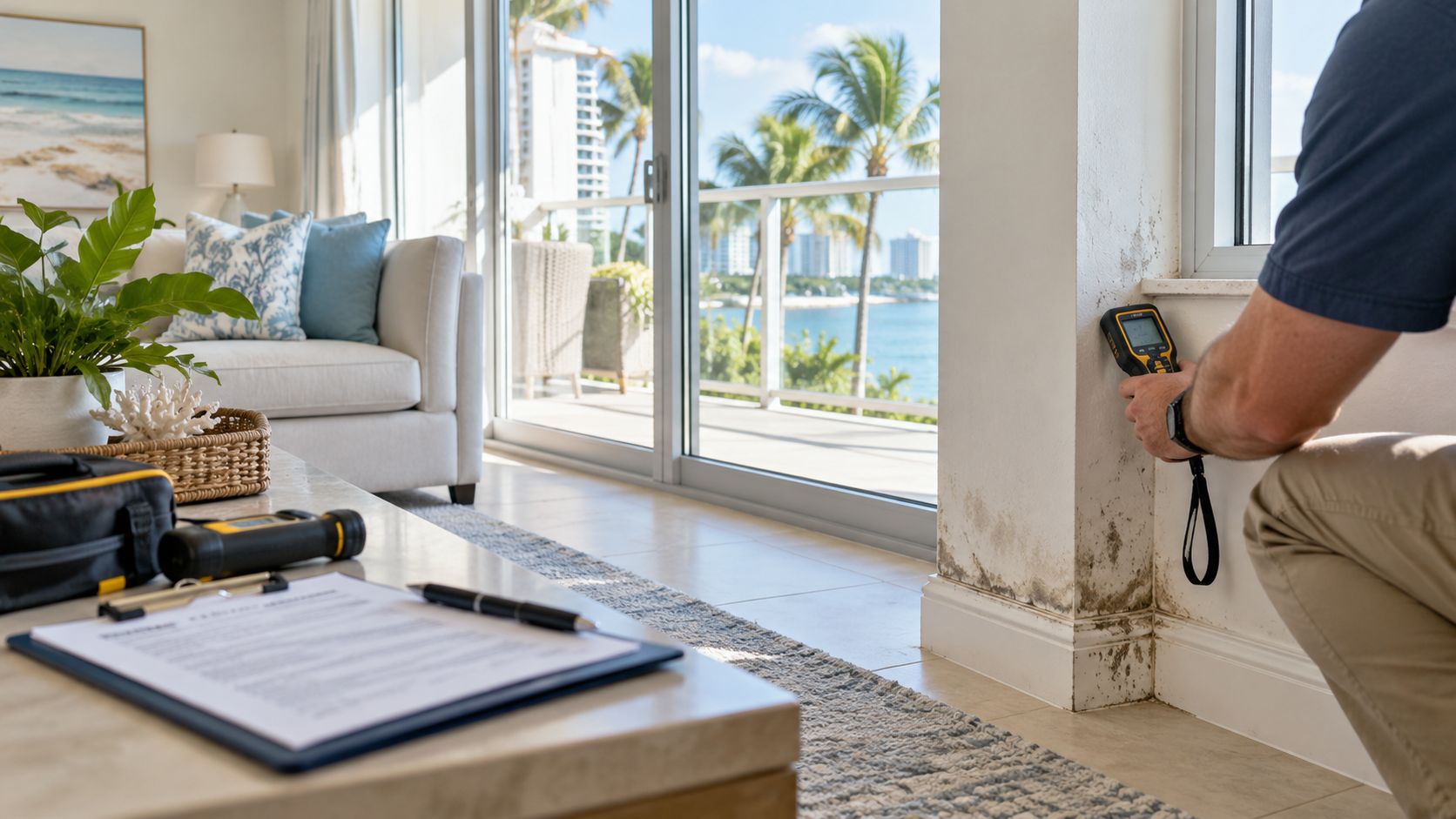
If the odor continues after cleaning and airing out the space, a professional inspection can help identify the source. During the evaluation, Moisture Mapping & Readings can be used to locate elevated moisture in areas that may not be visible from the surface.
A musty smell should not be ignored simply because mold cannot be seen. Hidden moisture and concealed mold growth can continue to spread until the underlying source is identified and corrected.
2. Recent Water Damage or Flooding
Water damage can create mold-friendly conditions even after the visible water has been removed. Roof leaks, plumbing failures, appliance overflows, storm intrusion, and flooding can allow moisture to soak into drywall, insulation, flooring, and other porous materials.
In South Florida’s warm climate, damp building materials may begin supporting mold growth quickly when they are not dried thoroughly. A surface can appear dry while moisture remains trapped underneath or inside nearby structural materials.
You may need a mold inspection after water damage if:
- The affected area remained wet for an extended period
- Drywall, flooring, or cabinets feel soft, warped, or swollen
- Staining or discoloration appears after the area was cleaned
- A musty odor develops days or weeks after the water event
- You are unsure whether all hidden moisture was removed
A professional Moisture Mapping & Readings service can help identify where water entered the property and whether moisture remains in concealed areas .Finding these conditions early can reduce the risk of hidden mold growth and prevent the damage from spreading.
3. Visible Staining or Discoloration
Dark spots, water stains, peeling paint, or unusual discoloration on walls and ceilings can be signs of moisture intrusion or mold growth. Mold does not always appear black or green. Depending on the surface and conditions, it may look gray, white, brown, or even orange.
Pay close attention to staining around:
- Ceilings beneath rooflines or upstairs bathrooms
- Walls near windows and exterior doors
- Baseboards and flooring near plumbing fixtures
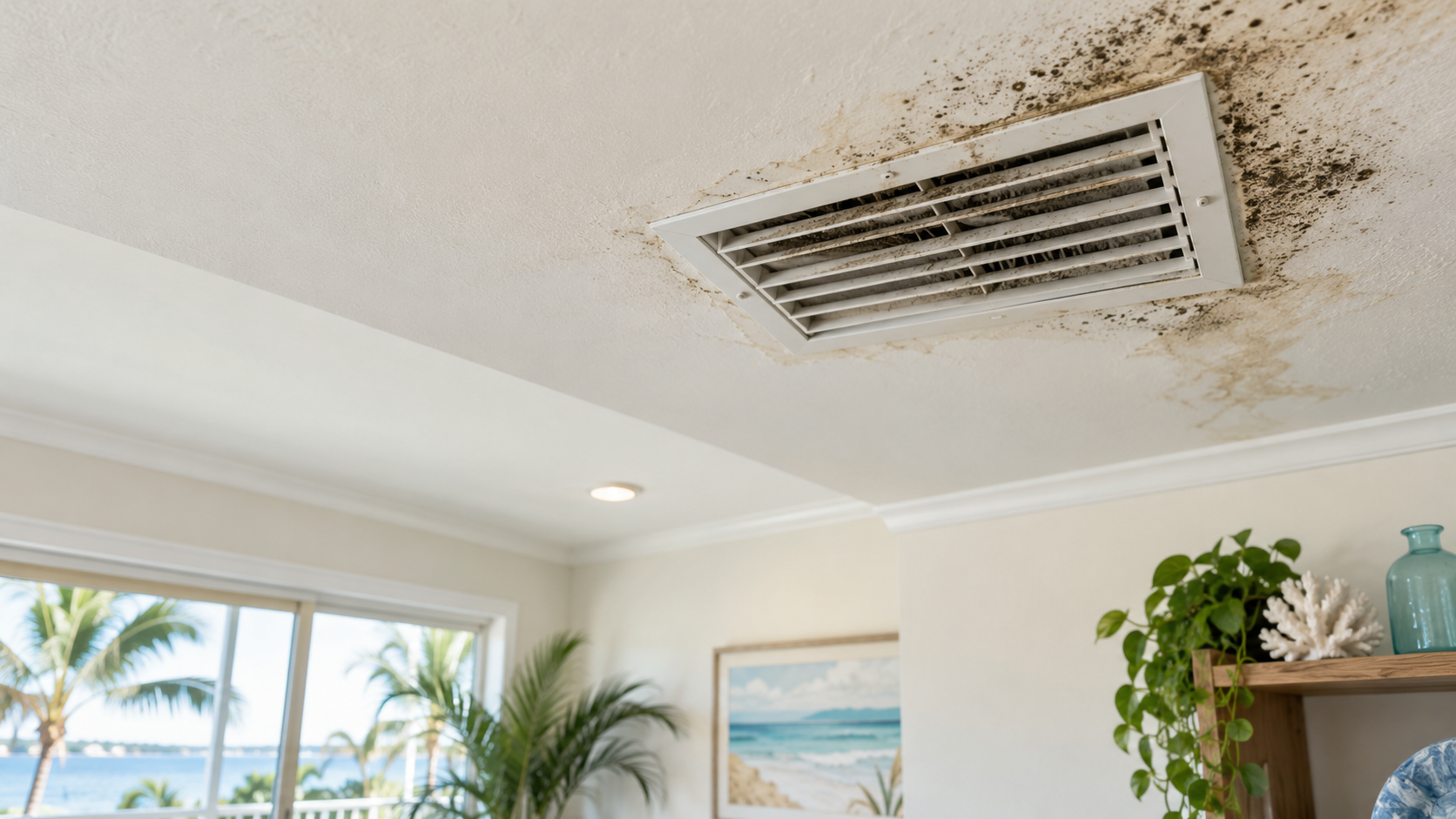
- Areas surrounding air-conditioning vents
- Cabinets beneath sinks or around appliances
Not every stain is mold, but recurring or spreading discoloration should be evaluated. A professional inspection can determine whether the area is simply stained or if moisture is still present behind the surface.
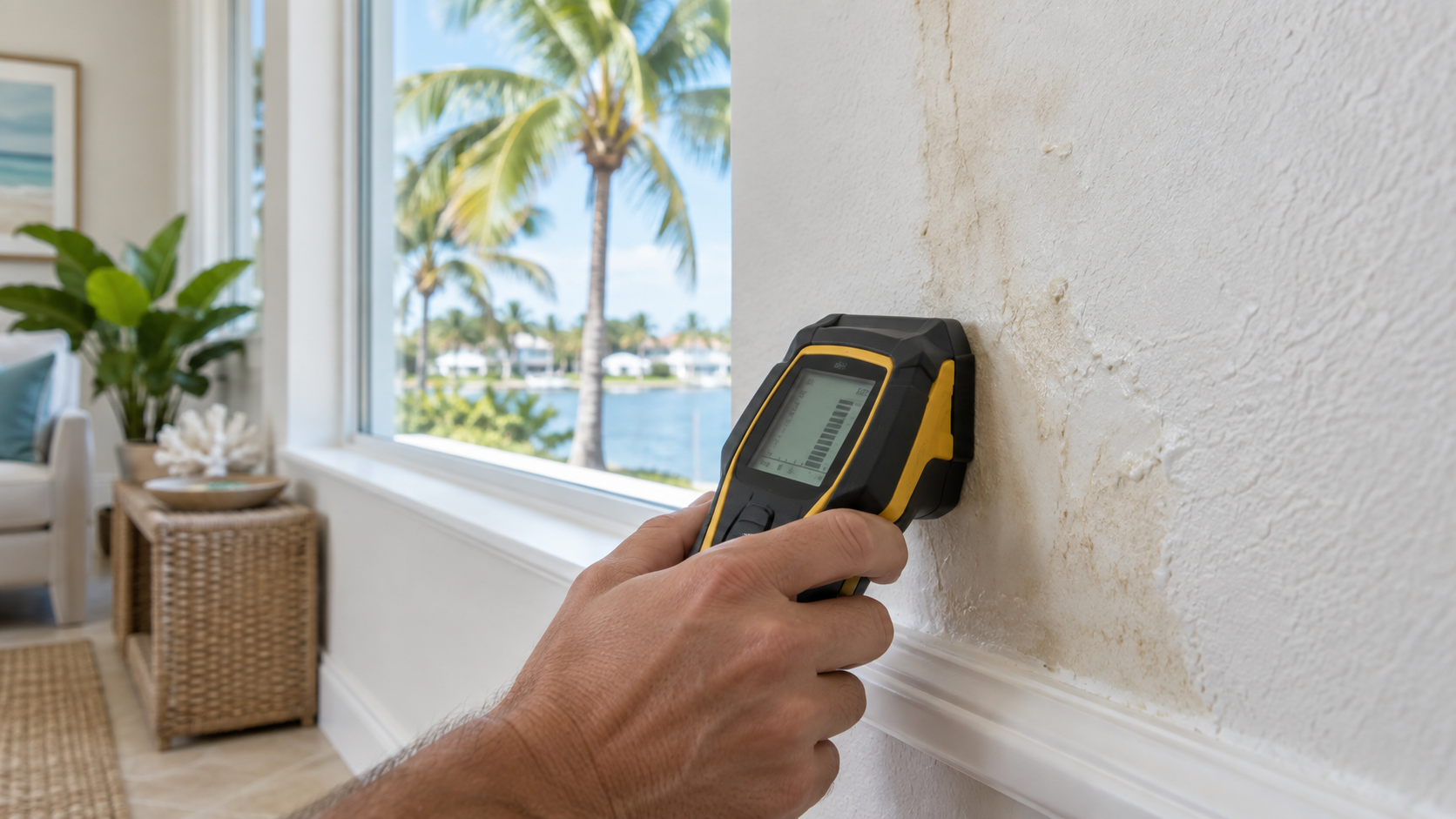
If the staining appears after a leak or continues to return after cleaning or repainting, Moisture Mapping & Readings can help identify hidden moisture that may be contributing to the problem.
4. Mold That Keeps Returning After Cleaning
Mold that returns after being cleaned is usually a sign that the underlying moisture problem has not been corrected. Wiping or treating the visible surface may temporarily improve its appearance, but it will not stop mold from returning if moisture remains behind the wall, beneath the flooring, or within nearby building materials.
Recurring mold is commonly found around bathroom ceilings, air-conditioning vents, windows, baseboards, sinks, and other areas exposed to humidity or water. You may also notice that the affected area becomes worse during rainy weather or periods of high indoor humidity.
Consider scheduling a mold inspection in South Florida if:
- Mold returns within days or weeks of cleaning
- The affected area continues to spread
- Paint begins bubbling, peeling, or discoloring
- A musty odor remains after the surface is cleaned
- You cannot identify the source of the moisture
A professional inspection can evaluate the affected area, identify conditions contributing to the recurring growth, and determine whether additional testing is appropriate. Addressing the source of moisture is essential because cleaning the surface alone will not prevent the problem from returning.
5. Consistently High Indoor Humidity

High indoor humidity can create the right conditions for mold growth even when there has not been an obvious leak or flood. In South Florida, humidity can build up quickly when air-conditioning systems are not removing enough moisture, ventilation is poor, or certain rooms remain closed for long periods.
Common signs of excessive indoor humidity include:
- Condensation on Windows
Moisture collecting on windows or glass doors can indicate that the indoor air is holding too much humidity. - Damp or Sticky Indoor Air
Rooms may feel uncomfortable, heavy, or warmer than expected even when the air conditioning is running. - Recurring Moisture in Bathrooms or Closets
Poor airflow can allow humidity to remain trapped in enclosed spaces. - Warped Wood or Peeling Paint
Excess moisture can cause building materials and finishes to swell, separate, or deteriorate. - Musty Odors Without Visible Mold
A persistent odor may indicate hidden moisture or mold growth behind surfaces.
If your home remains humid despite normal air-conditioning use, a professional mold inspection in South Florida can help determine whether moisture is collecting in hidden areas or contributing to indoor mold growth. An inspection can also help identify whether additional testing is needed to better understand the condition of the indoor environment.
6. Warped Walls, Ceilings, or Flooring
Warping, bubbling, swelling, or soft spots can indicate that moisture has become trapped inside building materials. Even when there is no visible mold, these changes may point to an ongoing leak, past water damage, or condensation affecting the area.
Watch for signs such as:
- Bubbling or Peeling Paint
Paint may separate from the wall when moisture builds up beneath the surface. - Sagging or Stained Ceilings
This can indicate a roof leak, plumbing issue, or moisture collecting above the ceiling. - Swollen Baseboards or Cabinets
Wood and composite materials often expand when they absorb water. - Buckled or Warped Flooring
Laminate, wood, and vinyl flooring may lift or shift when moisture becomes trapped underneath. - Soft Drywall
Walls that feel soft, spongy, or unusually cool may require further evaluation.
These changes should not be ignored, especially if they continue to worsen or appear after a leak. A professional mold inspection can help determine whether hidden moisture is present and whether mold may be developing behind the affected materials.
7. Condensation Around Windows, Vents, or Air Ducts
Frequent condensation can be a warning sign that excess moisture is collecting inside the home. While occasional condensation may occur, moisture that repeatedly forms around windows, air-conditioning vents, or ductwork can create damp conditions that support mold growth.
Pay attention to signs such as:
- Water Droplets on Windows
Condensation that regularly collects on glass, frames, or window sills may indicate elevated indoor humidity. - Dark Marks Around Air Vents
Discoloration near vents may be caused by dust, moisture, or possible mold growth and should be evaluated if it continues to spread. - Damp Walls Near Ductwork
Moisture can develop when cold air ducts come into contact with warm, humid air. - Peeling Paint or Swollen Trim
Repeated condensation can damage paint, drywall, baseboards, and window framing over time. - Musty Odors When the AC Runs
An odor that becomes stronger when the air-conditioning system turns on may indicate moisture or mold within nearby materials or ductwork.
Condensation alone does not confirm mold, but recurring moisture should not be ignored. A professional mold inspection can help determine whether the affected areas are simply damp or if hidden mold growth may be developing nearby.
8. Unexplained Indoor Air Quality Concerns
Sometimes the warning signs of a mold problem are connected more to how the home feels than to anything visibly growing on a wall. Persistent odors, stale air, or discomfort that seems worse indoors may indicate that moisture or airborne contaminants are affecting the indoor environment.
Common concerns may include:
- Persistent Musty or Stale Air
An odor that remains even after cleaning and ventilation may point to hidden moisture or mold growth. - Symptoms That Feel Worse Indoors
Some occupants may notice allergy-like irritation, coughing, congestion, or discomfort that improves after leaving the property. - Rooms That Feel Damp or Heavy
Certain areas may feel noticeably more humid or uncomfortable than the rest of the home. - Odors That Increase When the AC Runs
This can suggest that moisture or contaminants are present near vents, ducts, or concealed building materials. - Recurring Dust or Discoloration Around Vents
While this does not automatically confirm mold, repeated buildup combined with moisture or odor concerns may require further evaluation.
A professional mold inspection can help determine whether moisture conditions or hidden growth may be contributing to the problem. When airborne concerns are present, Indoor Mold Testing may also be recommended to evaluate mold spore levels and provide a clearer picture of the indoor environment.
9. Buying a Home With a History of Leaks or Water Damage

A home may look clean and well maintained while still hiding moisture problems from a previous roof leak, plumbing failure, flood, or air-conditioning issue. Fresh paint and new flooring can improve the appearance of a property, but they do not always confirm that the underlying materials were properly dried or repaired.
Before purchasing a South Florida home, watch for signs such as:
- Recent Repairs or Fresh Paint in One Area
A newly painted wall or ceiling may be completely routine, but it is worth asking whether the area was repaired because of a previous leak. - Water Stains or Discoloration
Marks around ceilings, windows, cabinets, or baseboards may indicate past or ongoing moisture intrusion. - Warped Flooring or Swollen Trim
Changes in wood, laminate, cabinetry, or baseboards can suggest that the materials were previously exposed to water. - Musty Odors in Closed Rooms
Closets, bathrooms, and rooms with limited airflow may reveal odors that are less noticeable during a quick walkthrough. - Incomplete Information About Previous Damage
If the seller cannot provide clear details about past leaks, drying, or repairs, an independent inspection can offer valuable information before closing.
Scheduling a mold inspection in South Florida before purchasing a property can help uncover visible concerns, hidden moisture, and conditions that may require further evaluation. The findings can give buyers a clearer understanding of the home’s condition and help them make a more informed decision before finalizing the purchase.
10. Signs of Hidden Moisture Behind Surfaces
Hidden moisture can remain behind walls, beneath flooring, or inside ceilings long after a leak appears to have dried. Because these areas are concealed, the first warning signs may be subtle changes in the surrounding materials rather than visible water or mold.
Watch for signs such as:
- Walls That Feel Cool or Damp
A section of drywall that feels noticeably cooler or damp compared with nearby areas may indicate moisture behind the surface. - Peeling, Bubbling, or Cracking Paint
Moisture can cause paint and wall coverings to separate as pressure builds beneath the surface. - Loose Flooring or Soft Spots
Flooring that lifts, shifts, or feels soft underfoot may be affected by moisture trapped underneath. - Swollen Baseboards or Cabinetry
Wood and composite materials often expand or become distorted after absorbing water. - Recurring Stains After Repairs
A stain that returns after repainting may indicate that the source of moisture was never fully corrected.
A professional mold inspection can evaluate these areas using moisture meters and thermal imaging equipment. Thermal Imaging Moisture Detection can help identify temperature patterns associated with possible hidden moisture, although additional readings are usually needed to confirm what is happening behind the surface.
Finding hidden moisture early can help homeowners address the source before it causes greater property damage or creates conditions that support concealed mold growth.
Frequently Asked Questions About Mold Inspections in South Florida
Not every mold concern is easy to identify. Homeowners may notice a musty odor, recurring moisture, or changes in their walls and flooring without knowing whether mold is present. These frequently asked questions explain when to schedule a professional mold inspection in South Florida, what the process may include, and when mold testing could provide additional information.
How do I know if I need a mold inspection?
You may need a mold inspection if your home has persistent musty odors, visible discoloration, recurring mold growth, high indoor humidity, warped building materials, or a history of water damage. A professional mold inspection in South Florida can help determine whether hidden moisture or conditions that support mold growth are present.
An inspection may also be beneficial when purchasing a home, investigating a previous leak, or trying to understand why mold keeps returning after cleaning.
Can mold grow inside my home even if I cannot see it?
Yes. Mold can grow behind drywall, beneath flooring, above ceilings, inside cabinets, and around plumbing or air-conditioning components. Because these areas are concealed, homeowners may notice odors or moisture-related damage before seeing visible mold.
Professional mold inspection experts may use moisture meters and thermal imaging equipment to identify areas that require further evaluation. These tools do not confirm mold by themselves, but they can help locate hidden moisture that may be contributing to mold growth.
Does a musty smell always mean there is mold?
A musty smell does not automatically confirm mold, but it often indicates excess moisture or damp building materials. If the odor continues after cleaning and ventilation, a professional mold inspection can help identify whether the source is hidden mold, a moisture problem, or another indoor environmental concern.
The odor may become more noticeable after heavy rainfall, when the air conditioning turns on, or inside enclosed areas such as closets and bathrooms.
What is included in a professional mold inspection?
A professional mold inspection in Florida may include a visual evaluation of the property, moisture readings, thermal imaging, identification of possible water intrusion, and recommendations based on the findings.
The exact scope depends on the property and the reason for the inspection. If additional information is needed, the inspector may recommend air or surface sampling as part of professional mold testing.
Is mold testing included with a mold inspection?
Mold inspection and mold testing are related, but they are not always included as one service. An inspection focuses on evaluating the property, locating moisture, and identifying conditions that may support mold growth. Testing involves collecting air or surface samples for laboratory analysis.
Testing may be recommended when mold is suspected but cannot be seen, when indoor air quality is a concern, or when documentation is needed for a real estate transaction, insurance claim, or remediation project.
Can a mold inspection detect moisture behind walls?
A mold inspection can help identify signs of moisture behind walls using specialized tools such as moisture meters and thermal imaging cameras. Thermal Imaging Moisture Detection may reveal temperature differences that suggest possible dampness behind drywall, ceilings, or flooring.
Because thermal imaging does not directly detect mold or water, inspectors typically confirm suspicious areas using additional moisture readings and a visual evaluation.
How long does a mold inspection take?
The length of a mold inspection depends on the size of the property, the number of areas being evaluated, accessibility, and the complexity of the concern. A smaller residential inspection may take a few hours, while larger homes and commercial properties may require more time.
A thorough inspection should not be rushed. The inspector needs enough time to evaluate visible conditions, investigate possible moisture sources, and explain the findings clearly.
Should I schedule a mold inspection before buying a home?
Scheduling a mold inspection before buying a home can help uncover moisture problems, visible mold, previous water damage, and conditions that may require further evaluation. This can be especially valuable when purchasing property in South Florida, where humidity, storms, plumbing leaks, and roof damage can create hidden moisture issues.
Buyers seeking a mold inspection in Miami, Broward County, Fort Lauderdale, or Palm Beach County should consider having the property evaluated before closing, particularly when there is a known history of leaks or flooding.
What happens if mold is found during the inspection?
If mold or conditions supporting mold growth are identified, the inspector may recommend correcting the moisture source, completing additional testing, or developing a remediation plan. The next steps depend on the location and extent of the concern.
For larger or more complex mold problems, Mold Remediation Protocols may be prepared to outline the affected areas, recommended containment procedures, and scope of work for the remediation company.
How do I choose a mold inspection company in South Florida?
Look for a company that provides a detailed inspection process, uses professional moisture-detection equipment, clearly explains its findings, and recommends testing only when it adds meaningful value.
Experienced mold inspection professionals should help you understand the condition of the property without using fear-based sales tactics. The goal of the inspection should be to identify potential moisture and mold concerns so you can make an informed decision about the next steps.
Protect Your Home with a Professional Mold Inspection
Recognizing the warning signs of mold early can help prevent a small moisture issue from becoming a larger and more expensive problem. Musty odors, recurring stains, water damage, high humidity, warped materials, and hidden moisture are all reasons to take a closer look at the condition of your property.
At Holistic Environmental Solutions, we provide professional mold inspection and mold testing services for homes and businesses throughout South Florida. Our team evaluates visible concerns, moisture conditions, and areas that may require additional testing so you can understand what is happening and make informed decisions about the next steps.
If you suspect mold or want peace of mind after water damage, call (786) 580-9374 to speak with our team. You can also fill out our online contact form to receive 10% off your mold inspection when you schedule through the website.
Do not wait for visible mold to spread. Schedule a professional mold inspection in South Florida and get clear answers about the condition of your property.
About Holistic Environmental Solutions
Holistic Environmental Solutions provides independent mold assessment and environmental testing services throughout South Florida, including Mold Assessment Services, Indoor Mold Testing, Air Quality Testing, Moisture Mapping & Readings, Remediation Protocols, and Post-Remediation Verification. Our team serves Miami-Dade, Broward, Palm Beach, and Monroe counties, helping property owners better understand mold, moisture, and indoor air quality concerns with clear, objective findings.
Florida Licensed Mold-Related Services Assessor #MRSA5496
Recent Posts