
After a Plumbing Leak, Do You Need Moisture Mapping or Mold Testing?
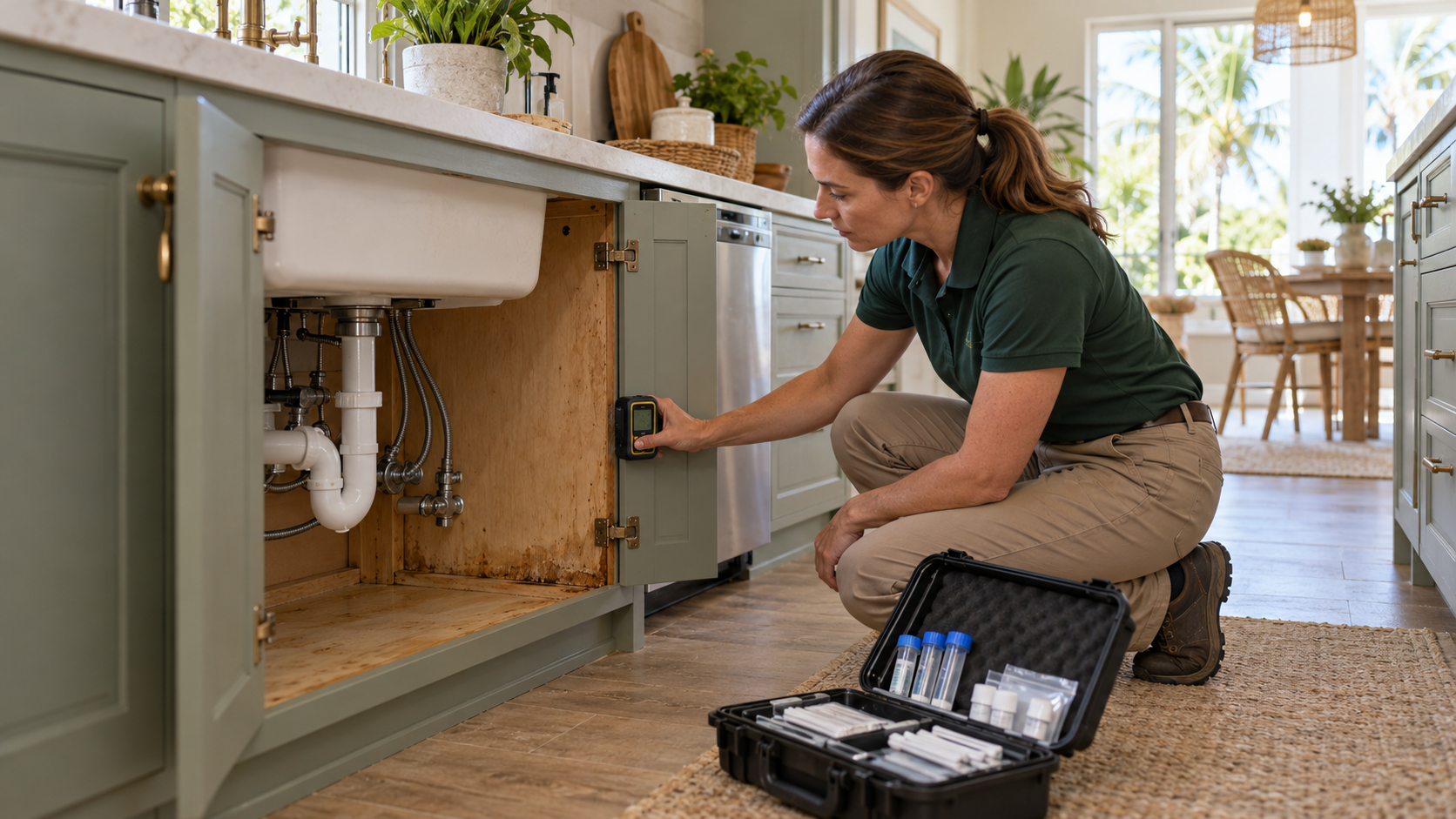
You open the cabinet beneath your kitchen sink and find a slow drip and a swollen shelf. After the plumbing repair, should you check for moisture or test for mold? Moisture mapping investigates damp building materials; mold testing analyzes samples when a specific mold question needs answering. Depending on the damage and findings, one service, both, or neither may be necessary.
Visible water removal does not establish that concealed materials are dry. Holistic Environmental Solutions provides moisture mapping and mold testing in South Florida to help property owners choose an assessment that addresses their concern.
After a Plumbing Leak, Should You Get Moisture Mapping or Mold Testing?
Start with the unanswered question. If you need to know where materials may still be damp, discuss moisture mapping. If suspected growth or persistent odors need investigation, discuss a mold assessment, with sampling only when useful.
Tell the professional about:
- The leak’s known or possible duration.
- Damp materials and areas where water may be concealed.
- Visible or suspected growth and recurring odors.
- Previous water damage or repeated moisture problems.
An assessment can help establish whether testing would change the next decision. The two services provide different kinds of evidence, as explained below.
What Is Moisture Mapping?
Moisture mapping measures and documents moisture patterns at identified locations in building materials. It helps investigate where water may have traveled and which accessible areas warrant attention after a leak.
How Does Professional Moisture Mapping Work?
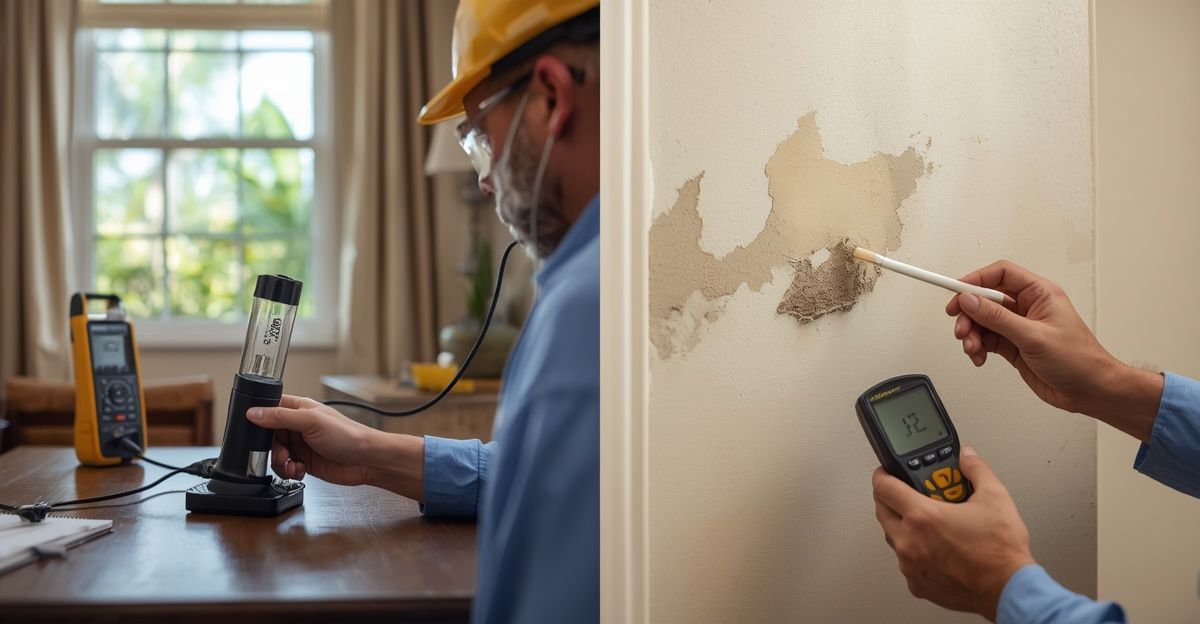
Inspectors may combine observations, moisture meters, humidity readings, and thermal imaging. Holistic’s professional moisture mapping services use these methods as appropriate to the property and scope.
Thermal cameras show surface temperature differences, not water or mold directly. As FLIR explains, suspicious temperature patterns need verification with a moisture meter. The reported leak location helps guide where those checks begin.
Where Can Hidden Moisture Develop After a Plumbing Leak?
Water may affect adjoining materials as well as the location where it first becomes visible. Areas worth discussing include:
- Behind drywall and within affected wall assemblies.
- Beneath flooring and around cabinets.
- Near fixtures, supply lines, and drains.
- Inside ceilings or adjoining rooms below the leak.
Access and construction affect what can be evaluated. Our guide to moisture mapping after water damage discusses these locations in more detail.
What Can Moisture Mapping Tell You?
Readings can document moisture concerns in checked locations and support decisions about drying or further investigation. Interpretation depends on the material, instrument, and comparison information.
Mapping does not identify mold or guarantee that every concealed area was assessed. Likewise, current dry readings do not establish that a material was never wet. That distinction matters when considering a separate mold investigation.
What Is Mold Testing After Water Damage?
Professional mold testing collects samples for analysis to answer a defined mold-related question. It is one possible component of an assessment, which also considers observations, moisture conditions, and leak history. Holistic offers indoor mold testing using air and surface sampling where appropriate.
When Might Mold Testing Be Appropriate After a Leak?
Sampling may help when an assessor needs additional information about suspected growth or environmental conditions. Persistent odors, uncertain leak duration, recurring intrusion, and concealed affected areas justify investigation, but do not automatically require samples.
Ask what the proposed test would clarify. EPA’s sampling guidance notes that visible mold usually does not require sampling. An inspection may therefore establish the next action without a laboratory test.
What Types of Mold Testing May Be Used?
Air sampling collects airborne material during a defined sampling period. Surface sampling examines material from a particular location. The method should follow the assessment question and accessible conditions.
Neither method is required at every inspection. If concerns also involve chemical odors or other airborne pollutants, ask about the scope of indoor air quality testing; a mold-only sample does not evaluate every indoor-air concern.
What Can Mold Testing Results Tell You?
Laboratory analysis may describe mold structures or groups detected and, depending on the method, reported counts. Interpretation needs the sampling locations, conditions, and inspection findings.
Results describe the collected samples, not every hidden surface. A low or negative air result cannot rule out concealed growth, and results are not a medical diagnosis. The comparison below keeps these limits alongside each service’s purpose.
Moisture Mapping vs. Mold Testing: What’s the Difference?
Moisture mapping evaluates moisture conditions; mold testing evaluates collected mold-related samples. Neither substitutes for the other, and neither performs leak repair or cleanup.
| Feature | Moisture Mapping | Mold Testing |
|---|---|---|
| Primary purpose | Investigate moisture patterns | Answer a defined mold-sampling question |
| What is evaluated | Accessible building materials and moisture conditions | Air or material collected at selected locations |
| Tools or methods | Moisture meters; thermal imaging and humidity readings as appropriate | Air or surface sampling as appropriate |
| Typical situations | Uncertain drying or extent of water intrusion | Suspected mold needing additional information |
| Information provided | Documented locations and readings | Method-dependent laboratory findings |
| Limitations | Does not identify mold or assess every concealed area | Does not map every moisture source or rule out hidden growth |
| Laboratory analysis | Not ordinarily part of moisture readings | Generally involved for collected mold samples |
For example, an air sample cannot document whether the cabinet base has dried. A moisture reading cannot identify material growing on it. Choose the method that addresses the unresolved question.
When Might You Need Both Moisture Mapping and Mold Testing?
Both may be useful when there are separate questions about remaining moisture and suspected mold. An assessor should explain the purpose of each rather than automatically bundling them.
Consider these hypothetical situations:
- A slow bathroom-wall leak or damaged kitchen cabinet: mapping may investigate adjacent moisture; targeted sampling might clarify uncertain surface material.
- Repeated leaks or moisture beneath flooring: evaluate the water pattern and history before deciding whether samples add useful information.
- A repaired leak with continuing musty odors: investigate unresolved conditions, including areas outside the original repair, before choosing tests.
Uncertainty about how far water traveled may justify moisture evaluation alone. The appropriate scope depends on findings, not simply the location of the leak.
How Soon Should You Investigate Moisture After a Plumbing Leak?
Address water intrusion promptly. Arrange safe leak repair and appropriate drying without waiting for mold test results. EPA’s moisture guidance recommends drying wet materials within 24–48 hours to help prevent mold growth; this is a prevention target, not a guarantee or a fixed timetable for growth.
Once immediate hazards are addressed, discuss concealed moisture or materials that are not drying as expected with the appropriate professional. Continue monitoring for renewed dampness, stains, or odors after repairs.
What Are the Signs of Hidden Moisture After a Plumbing Leak?
Changes in appearance, texture, or odor can justify further investigation when the cause or extent is unclear. Watch for:
- Musty odors or persistent dampness.
- Staining, discoloration, or repeated water marks.
- Peeling paint or bubbling drywall.
- Warped flooring or swollen cabinetry.
- Unexplained moisture around plumbing fixtures.
These signs do not automatically confirm mold or an active leak. Document their locations and timing so a professional can interpret them alongside the repair history.
Can a Plumbing Leak Cause Mold Behind Walls or Under Floors?
Yes. Persistent moisture can support mold growth on suitable materials behind finishes or beneath flooring. Concealed surfaces may be difficult to inspect, even when the visible side looks unchanged. Our article on water damage and hidden mold explains common affected locations.
A visual assessment is limited by access, and samples cannot check every cavity. Avoid opening walls or lifting finishes yourself to investigate suspected mold. Discuss appropriate access and further evaluation with the professionals involved.
What Should You Do After Discovering a Plumbing Leak?
Separate immediate repair and drying needs from questions that an assessment can answer. Use this checklist to coordinate the response:
- Stop the water if safe, or contact a qualified plumber.
- Keep clear of electrical or structural hazards and obtain appropriate assistance.
- Photograph visible damage when safe.
- Arrange suitable water removal and drying.
- Discuss whether moisture may remain concealed.
- Request professional moisture evaluation when the extent is uncertain.
- Consider a mold assessment if findings or history raise concerns.
- Keep repair, drying, and inspection records together.
Holistic provides testing and assessment, not plumbing repairs, restoration, or mold removal. If a separate contractor later performs remediation, mold clearance testing may be relevant before reconstruction, depending on the project.
How to Choose a Moisture Mapping or Mold Testing Company in South Florida
Look for relevant qualifications, experience investigating moisture-related property concerns, and clear explanations of scope. Ask which areas will be evaluated, how findings will be documented, and whether laboratory analysis would answer a useful question.
Compare proposals by the work included, not the test name alone. Discuss written reporting, access limitations, local building conditions, and independence from remediation. Holistic’s mold assessment services can help evaluate mold and moisture concerns; the company does not perform remediation. Confirm the recommended scope before booking.
Frequently Asked Questions About Moisture Mapping and Mold Testing After a Plumbing Leak
Property owners often have questions about hidden moisture, inspection timing, and whether mold testing adds useful information after a leak. These answers help distinguish the services and clarify what to discuss before scheduling an evaluation.
Do I need mold testing after a plumbing leak?
Not every plumbing leak requires mold testing. A promptly addressed leak with no continuing concerns may not need sampling. When odors, suspected growth, or uncertain moisture history remain, start with an assessment and ask whether a sample would change the recommended next step.
What is the difference between moisture mapping and mold testing?
Moisture mapping documents moisture conditions in checked materials, while mold testing analyzes collected samples. Mapping may help investigate where water remains; samples may clarify a specific mold concern. Neither service repairs the leak, and neither alone provides a complete assessment of every concealed area.
Can moisture mapping detect mold behind walls?
Moisture mapping does not directly detect or confirm mold behind walls. It can identify moisture patterns that warrant closer investigation. A professional interprets those findings with the leak history and visible conditions, then determines whether additional access or targeted mold sampling would be useful.
How do I know if water damage caused mold?
You may need a professional assessment to evaluate suspected mold after water damage. A stain or musty odor alone does not establish the cause. The assessor considers observations, moisture history, and relevant sampling when needed; results cannot establish that every hidden surface is unaffected.
How soon should moisture be checked after a plumbing leak?
Check moisture concerns as soon as practical once immediate safety issues are addressed. Do not delay leak repair or necessary drying while waiting for an inspection. A professional evaluation may be useful when materials remain damp or the extent of concealed water intrusion is uncertain.
Can mold grow under flooring after a plumbing leak?
Yes, mold can grow beneath flooring when moisture and suitable materials are present. The finished surface may conceal the affected area. Tell the assessor about flooring changes and leak history, and avoid pulling up materials yourself to investigate suspected mold without appropriate professional guidance.
Does a musty smell mean there is mold?
A musty smell can suggest a moisture or mold concern, but it does not confirm the source. Persistent odors deserve investigation, particularly after a leak. Explain where and when the smell occurs so the assessor can evaluate relevant conditions before deciding whether samples are appropriate.
Is mold testing necessary if the leak has already been repaired?
Not automatically. Repairing the leak stops that source, but it does not establish whether affected materials dried or whether a separate mold concern remains. Discuss lingering odors, damage, and available drying records. A moisture review or broader assessment may be more useful than immediate sampling.
Can thermal imaging detect hidden moisture?
Thermal imaging can reveal temperature patterns that suggest areas needing moisture checks. It does not independently confirm water, identify mold, or see through walls. Inspectors interpret thermal findings alongside observations and moisture-meter readings, with limitations related to the surface and inspection conditions.
Should I get moisture mapping before mold testing?
Often, evaluating moisture and property history helps determine whether mold sampling is useful, but there is no universal required order. The assessments may occur during the same visit when justified. Ask the provider which unanswered question each proposed service will address for your property.
Can a small plumbing leak cause hidden water damage?
Yes. A small leak can repeatedly wet nearby materials, particularly when it remains unnoticed. The visible puddle may not show the full affected area. Document when the leak was found and repaired, and seek evaluation if dampness, swelling, staining, or odors continue afterward.
Where can I schedule professional moisture mapping or mold testing in South Florida?
You can request an evaluation from Holistic Environmental Solutions for properties in its South Florida service areas, including Miami-Dade, Broward, Palm Beach, and Monroe counties. Explain the leak location, repair status, and continuing concerns so the team can discuss an appropriate scope before scheduling.
You do not need to choose the exact test before calling. Start with what happened, what has been repaired, and what remains uncertain.
Concerned About Hidden Moisture After a Plumbing Leak? Get Answers From Holistic Environmental Solutions
Understanding the difference between moisture mapping and mold testing helps you choose an evaluation that answers your property’s actual question. Moisture findings can guide investigation of damp materials, while appropriate sampling may add information about suspected mold.
Holistic Environmental Solutions helps South Florida homeowners and property managers evaluate these concerns independently of cleanup work. Call (786) 580-9374 or schedule an assessment. Share your leak history and repair records to take the next step toward an informed plan for your property.
About Holistic Environmental Solutions
Holistic Environmental Solutions provides independent mold assessment and environmental testing services throughout South Florida, including Mold Assessment Services, Indoor Mold Testing, Air Quality Testing, Moisture Mapping & Readings, Remediation Protocols, and Post-Remediation Verification. Our team serves Miami-Dade, Broward, Palm Beach, and Monroe counties, helping property owners better understand mold, moisture, and indoor air quality concerns with clear, objective findings.
Florida Licensed Mold-Related Services Assessor #MRSA5496
Recent Posts