
Failed Mold Clearance Test? What to Do Before Retesting
If your property fails mold clearance testing, ask for the written findings, identify which completion criteria were not met, and have the appropriate contractor address those conditions before retesting. Coordinate the follow-up evaluation with an independent assessor before covering the affected area with new finishes. Repeating an air sample alone does not resolve an unfinished cleanup or moisture problem.
A failed result can disrupt a repair schedule, especially when new drywall, flooring, or tenants are waiting. The most useful next step is to turn the report into specific questions and documented corrective work. This guide helps South Florida homeowners and property managers organize that process.
What Does a Failed Mold Clearance Test Actually Mean?
A failed clearance result means the evaluated area did not meet one or more of the project’s established completion criteria at the time of the evaluation. The issue may involve visible conditions, moisture findings, or sampling results when sampling is included. Ask the assessor to identify the exact basis for the conclusion.
The terms clearance testing and post-remediation verification are often used together. Verification can include more than laboratory samples: it considers the condition of the work area and the applicable completion criteria. For an overview of the initial process, see our mold clearance testing guide.
A failed finding in one area does not automatically establish that every room needs remediation. It also does not identify who is responsible for every problem. The report’s locations, observations, and scope matter. Use those details to define the next step rather than assuming the entire project must start over.
What Should You Request Before Scheduling Another Test?
Request the complete verification report and an explanation of its conclusions before booking a repeat visit. A verbal statement that the property failed leaves too many questions unanswered. You need to know which area was evaluated, what was found, and what must be addressed before another evaluation is useful.
Build a Small Project File
Keep the relevant records together so the assessor and remediation contractor are working from the same information. Ask for copies of the following where they exist:
- The original assessment and written remediation scope or protocol.
- The clearance report, photographs, and locations of unresolved findings.
- Laboratory results and sample locations if samples were collected.
- Available drying records and documentation of leak repairs.
- A written description of the corrective work proposed by the contractor.
Ask the assessor to distinguish a documented failure from an area that could not be evaluated because access or information was missing. Those situations may require different follow-up work. Our guide on how to read mold test results can help you understand the laboratory portion without treating it as the entire assessment.
Once the findings are clear, connect each concern to the person responsible for addressing it and the evidence needed at the next visit.
Which Findings Need Attention Before Retesting?
The corrective plan should follow the actual findings. More cleaning will not fix a continuing leak, and another sample will not establish that an inaccessible area was properly addressed. Ask for a location-specific plan rather than a general promise to try the test again.
| Reported concern | Question to resolve before retesting |
|---|---|
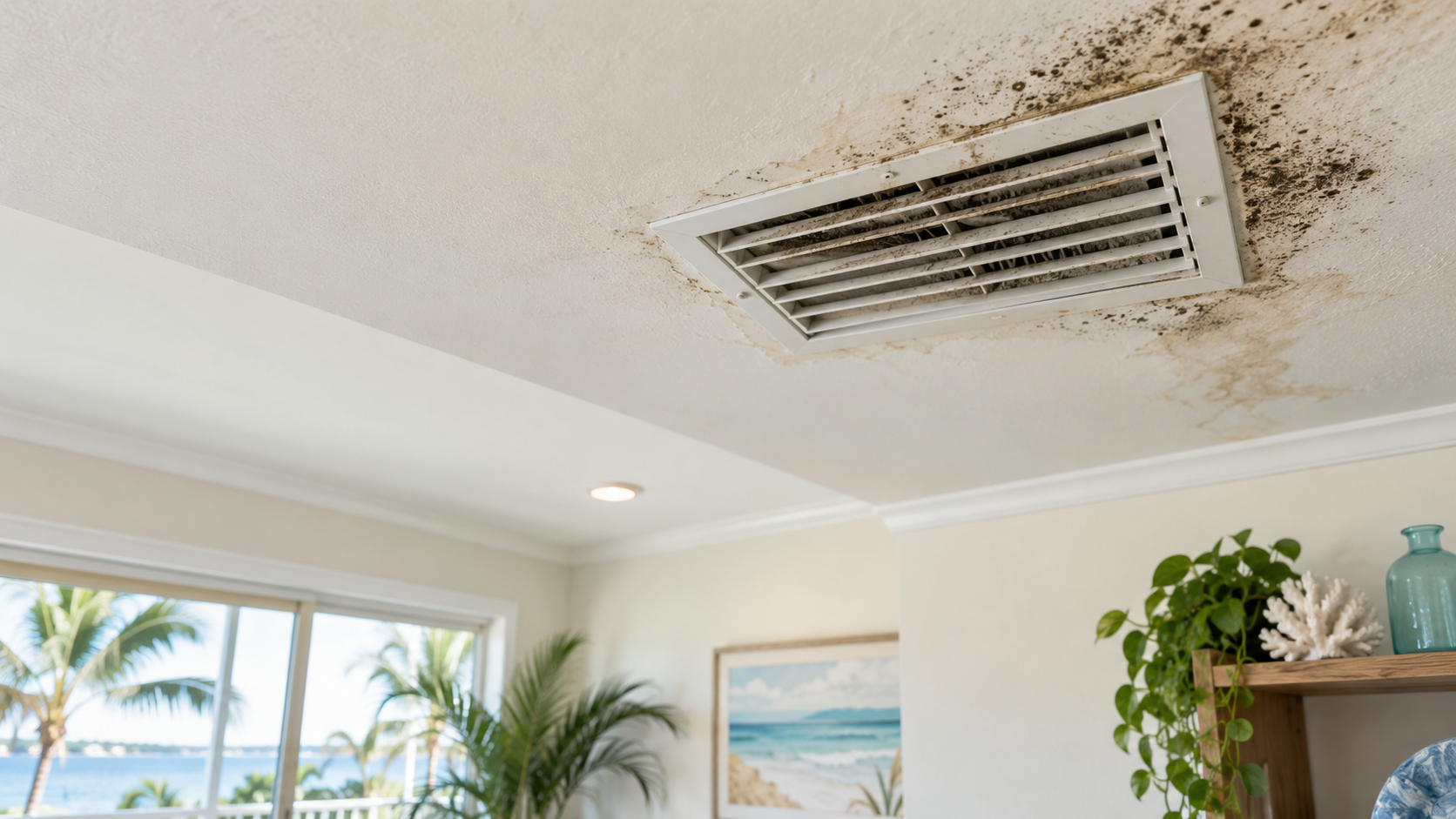
| Remaining visible growth, dust, or debris | Which locations require further contractor attention under the agreed scope? |
| Elevated moisture or renewed water intrusion | Has the source been addressed, and what drying documentation is needed? |
| Sampling results outside project criteria | How do the results relate to observations, sample locations, and the protocol? |
| Restricted access or incomplete records | What access or documentation is needed to complete the evaluation? |
This is a discussion guide, not a diagnosis of your property. The assessor should interpret the findings and clarify whether additional investigation is needed before the contractor proceeds.
When Moisture Remains Unresolved
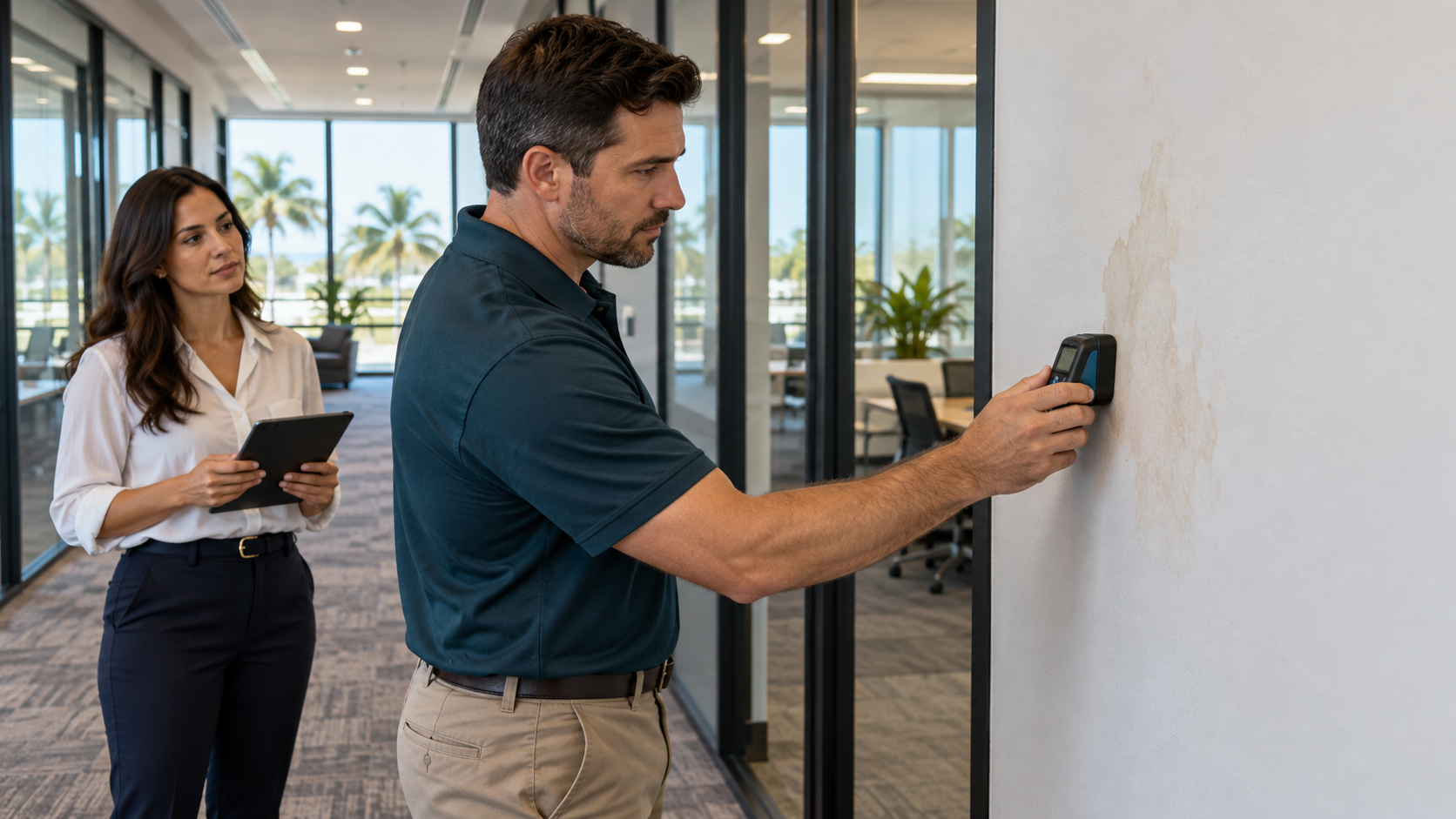
If the report identifies elevated moisture, ask where it was measured and how the result was interpreted. Confirm who will address the water source and who will document drying. Moisture mapping and readings may help evaluate accessible areas when the extent of remaining moisture is uncertain.
Do not treat a dry-looking finish as confirmation that all affected materials are dry. At the same time, a moisture reading does not identify mold by itself. Ask the assessor how the moisture findings relate to the project’s completion criteria.
When Sampling Results Need Clarification
Ask which sample or finding led to the conclusion and how it relates to the inspection observations. EPA’s mold sampling guidance explains that there are no federal limits for mold or mold spores. A laboratory number is therefore not a universal federal pass-or-fail threshold or a medical diagnosis.
The assessor should explain the criteria used for your project. If the interpretation is disputed, request a review of the full report and sampling conditions before commissioning unrelated tests. A second opinion is most useful when the professional has the original records.
Who Should Coordinate the Corrective Work?
The owner or property manager should coordinate communication between the independent assessor, remediation contractor, and any separate repair professional. Give each party the same report and ask them to clarify their role. Assessment, cleanup, leak repair, and reconstruction are different tasks.
A written plan can identify the affected locations, the proposed correction, the person completing it, and what the assessor needs to review afterward. Holistic Environmental Solutions develops mold remediation protocols that can help define remediation work and completion criteria when that service is appropriate.
An unsuccessful evaluation does not automatically require a completely new protocol. Ask whether the existing scope remains adequate or whether newly identified conditions justify revising it. This avoids authorizing work based only on the word failed.
Questions to Resolve Before the Next Visit
Use a short coordination call or email to make the plan specific:
- Which findings remain open, and in which rooms or work areas?
- What corrective work will address each finding?
- Are leak repair and drying records available for review?
- Does the assessor need access before new finishes are installed?
- What is included in the follow-up visit, and what costs extra?
Keep the answers with the project records. A clear handoff helps prevent the next appointment from occurring before the area is ready to evaluate.
When Should You Retest After Mold Remediation?
Schedule the follow-up after the corrective work is complete and the assessor confirms the area is ready for the agreed evaluation. There is no single waiting period that applies to every failed project. The appropriate timing depends on the findings, drying needs, work performed, and verification approach.
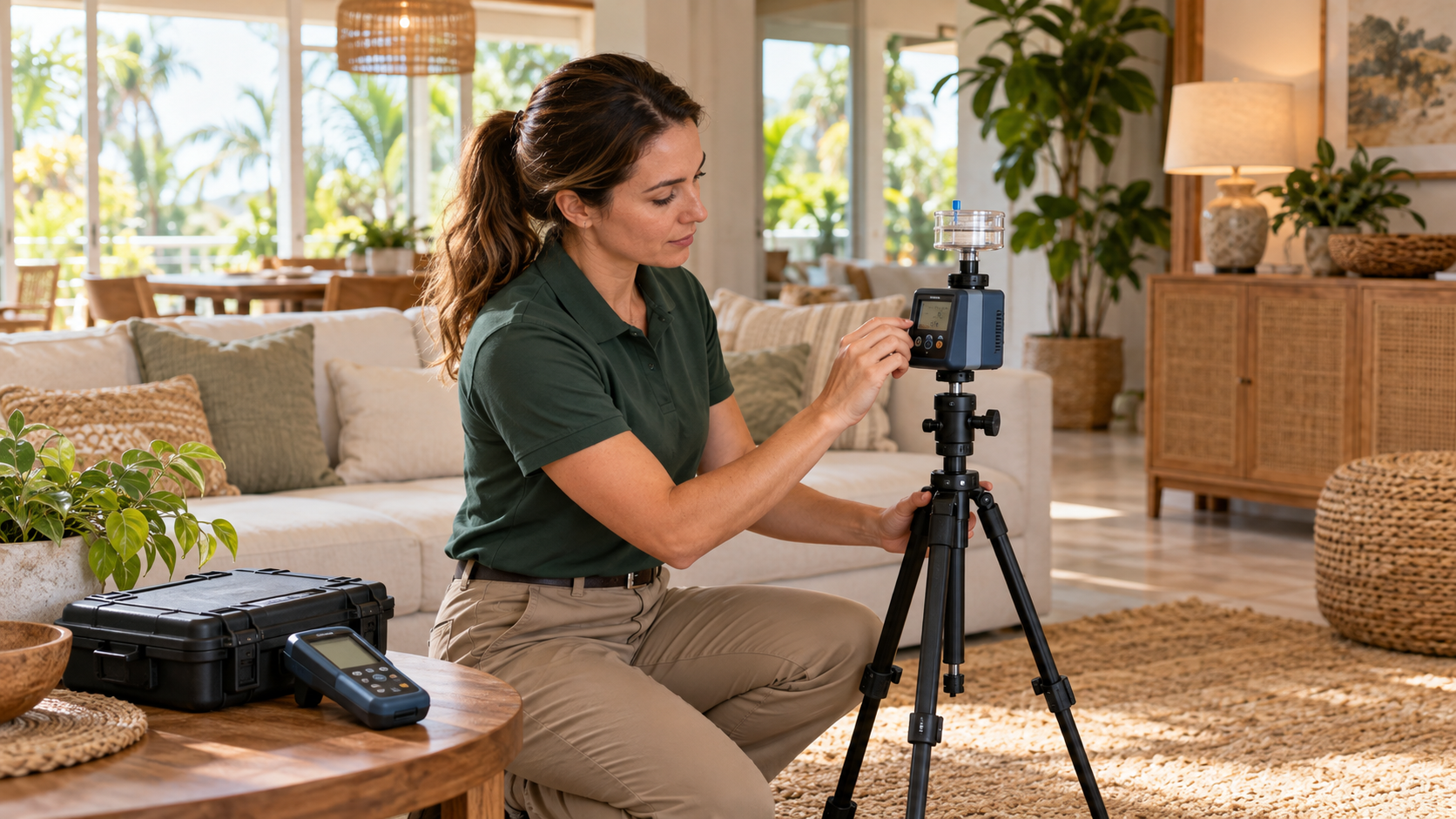
Ask the assessor and contractor for coordinated instructions about containment, equipment operation, access, and sampling conditions if sampling is planned. Do not remove barriers or change equipment settings on your own to prepare for testing. Tell the assessor about changes made since the earlier visit.
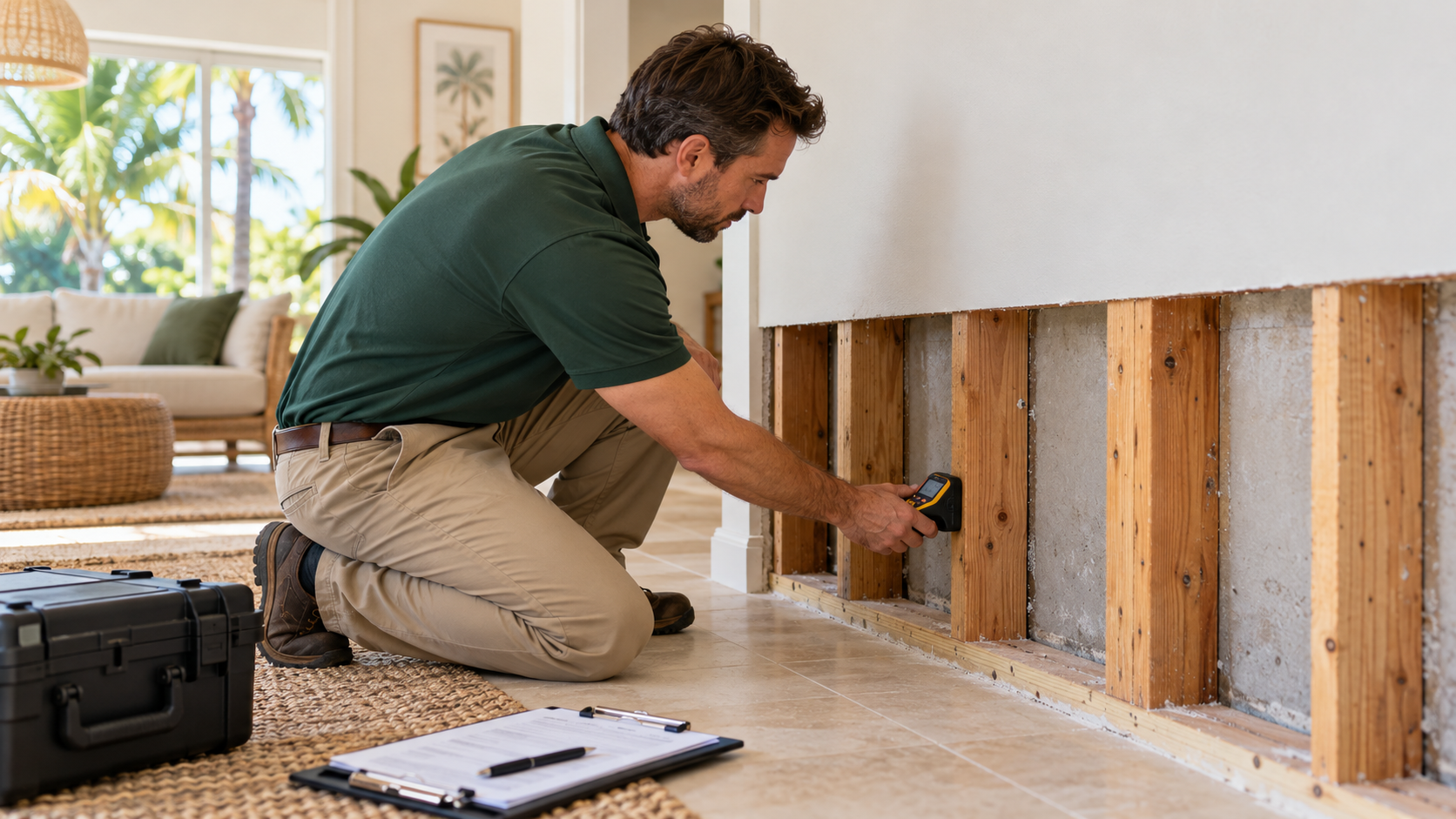
Avoid booking a retest solely because a reconstruction crew is available the next morning. Keep the relevant work areas accessible until the agreed verification steps are complete. That may prevent new finishes from covering a condition that still needs investigation.
What Should You Avoid After a Failed Result?
Avoid changes intended only to improve the next sample or conceal a concern. The goal is to resolve the documented issue and evaluate the resulting conditions. Repainting, masking odors, or arranging repeated tests without an explanation of what changed can leave the original question unanswered.
EPA’s guide to mold and moisture emphasizes correcting the water problem as part of completing cleanup and advises against painting over moldy surfaces. Discuss proposed treatments with the professionals handling the project rather than applying an additional product yourself.
If concerns extend beyond the original work area, ask whether broader mold assessment services are appropriate. A follow-up clearance visit may have a limited scope; it should not be assumed to evaluate every room or concealed cavity in the building.
What Should the Follow-Up Report Explain?
Ask for documentation that connects the new findings to the previously unresolved conditions. A useful report should make clear which areas were evaluated, what methods were used, and whether the applicable completion criteria were met. Any limitations or remaining questions should be identified.
For example, imagine a condominium project where the first evaluation noted unfinished cleaning in a closet and moisture concerns along an adjoining wall. The follow-up should address those documented locations and the relevant corrective work. A sample from a different room would not, by itself, answer both questions. This is an illustrative example, not a Holistic client case.
Keep the original and follow-up reports together with the contractor’s records. Passing verification describes the evaluated conditions at that time; it does not guarantee that future leaks or moisture problems cannot lead to new growth.
Frequently Asked Questions
These answers address the practical decisions that commonly arise after unsuccessful verification. Your report and the agreed scope should guide the details for your property.
Does a Failed Clearance Test Mean All the Mold Remediation Must Be Repeated?
Not necessarily. The report may identify a limited area or a specific unresolved condition. Ask the assessor and contractor to explain the corrective scope before assuming the whole project must be repeated.
Can a Property Fail Verification Without Air Sampling?
Yes. If the agreed completion criteria include visual cleanliness or acceptable moisture conditions, unresolved findings can prevent successful verification before samples are collected. Ask which part of the evaluation supports the conclusion.
Should I Order Another Air Test Immediately?
First clarify the reason for the unsuccessful result. If corrective work is needed, complete it before the follow-up evaluation. Ask the assessor whether sampling will add useful information and how it fits the verification plan.
Can New Drywall Go Up Before the Follow-Up Evaluation?
Coordinate that decision with the assessor and contractor. Where verification is part of the project, plan it before finishes close off areas that need evaluation. Explain any construction deadlines before booking the appointment.
Does Passing Clearance Mean the Home Has Zero Mold Spores?
No. Clearance is evaluated against the project’s completion criteria, not a guarantee of zero spores. A passing result is also not a promise about every occupant’s health or every concealed area in the property.
Does Holistic Environmental Solutions Perform the Corrective Cleanup?
No. Holistic Environmental Solutions provides independent assessment and testing services, including post-remediation verification. A separate remediation contractor performs cleanup; repair professionals address issues such as plumbing or roof leaks.
Discuss Your Failed Clearance Report With Holistic Environmental Solutions
If a South Florida property has not met its clearance criteria, start with the findings you already have. Holistic Environmental Solutions serves Miami-Dade, Broward, Palm Beach, and Monroe counties with independent assessment, moisture evaluation, remediation protocols, and post-remediation verification.
Call (786) 580-9374 or contact Holistic Environmental Solutions to discuss the report and the appropriate next evaluation. Have the property location, earlier reports, remediation scope, and corrective-work status available so the team can help define what needs to be reviewed before retesting.
About Holistic Environmental Solutions
Holistic Environmental Solutions provides independent mold assessment and environmental testing services throughout South Florida, including Mold Assessment Services, Indoor Mold Testing, Air Quality Testing, Moisture Mapping & Readings, Remediation Protocols, and Post-Remediation Verification. Our team serves Miami-Dade, Broward, Palm Beach, and Monroe counties, helping property owners better understand mold, moisture, and indoor air quality concerns with clear, objective findings.
Florida Licensed Mold-Related Services Assessor #MRSA5496
Recent Posts