Indoor Air Quality Testing vs. Mold Testing: Which Do You Need?
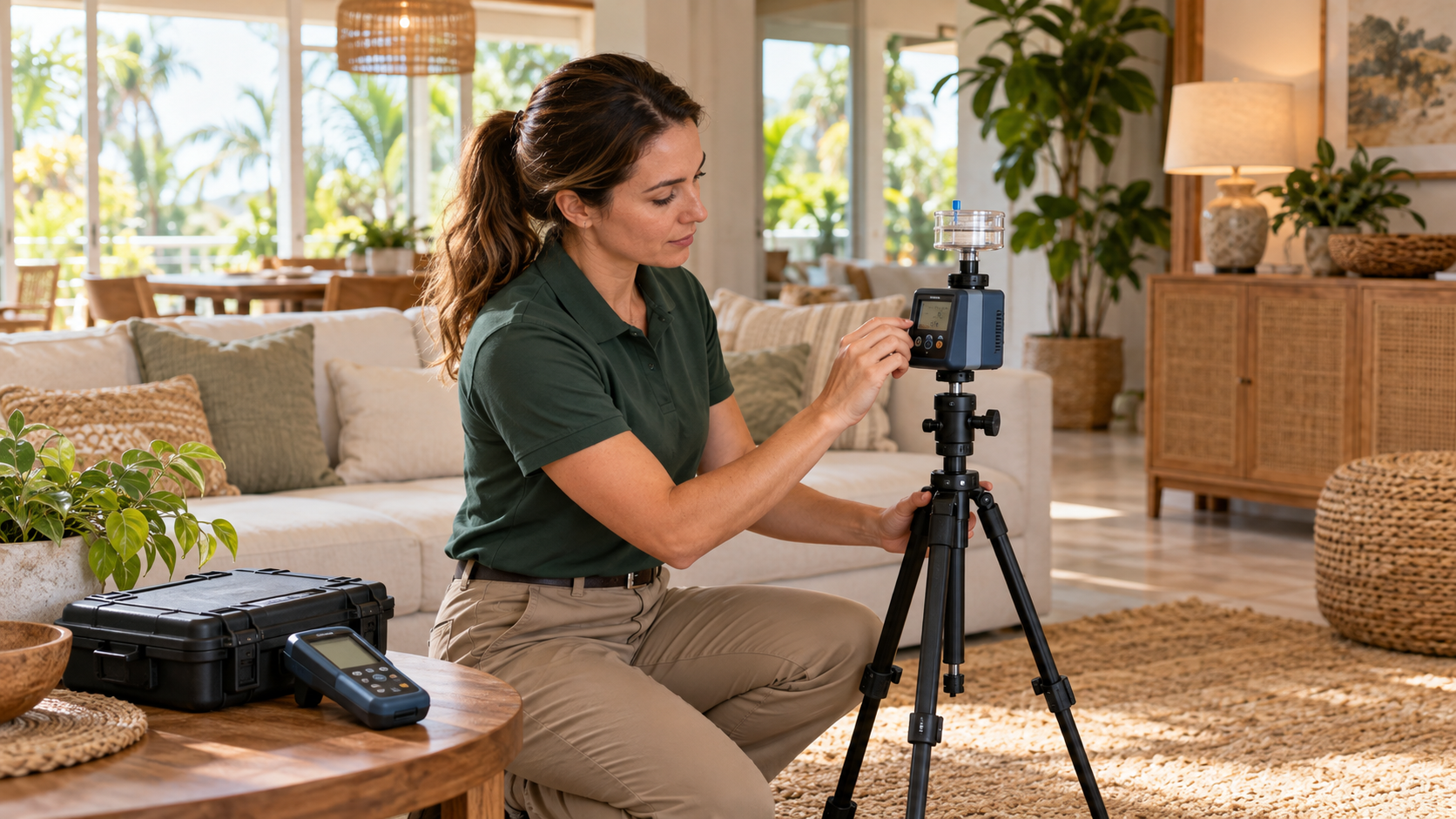
Indoor air quality testing evaluates selected airborne pollutants and indoor conditions, while mold testing focuses on mold-related samples. If you have leaks, visible growth, or persistent musty odors, start by discussing a mold and moisture assessment. If concerns involve dust, chemical odors, or ventilation, ask about an indoor air quality evaluation. The right scope depends on what you need to find out.
These services overlap, but they are not interchangeable. For South Florida homeowners and property managers, the most useful first step is describing the problem before choosing a testing package.
What Is the Difference Between Indoor Air Quality Testing and Mold Testing?
Indoor air quality, often shortened to IAQ, describes the air conditions within a building. An IAQ evaluation may consider selected pollutants, humidity, and ventilation-related concerns. Mold testing has a narrower purpose: collecting and analyzing samples to investigate a defined mold question.
A mold assessment is broader than sampling alone. It considers observations, moisture conditions, and property history. Neither a mold sample nor a general air-quality reading can answer every question about a home or office.
| Evaluation | Main question | Important limit |
|---|---|---|
| Indoor air quality evaluation | Which selected pollutants or indoor conditions should be investigated? | Does not automatically test for every pollutant or include mold sampling. |
| Mold testing | What mold-related information is present in the collected samples? | A sample alone does not locate all growth or explain its moisture source. |
| Mold and moisture assessment | What do the property history, visible conditions, and moisture findings show? | Access limitations can leave concealed areas unresolved. |
Holistic Environmental Solutions offers indoor air quality testing services and mold-related evaluations. Ask which measurements are relevant to your concern and which are included in the proposed service.
The distinction matters most when deciding what to book. Start with the conditions you have noticed, rather than assuming every odor needs the same test.
Which Service Should You Ask About First?
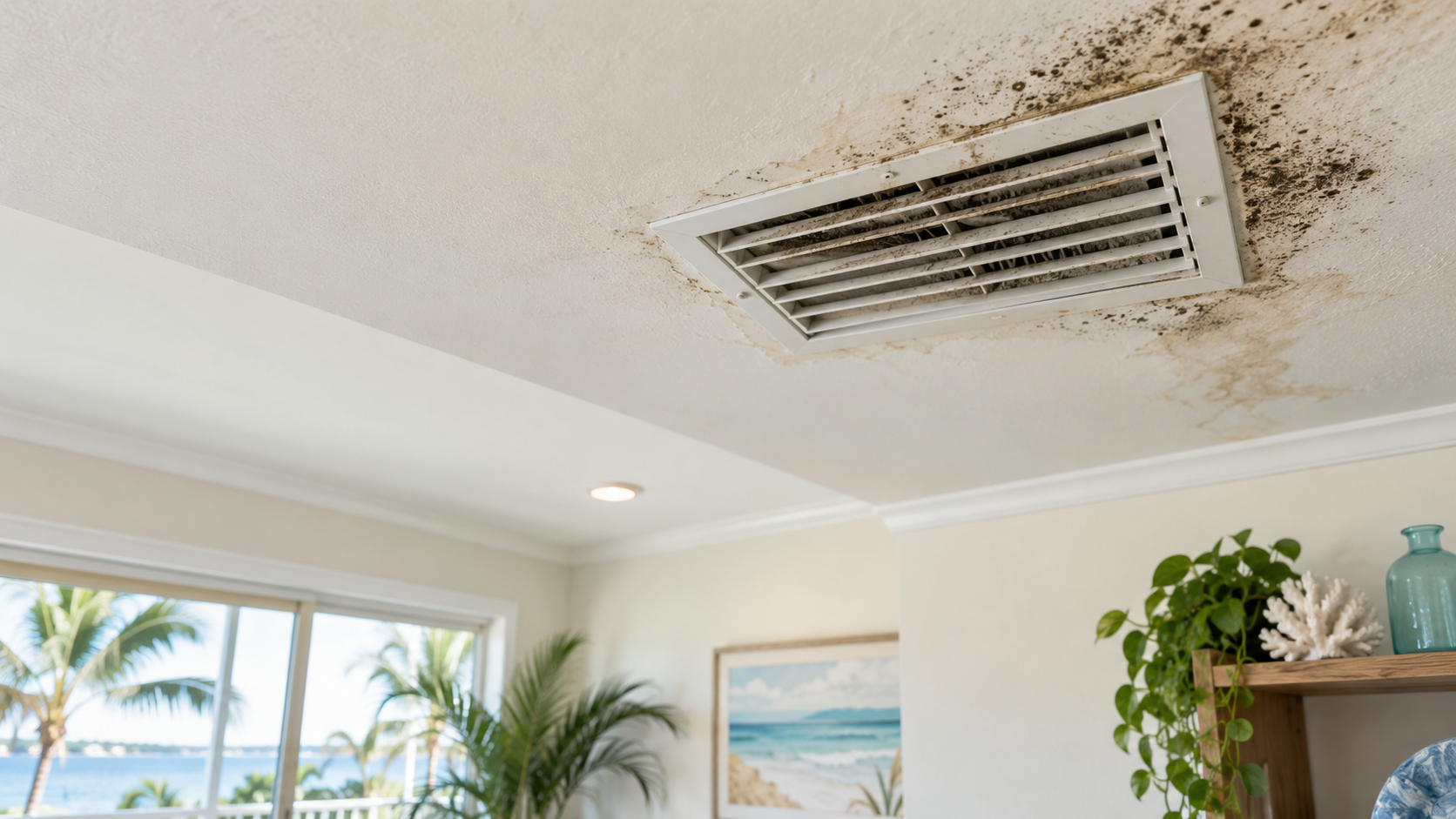
Ask about a professional mold assessment when the main concern is visible growth, a recurring musty odor, or previous water damage. For concerns linked to new materials, cleaning products, dust, or stuffy rooms, discuss an IAQ evaluation and explain when the problem occurs.
This is a starting point, not a diagnosis. Odors and staining can have different causes, and two problems may occur together. A property review helps determine whether targeted testing would change the next decision.
Leaks, Damp Materials, or a Musty Smell
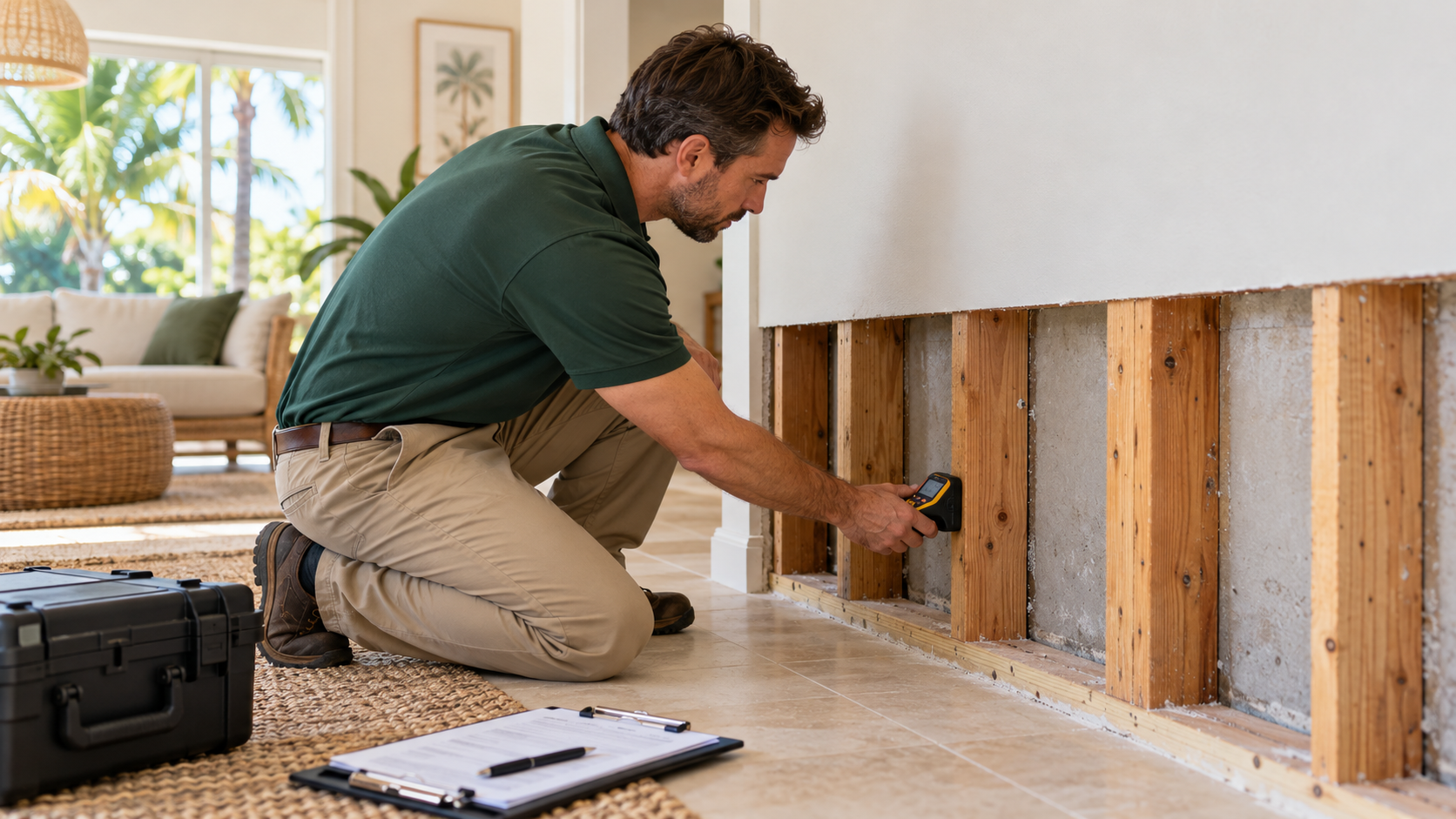
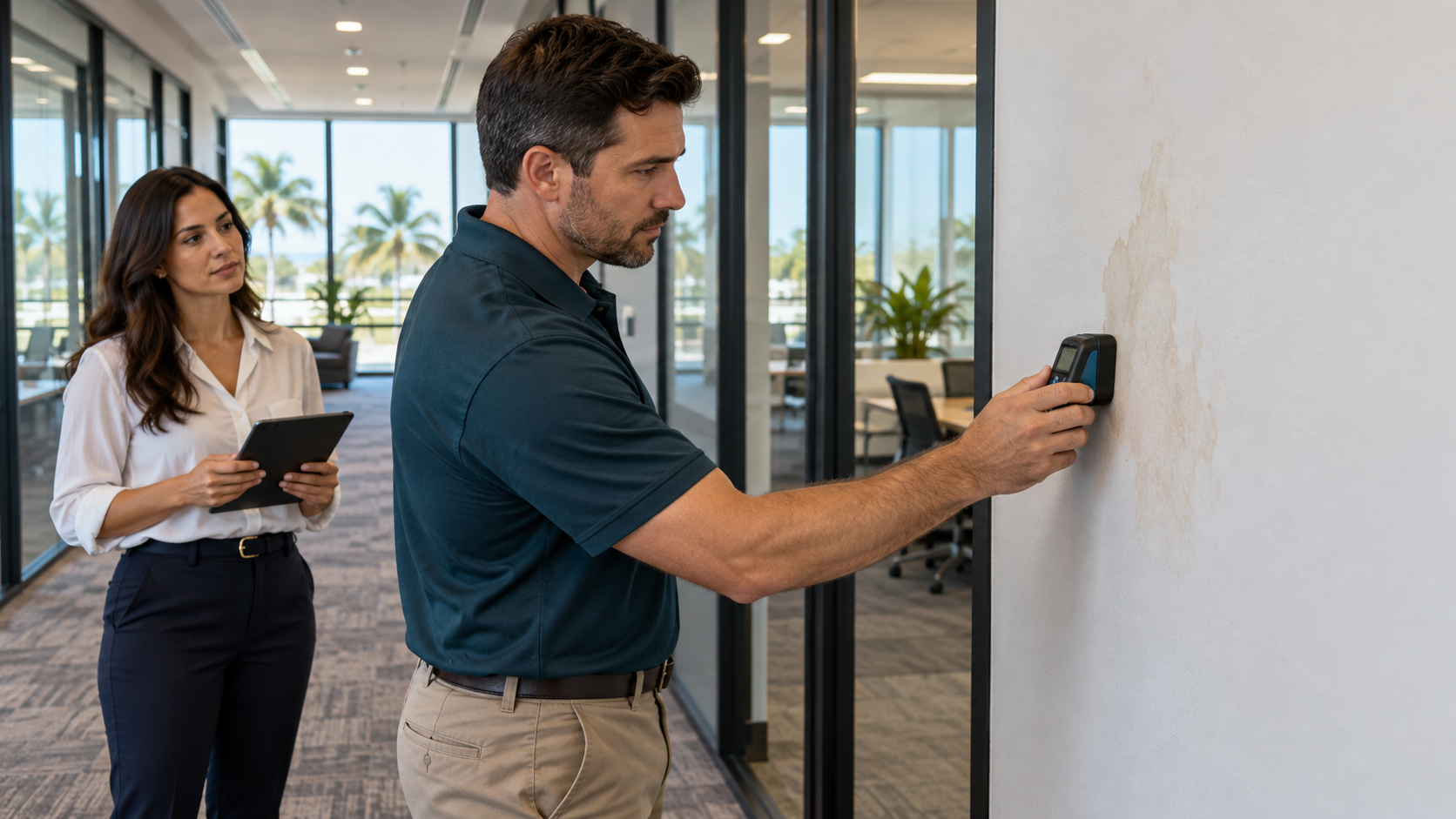
Tell the assessor where the leak occurred, what was repaired, and whether the area was dried. Include nearby rooms and enclosed spaces where odors or staining persist. Moisture mapping and readings can help document moisture conditions in accessible materials.
Do not postpone stopping an active leak or addressing urgent drying needs while waiting for testing. Repair and restoration professionals handle those tasks; assessment helps clarify the environmental questions.
Chemical Odors, Dust, or Ventilation Concerns
Explain whether the concern began after painting, flooring installation, cleaning, or a change in building use. Paints, furnishings, and household products can release volatile organic compounds, or VOCs. A mold-only sample does not measure those chemicals.
EPA’s guidance on indoor air quality identifies pollutant sources and inadequate ventilation as important contributors to indoor air problems. Discuss the suspected source so the provider can recommend relevant measurements rather than an unrelated test.
A short description of the trigger, location, and timing gives the provider a useful starting point. Next, confirm exactly what the proposed testing will cover.
Does an Indoor Air Quality Test Automatically Include Mold?
No. An indoor air quality test includes the measurements and sampling methods specified in its scope. Some evaluations include mold air sampling; others focus on different conditions. The service name alone does not tell you what will be measured.
Likewise, a particle reading does not establish whether the particles are mold, and a humidity reading does not identify mold growth. Each method answers a different question. Ask for the scope in plain language before authorizing the work.
Questions to Ask Before Booking
A clear proposal should connect each measurement to your concern. These questions can help you understand what you are purchasing:
- Does this evaluation include a visual inspection and moisture review?
- Is mold sampling included, and what question would it answer?
- Which other pollutants or conditions will be evaluated?
- Are laboratory analysis and an explanation of findings included?
- Which rooms or areas are excluded, and why?
Holistic’s indoor mold testing service may include air or surface sampling when appropriate. Confirm the recommended approach for your property rather than assuming every available test is necessary.
Once the scope is clear, it is easier to recognize when an inspection can answer the question without additional samples.
Do You Always Need Mold Air Sampling?
No. Mold air sampling is not automatically necessary, even when mold is a concern. EPA’s mold sampling guidance explains that visible mold usually does not require sampling. An assessor should explain what information a proposed sample would add.
CDC/NIOSH guidance also advises against routine mold air sampling during building air-quality evaluations. Short-term samples, particularly negative findings, may not represent actual exposure. This makes the visual and moisture investigation important.
For example, a clearly documented moisture problem still needs attention even if a brief air sample does not show elevated findings. Conversely, finding spores in a sample does not by itself establish the location or extent of indoor growth.
Ask how a result would affect the next step. If the answer is unclear, clarify the purpose before adding tests to the inspection.
What Can the Results Tell You, and What Can They Miss?
Results can document what was measured or collected at particular locations and times. Their usefulness depends on the methods, sampling conditions, and inspection findings. A report should help you understand both the evidence and the questions that remain.
Mold results require context, including the sampling method and relevant comparison information. A report is not a medical diagnosis or a guarantee that every concealed area has been evaluated. For a detailed explanation of laboratory reports, see how to read mold test results.
Avoid Treating One Number as a Whole-Building Answer
There is no federal airborne mold limit that turns a spore count into a universal pass-or-fail health result. Similarly, a reassuring result for one measured pollutant says nothing about pollutants that were not tested.
When reviewing findings, ask which conclusions come from direct observations, which come from measurements, and which require further investigation. If symptoms are part of your concern, discuss them with a healthcare professional; environmental testing cannot determine their medical cause.
Understanding the limits helps you use the report appropriately. Preparing a clear property history can also improve how the findings are interpreted.
How Should You Prepare for an Assessment?
Prepare by documenting the concern and asking the provider for instructions specific to the planned evaluation. Avoid making changes simply to produce a better-looking test result. Explain recent cleaning, ventilation changes, repairs, or air-purifier use so the assessor understands the conditions.
Gather photographs and a short timeline rather than relying on memory. In a rental property or office, coordinate access with occupants and identify one contact who can explain the building history.
A Practical Preparation Checklist
Share the details that help connect the reported problem to a location, activity, or event:
- Rooms affected and when odors or other concerns occur.
- Leak dates, drying records, and previous repair information.
- Recent painting, new furnishings, flooring, or cleaning products.
- Available prior inspection reports and laboratory results.
- HVAC operating patterns and known maintenance issues.
- Access restrictions, locked rooms, or tenant scheduling needs.
Follow the assessor’s instructions about windows, HVAC operation, and room use. If conditions change before the appointment, let the provider know.
Preparation supports a more focused evaluation. It also gives you a better basis for comparing proposals and deciding what documentation you need.
How Do You Compare Quotes and Plan the Next Step?
Compare the proposed scope, not just the price. Property size, number of areas, measurement methods, laboratory work, and reporting needs can affect cost. Ask whether the proposal includes interpretation and whether further sampling requires separate authorization.
A hypothetical example: An office manager notices a chemical odor after installing new flooring. Ordering only a mold sample would not answer the chemical question. The manager instead describes the installation date and affected rooms so the provider can consider an appropriate IAQ investigation. A separate history of leaks could justify adding a mold and moisture evaluation.
If findings identify a concern, discuss which professional should address it. Holistic Environmental Solutions provides assessment and testing services; it does not perform mold remediation or sell air-purification systems. Where mold cleanup is undertaken by a separate provider, post-remediation verification may be an appropriate later step.
A useful evaluation connects the findings to a practical action. The following answers can help you clarify remaining questions before requesting an appointment.
Frequently Asked Questions
The names of environmental services can sound similar, especially when air sampling appears in more than one service. These answers summarize the distinctions that matter when choosing an evaluation for your South Florida property.
Can an Air Quality Test Detect Mold?
It can provide mold-related information if appropriate mold sampling is included. A general air-quality monitor or a test for a different pollutant does not automatically test for mold. Confirm the method and interpret findings alongside the property assessment.
Is Mold Testing the Same as an Indoor Air Quality Assessment?
No. Mold testing analyzes mold-related samples. An indoor air quality assessment considers the reported indoor-air concern and may include other measurements. The two can overlap when mold is one of the concerns being evaluated.
Should I Book Both Services?
Not automatically. Explain the problem first and ask which scope will answer it. Both may be appropriate when concerns overlap, but additional testing should have a defined purpose rather than being included simply because it is available.
Can a Home Air Quality Monitor Rule Out Mold?
No. A consumer monitor only reports the pollutants or conditions its sensors are designed to measure. EPA’s guidance on consumer air monitors explains their limited scope. A normal reading does not establish that a property has no mold or other unmeasured problem.
Does a Musty Odor Mean I Need an Air Test?
Not necessarily. A persistent musty odor is a reason to investigate the property and moisture conditions. The assessor can then decide whether sampling would add useful information. An air test alone may leave the cause unresolved.
Can Testing Prove My Home Is Safe for Everyone?
No single test can provide that guarantee. Results have limits based on their scope, timing, and methods, and people’s health circumstances differ. Use the report to guide property decisions and seek medical advice for individual health concerns.
You do not need to choose the exact instruments before calling. A clear explanation of your concern is enough to begin discussing an appropriate scope.
Find the Right Evaluation for Your South Florida Property
Holistic Environmental Solutions helps homeowners, property managers, and businesses evaluate mold, moisture, and indoor-air concerns across Miami-Dade, Broward, Palm Beach, and Monroe counties. The goal is to select an evaluation that addresses your actual question and provides useful findings.
Call
(786) 580-9374 or
contact Holistic Environmental Solutions
to discuss your property. Describe what you noticed, when it started, and any recent leaks or renovations so the team can help determine the appropriate next step.
About Holistic Environmental Solutions
Holistic Environmental Solutions provides independent mold assessment and environmental testing services throughout South Florida, including Mold Assessment Services, Indoor Mold Testing, Air Quality Testing, Moisture Mapping & Readings, Remediation Protocols, and Post-Remediation Verification. Our team serves Miami-Dade, Broward, Palm Beach, and Monroe counties, helping property owners better understand mold, moisture, and indoor air quality concerns with clear, objective findings.
Florida Licensed Mold-Related Services Assessor #MRSA5496
Recent Posts