
Commercial Moisture Mapping: When Should Property Managers Schedule an Inspection?
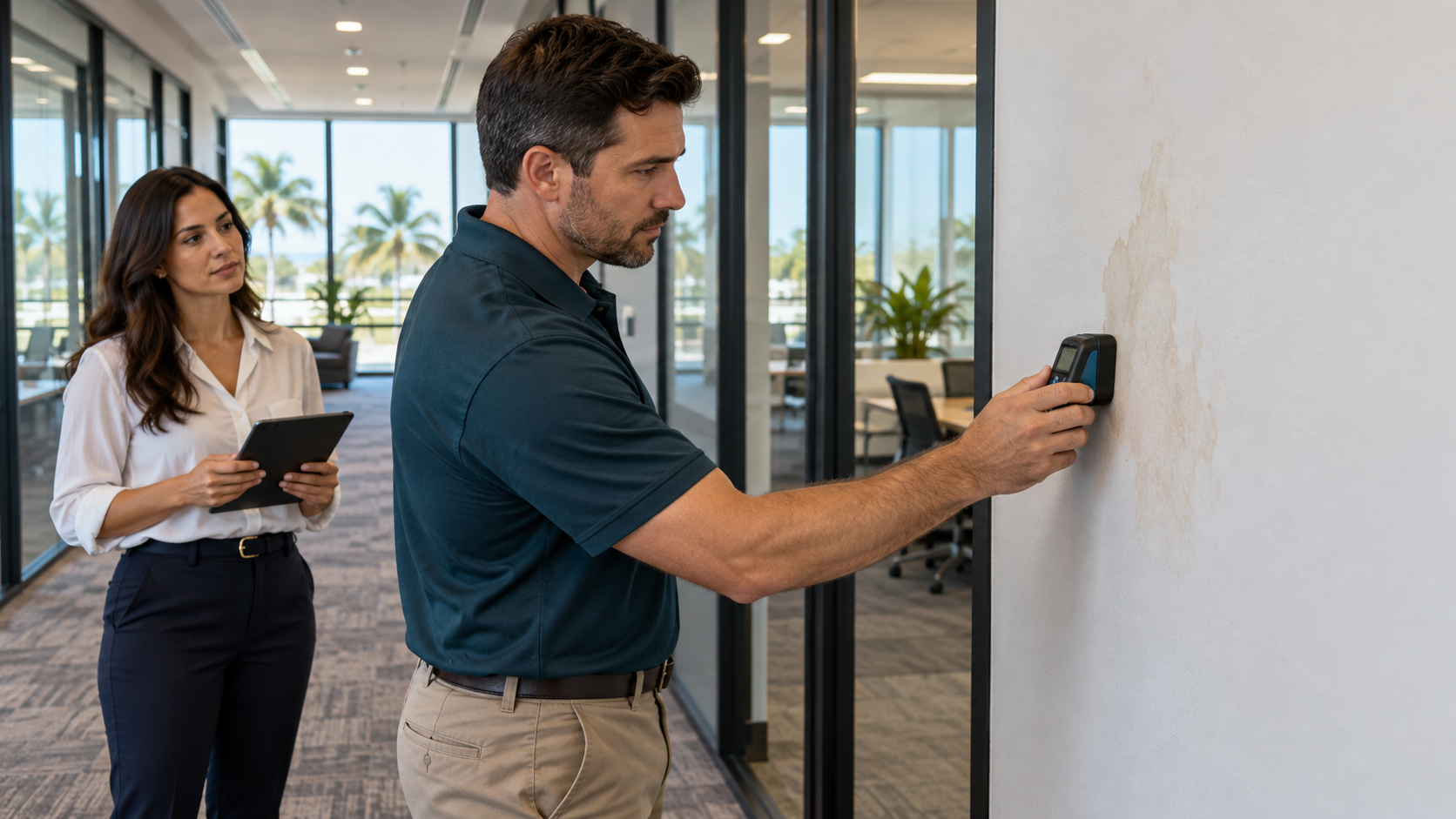
Property managers should consider commercial moisture mapping after a leak, when stains or musty odors return, or when there is uncertainty about moisture in adjoining spaces. Schedule the evaluation promptly, alongside necessary repairs and drying. Do not wait for an inspection to address active water intrusion.
Moisture mapping means measuring and recording moisture conditions at identified locations. For a commercial property, its value is practical: helping managers understand which accessible areas need attention and coordinate the next steps with the right professionals.
When Does a Commercial Property Need Moisture Mapping?
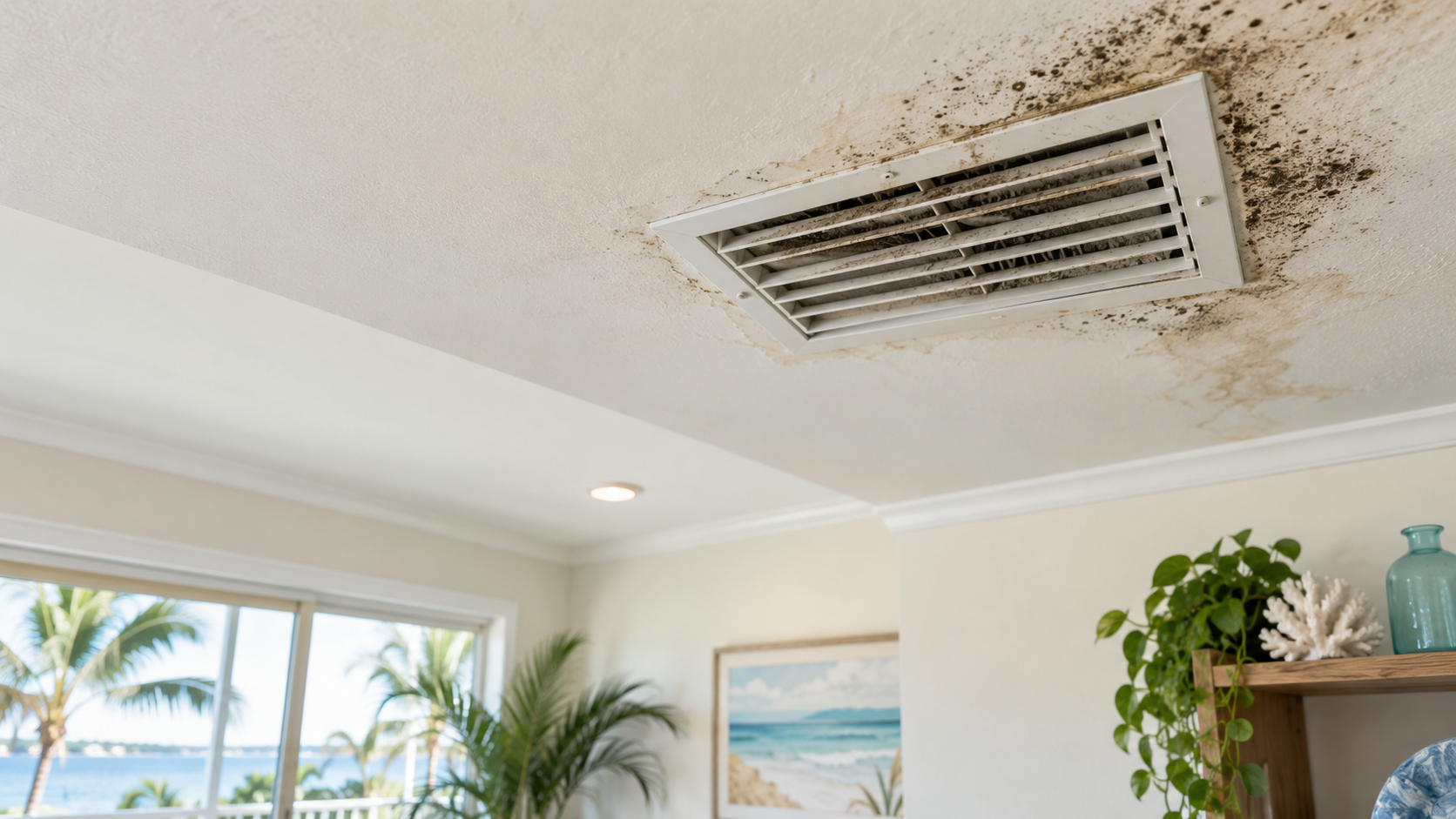
A commercial property may need moisture mapping when visible damage does not explain the apparent extent of a water problem. A stained ceiling in one suite, for example, may warrant evaluating nearby areas rather than assuming the stain marks the full affected area.
Managers may also request an evaluation before authorizing finish repairs when moisture conditions remain uncertain. A dry-looking surface is not enough information to decide whether everything beneath it is ready for rebuilding.
Warning Signs Worth Investigating
Record where and when these conditions occur. They justify investigation but do not, by themselves, prove a particular leak source or mold problem.
- Stains that return after painting or ceiling-tile replacement.
- Peeling finishes, swollen trim, or changes in flooring.
- Persistent musty odors without an obvious source.
- Repeated leaks near the same roof, plumbing, or air-conditioning area.
- Similar complaints in adjoining rooms, suites, or floors.
A location-based record helps define the inspection scope. Understanding the tools used makes it easier to request an evaluation that answers your building’s specific questions.
How Commercial Moisture Mapping Works
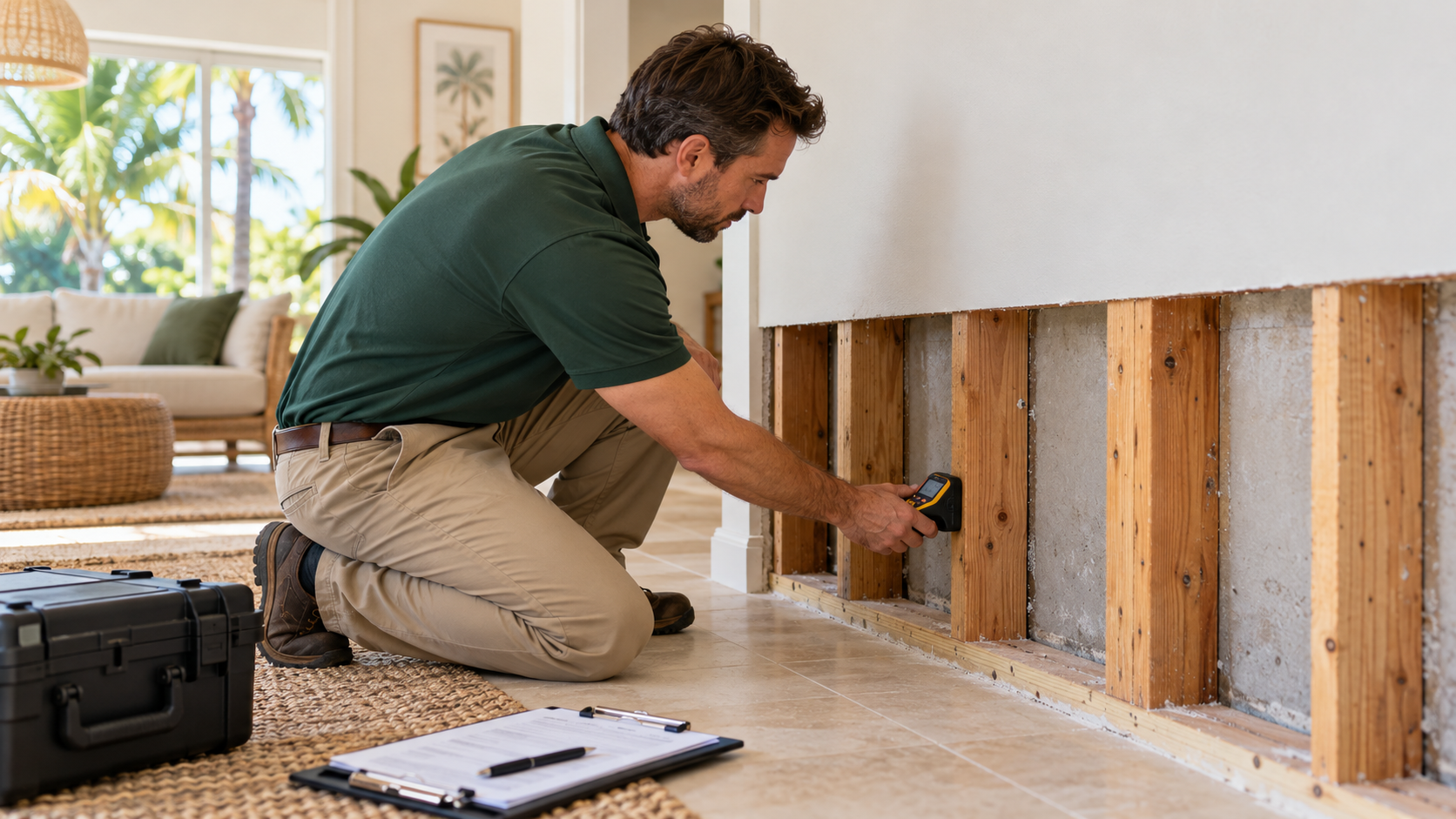
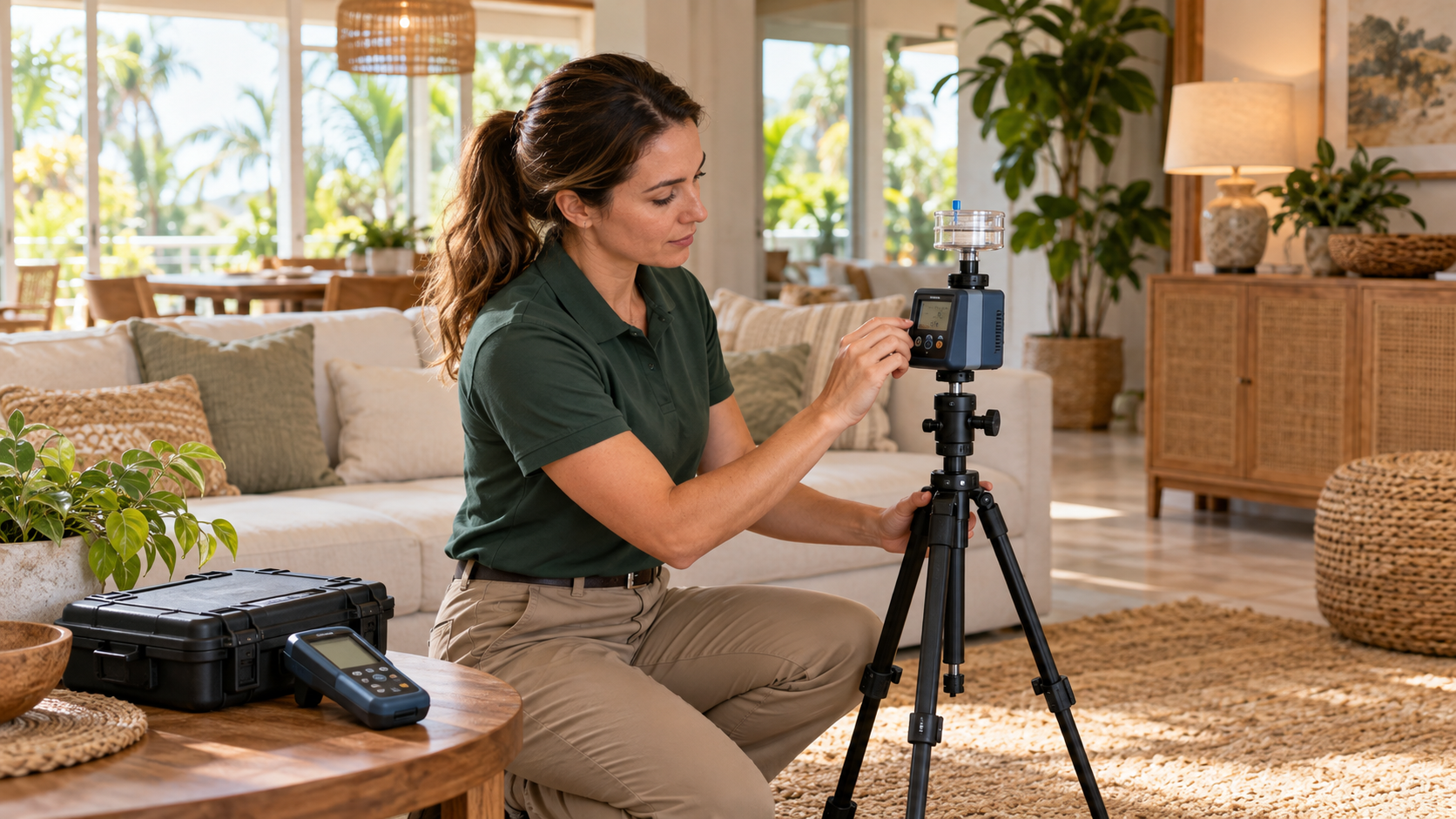
Commercial moisture mapping combines observations with measurements in agreed, accessible areas. Depending on the scope, an inspector may use moisture meters, indoor humidity measurements, and thermal imaging to investigate patterns and document findings.
Material moisture readings and air humidity measurements describe different conditions. Results need interpretation in relation to the material, instrument, and inspection location. Holistic Environmental Solutions offers professional moisture mapping services for properties with moisture concerns.
What Inspectors May Evaluate
The inspection should follow the reported problem and accessible building areas rather than stop at the most visible stain. Depending on the assignment, evaluation may include:
- Affected rooms and adjoining accessible spaces.
- Walls, ceiling areas, flooring, and transitions between materials.
- Comparison readings from similar, apparently unaffected materials.
- Locations that warrant further access or investigation.
Thermal cameras show surface temperature patterns. They do not see through walls, identify mold, or prove water is present. FLIR’s thermal-imaging guidance explains that moisture-like temperature patterns require verification with a moisture meter.
These tools help narrow the investigation. Managers can make the visit more useful by arranging access and assembling records while urgent leak response proceeds.
What Property Managers Should Do After a Leak
Address active water intrusion and urgent drying needs immediately with appropriate professionals. Coordinate source repairs with the relevant plumber, roofer, or HVAC contractor, and involve a restoration provider when needed. Inspection and assessment do not replace water extraction, drying, or repairs.
EPA’s commercial-building guidance emphasizes responding to water damage within 24 to 48 hours. Treat this as a reason for prompt action, not a waiting period or a guarantee against mold. For broader background, read about moisture mapping after water damage.
Information to Gather Before the Inspection
Prepare one shared record so the inspector does not have to reconstruct events from separate tenant conversations. Useful information includes:
- When the leak started, stopped, or returned.
- Affected suite numbers, rooms, and dated photographs.
- Previous repairs and available drying records.
- Recurring complaints and their locations.
- Keys, tenant permissions, escorts, and access restrictions.
Hypothetical example: A manager replaces a stained ceiling tile in an office suite, but the stain returns after rain. The manager arranges a roofing evaluation and moisture inspection, provides earlier photographs, and coordinates access to the neighboring suite. Findings help determine which accessible areas need further attention; the roof contractor separately investigates and repairs the entry point.
Organized records connect the inspection to a decision. They also help determine whether moisture evaluation alone addresses the concern or a broader mold assessment is appropriate.
Moisture Mapping vs. Mold Inspection: Which Do You Need?
Choose moisture mapping when the immediate question is where elevated moisture may be present. Consider a mold assessment when visible growth, persistent odors, or the building’s history raises a separate mold concern. The services can complement each other.
Moisture readings do not identify mold species or establish that a building is mold-free. Holistic Environmental Solutions provides mold assessment services that may include testing when appropriate. Use the distinctions below when discussing your scope.
| Service | Main purpose | Key distinction |
|---|---|---|
| Moisture mapping | Locate and record moisture conditions. | Does not identify mold species. |
| Mold assessment | Evaluate mold concerns and contributing conditions. | May include sampling when appropriate. |
| Mold sampling | Analyze selected air or surface samples. | Answers specific questions; not always necessary. |
| Repair, drying, or remediation | Correct sources and address affected materials. | Performed by the appropriate contractor or restoration provider. |
When Additional Mold Evaluation May Be Appropriate
Explain these conditions when requesting an inspection so the provider can recommend an appropriate scope:
- Visible growth or suspicious material discoloration.
- Musty odors that persist after an apparent leak repair.
- Repeated wetting or uncertainty about earlier drying.
- Concerns about concealed materials after water damage.
Sampling is not automatically necessary. EPA’s mold investigation course explains that visible mold often does not require sampling and that sampling should serve a defined purpose. The guide to how water damage can lead to hidden mold offers additional background.
Clarifying the question first helps avoid treating a moisture reading as a mold result. The next step is agreeing on documentation that supports follow-through.
What a Commercial Moisture Mapping Report Can Help You Understand
A moisture mapping report can help managers communicate where concerns were documented and what requires further attention. Consistent room names and location descriptions make it easier to share findings with maintenance staff, owners, and contractors.
Confirm the deliverables before booking. Photographs, diagrams, readings, and recommendations may vary with the agreed scope; do not assume every inspection includes every type of documentation.
Useful Findings and Important Limitations
Ask how the report will distinguish observations, measurements, and unresolved questions. Depending on scope, useful information may include:
- Evaluated locations and accessible materials.
- Readings and relevant comparison locations.
- Visible conditions and supporting observations.
- Areas excluded because access was unavailable.
- Recommendations for further evaluation, where included.
One inspection cannot guarantee every concealed area is dry or identify every leak source. A locked suite or inaccessible assembly can leave questions unanswered. Ask whether additional access or follow-up measurements would help resolve them.
Documentation is most useful when someone owns the next action. Assign responsibility for contractor follow-up, then use the remaining questions to define any additional inspection work.
What Affects the Scope and Cost of a Commercial Moisture Inspection?
Scope and cost depend on the property and the question being investigated. A localized concern in one office differs from recurring complaints across several occupied floors. Square footage matters, but affected areas, materials, access, and documentation needs also influence the work.
Occupied spaces can require coordinated appointments, escorts, or phased access. Explain these constraints early, and ask what is included in the quote, what is excluded, and how additional work would be approved.
Details to Provide When Requesting a Quote
Give the provider enough information to propose a relevant evaluation rather than relying on the building’s address alone.
- Property type, approximate size, and affected suite count.
- Leak history, current conditions, and available photographs.
- Accessible areas and tenant scheduling constraints.
- Questions the inspection should answer and documentation needed.
Clear scope helps managers compare proposals and plan access. The answers below address common questions before scheduling.
Frequently Asked Questions About Commercial Moisture Mapping
Commercial managers often need to distinguish what an inspection can establish from what requires another professional. These answers can help frame the initial conversation and set expectations for the visit.
What is commercial moisture mapping?
Commercial moisture mapping is the process of measuring and documenting moisture conditions at locations within a commercial property. It helps organize findings by area so managers can coordinate further investigation, drying, or repairs.
When should a property manager schedule a moisture inspection?
Schedule promptly after a leak when the affected extent is uncertain, or when recurring stains, odors, or material changes suggest an unresolved issue. Arrange it alongside urgent response; do not delay stopping water or addressing wet materials.
Can moisture mapping find moisture behind walls or under flooring?
It may identify indications of concealed moisture, depending on the equipment, materials, and access. It cannot evaluate every hidden layer through every finish. Findings may justify targeted additional investigation with appropriate authorization.
Can thermal imaging detect mold?
No. A thermal camera displays surface temperature patterns, not mold. Some patterns may suggest a moisture concern, but they require interpretation and verification. A thermal image alone cannot confirm mold or establish that an area is dry.
Is moisture mapping the same as mold testing?
No. Moisture mapping investigates moisture conditions. Mold testing involves collecting samples for analysis when appropriate. For a fuller explanation of what meter readings mean, see can a moisture meter detect mold?
Can moisture findings help coordinate repairs and drying?
Yes. Documented locations and observations can help contractors target further investigation and plan their work. Repeat measurements may help track changing conditions when included in scope. The appropriate repair or restoration professional determines and performs the corrective work.
With these distinctions clear, managers can request an evaluation focused on the decisions their property needs to make.
Schedule a Commercial Moisture Evaluation in South Florida
Recurring stains, leaks, and musty odors deserve a documented investigation. Holistic Environmental Solutions provides inspection and assessment services for properties in Miami-Dade, Broward, Palm Beach, and Monroe counties, helping managers understand moisture concerns and discuss appropriate next steps.
Call (786) 580-9374 or contact Holistic Environmental Solutions to discuss your commercial property. Share the affected locations, leak history, and access needs so the team can help determine an appropriate inspection scope.
About Holistic Environmental Solutions
Holistic Environmental Solutions provides independent mold assessment and environmental testing services throughout South Florida, including Mold Assessment Services, Indoor Mold Testing, Air Quality Testing, Moisture Mapping & Readings, Remediation Protocols, and Post-Remediation Verification. Our team serves Miami-Dade, Broward, Palm Beach, and Monroe counties, helping property owners better understand mold, moisture, and indoor air quality concerns with clear, objective findings.
Florida Licensed Mold-Related Services Assessor #MRSA5496
Recent Posts