Home Mold Test Kits vs. Professional Mold Testing: What’s the Difference?
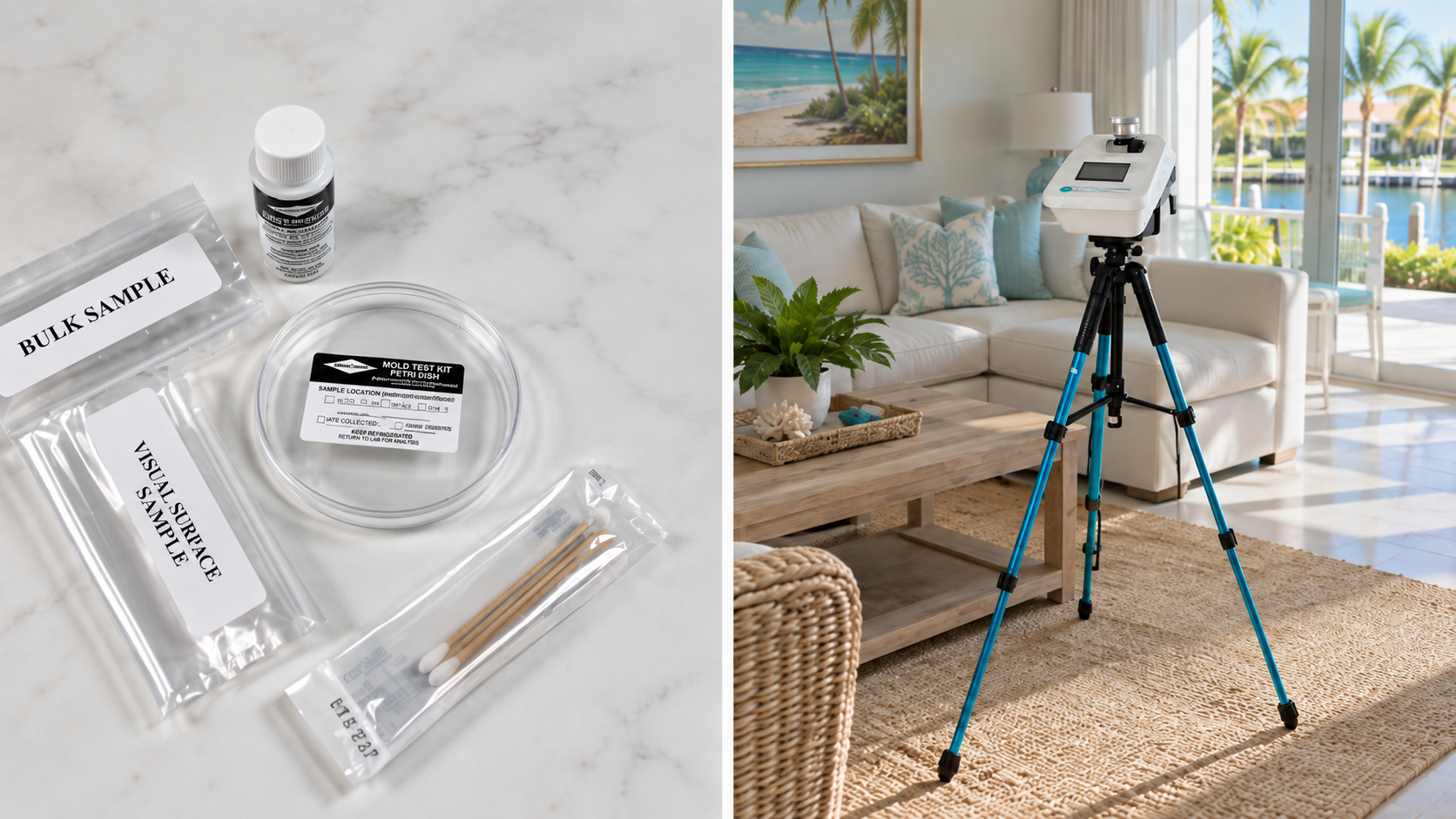
Home mold test kits and professional mold testing are not the same thing. DIY kits may collect a sample from the air or a surface, but they usually do not explain where mold is coming from, whether hidden moisture is present, or how the results relate to the overall condition of the property.
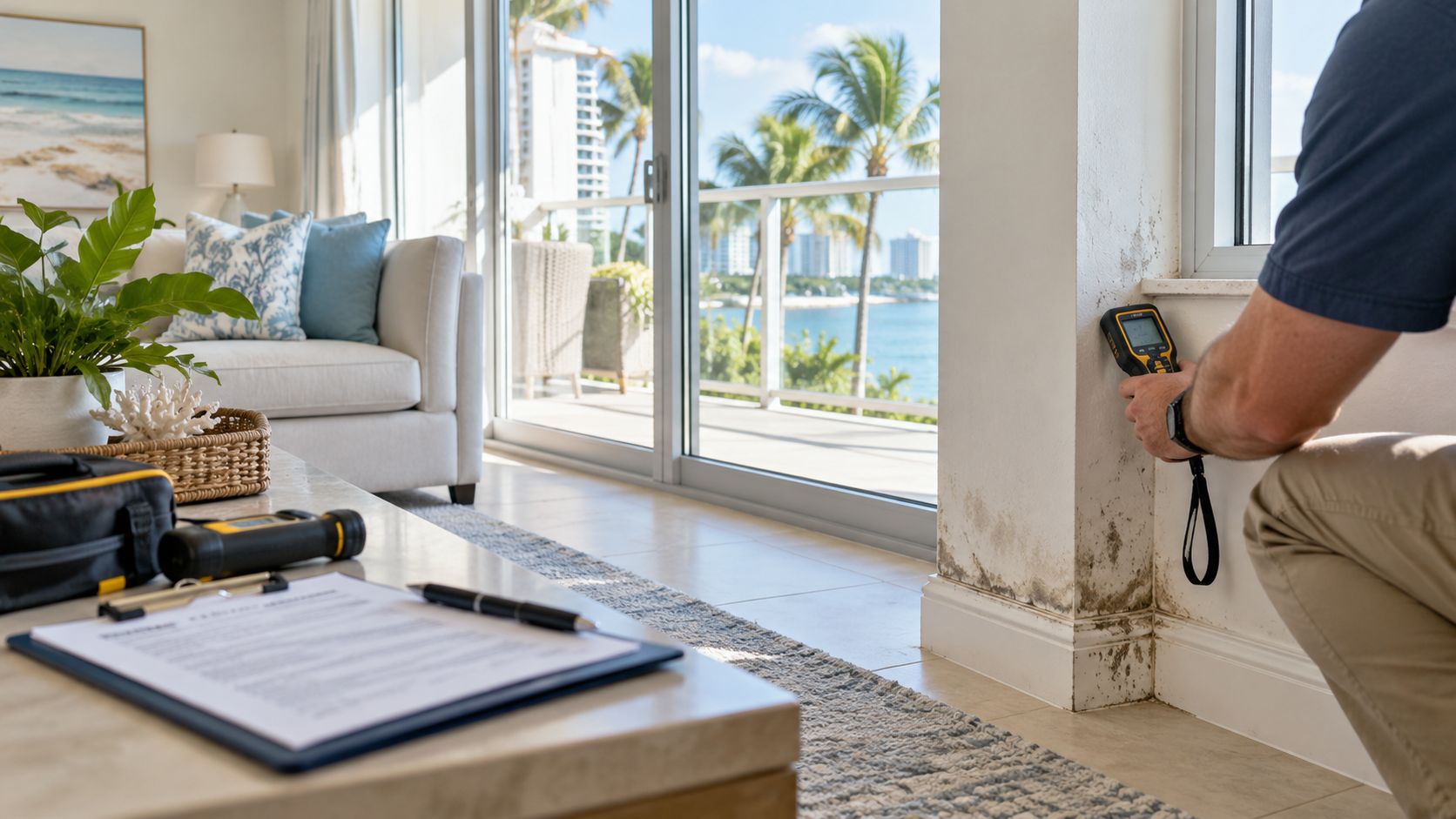
Professional mold testing takes a broader approach. A Mold Assessment Services evaluation may include visual inspection, moisture evaluation, controlled air or surface sampling, and laboratory interpretation so the test results can be reviewed alongside the actual conditions inside the home.
For South Florida homeowners in Miami, Fort Lauderdale, West Palm Beach, Boca Raton, Delray Beach, Weston, and surrounding communities, this distinction matters because humidity, leaks, storm-related water intrusion, and hidden moisture can all contribute to mold concerns that a simple test kit may not identify on its own.
In this guide, we’ll explain what home mold test kits can and cannot tell you, how professional Indoor Mold Testing works, why moisture evaluation matters, and when it may be time to move beyond a DIY kit and schedule a professional assessment.
What Can a Home Mold Test Kit Actually Tell You?
A home mold test kit can sometimes collect a sample from the air or from a specific surface, but the result is limited to that sample and the conditions present at the time it was collected. A DIY kit may indicate that mold spores or growth are present, but it does not automatically explain where the mold is coming from or how extensive the problem may be.
What a DIY Mold Test Kit May Show
- Whether mold grows on a sample collected from a surface or the air
- Whether visible growth was captured from a specific area
- Basic laboratory information if the kit includes professional analysis
- A snapshot of conditions from the location and time the sample was taken
What a kit usually does not show is whether there is hidden moisture behind walls, how far a mold problem may extend, or whether the sample result matches the overall condition of the property.
For homeowners in Miami-Dade, Broward, Palm Beach, and Monroe counties, that matters because humidity, plumbing leaks, roof issues, and water intrusion can create mold concerns in areas a simple home test kit may never reach.
A professional Mold Assessment Services evaluation can help connect testing results with visible conditions, moisture findings, and the history of the property.
What Are the Limitations of DIY Mold Test Kits?
DIY mold test kits can provide limited information, but they usually cannot tell you the full story behind a mold concern. A positive result may show that mold is present in the sample, yet it may not explain the source, location, extent, or moisture conditions contributing to the problem.
Common Limitations of Home Mold Test Kits
- They may capture mold spores that are naturally present in the environment.
- They do not identify hidden moisture behind walls, beneath flooring, or above ceilings.
- They may not show how widespread a mold concern is throughout the property.
- Results can be affected by where, when, and how the sample was collected.
- They do not replace a visual inspection of the property.
- They may not provide enough context to determine whether professional remediation or further testing is appropriate.
This is where professional Indoor Mold Testing and Moisture Mapping & Readings can provide more useful context. A trained assessor can determine where samples should be collected, evaluate whether elevated moisture is present, and interpret the results alongside visible conditions, water-damage history, and the overall condition of the property.
For South Florida properties in areas such as Miami, Fort Lauderdale, Boca Raton, Delray Beach, West Palm Beach, and Weston, that added context is especially important because hidden moisture can develop quickly in humid conditions and may contribute to mold concerns that a DIY kit does not identify on its own.
How Is Professional Mold Testing Different From a Home Test Kit?
Professional mold testing is designed to evaluate mold conditions in the context of the entire property rather than relying on a single DIY sample. The process may include visual inspection, moisture evaluation, controlled sampling, and laboratory analysis so the results can be interpreted alongside what is actually happening inside the home.
What Professional Mold Testing May Include
- A visual evaluation of areas with visible growth, staining, musty odors, or previous water damage.
- Air or surface sampling collected from specific locations based on the conditions found.
- Comparison of indoor samples with outdoor or control samples when appropriate.
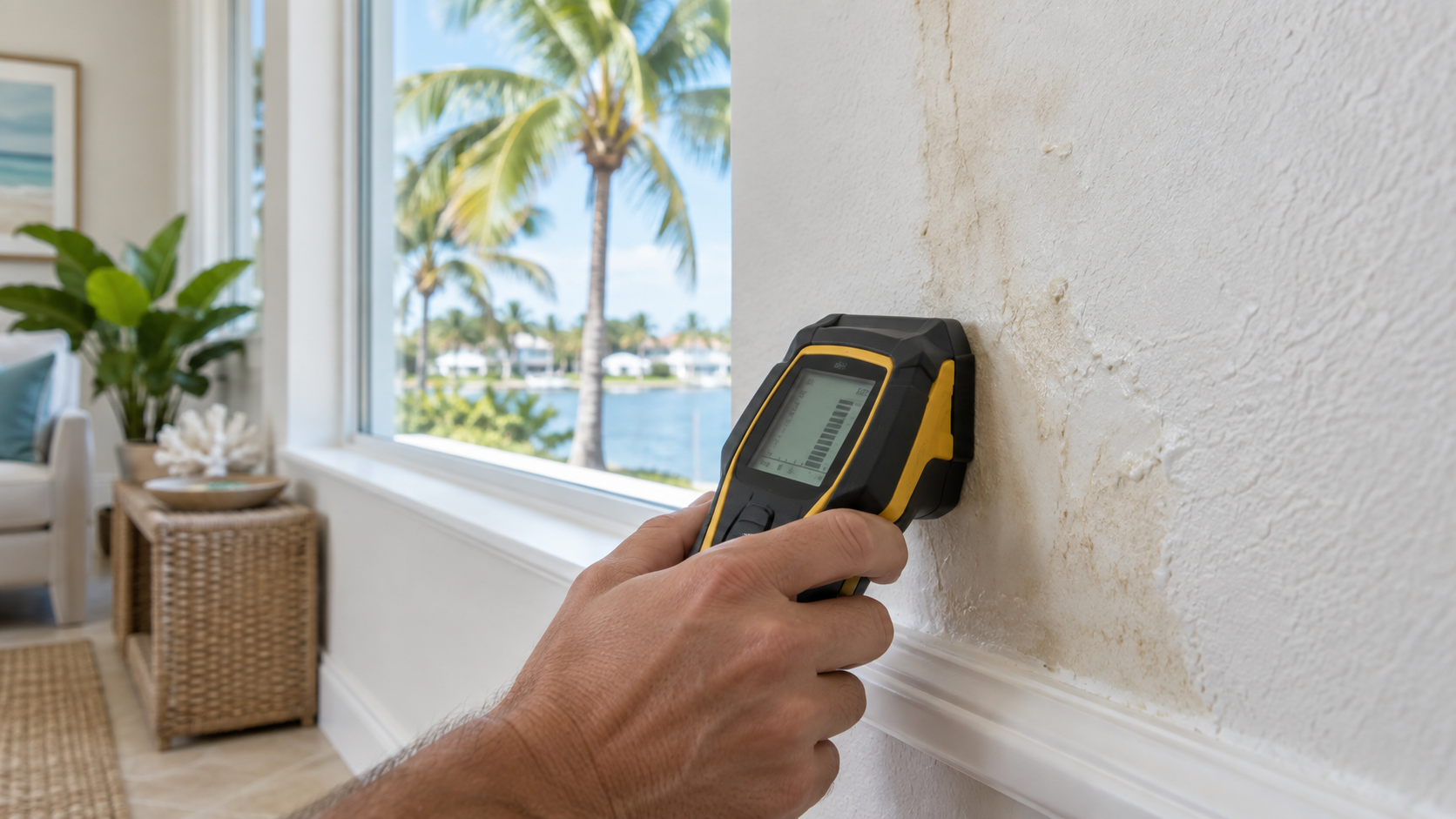
- Evaluation of moisture conditions using Moisture Mapping & Readings when hidden moisture is suspected.
- Laboratory analysis of collected samples.
- Interpretation of the results as part of a broader Mold Assessment Services evaluation.
Professional Indoor Mold Testing is especially useful when the concern is more complex than a single visible spot. It can help determine whether the testing results match the moisture conditions, property history, and areas of concern identified during the assessment.
When Should You Move Beyond a Home Mold Test Kit?
A home mold test kit may be enough to satisfy curiosity about a small, isolated concern, but there are situations where a professional evaluation can provide much more useful information. The key question is whether you need to know only if mold is present in a sample, or whether you need to understand what is happening inside the property as a whole.
Signs It May Be Time for Professional Testing
- Mold keeps returning after cleaning.
- There is a persistent musty odor but no obvious source.
- The property has experienced a roof leak, plumbing leak, flooding, or other water damage.
- Visible growth appears in more than one area.
- You suspect mold may be behind walls, beneath flooring, or in another concealed space.
- A DIY test produces a positive result but does not explain where the problem is coming from.
- Moisture concerns are present and need to be evaluated with Moisture Mapping & Readings.
- A broader Mold Assessment Services evaluation is needed to determine whether additional testing or remediation planning may be appropriate.
Moving beyond a DIY kit is usually about getting context, not simply getting another result. Professional Indoor Mold Testing can help connect the laboratory findings with moisture conditions, visible concerns, and the overall condition of the property.
Can a Home Mold Test Kit Tell You If Mold Is Hidden?
Not reliably. A home mold test kit may capture spores or material from the specific sample collected, but it usually cannot tell you whether mold is growing behind walls, beneath flooring, above ceilings, or in another concealed area.
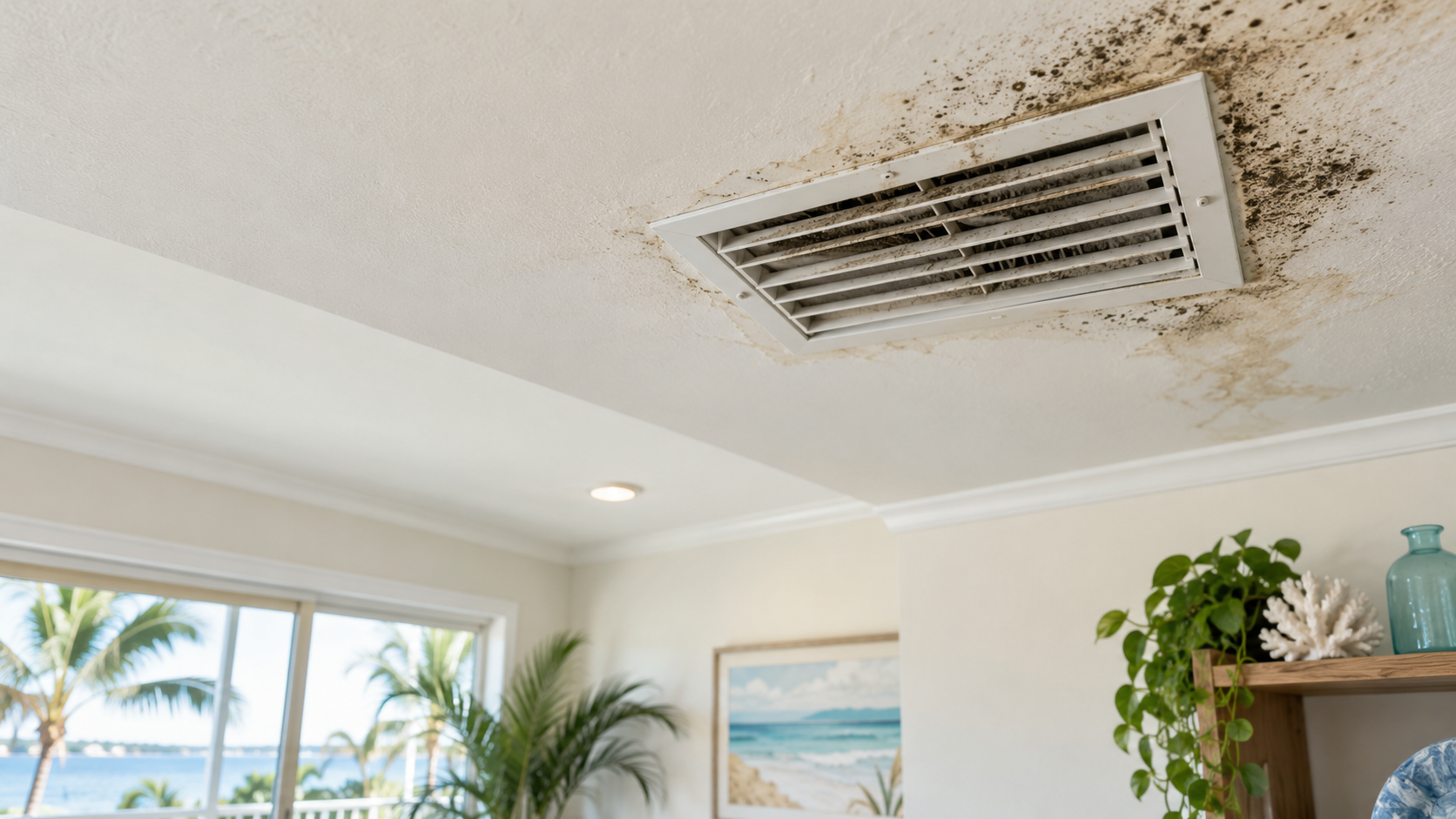
Hidden mold is often connected to moisture conditions that are not visible from the surface, which is why testing alone may not be enough to locate the source.
What May Point to Hidden Mold
- A persistent musty odor without visible growth.
- Previous water damage, roof leaks, or plumbing leaks.
- Bubbling paint, staining, warped materials, or soft drywall.
- Recurring mold that returns after cleaning.
- Elevated moisture found through Moisture Mapping & Readings.
- Air or surface results that raise concerns but do not identify the physical source.
When hidden mold is suspected, a broader Mold Assessment Services evaluation can help investigate the property conditions and determine whether Indoor Mold Testing or additional moisture evaluation may be appropriate.
A DIY mold kit can provide a sample result, but it does not replace the process of locating the moisture conditions or concealed areas that may be contributing to the problem.
Are Home Mold Test Kits Accurate?
Home mold test kits can collect mold spores or surface material, but accuracy depends heavily on how the sample is collected, where it is taken, and how the results are interpreted. A kit may provide useful information about a specific sample, but it does not automatically provide an accurate picture of the entire property.
What Can Affect a DIY Mold Test Result?
- The location where the sample is collected.
- Whether windows or doors were open before testing.
- HVAC operation and airflow inside the property.
- How long the sample was exposed.
- Whether the sample was collected from a representative area.
- Whether the result is interpreted without considering visible conditions or moisture concerns.
A professionally collected sample is typically chosen based on what the assessor finds during the property evaluation. Indoor Mold Testing can therefore provide more meaningful information when the sample location and method are selected based on the actual concern being investigated.
The biggest limitation of a home mold test kit is not necessarily whether it can collect mold—it is whether the result gives you enough context to understand what is happening inside the property.
What Should You Do After a Home Mold Test Kit Shows Mold?
If a home mold test kit shows mold, the next step is not automatically remediation. A positive DIY result should be considered alongside what is happening inside the property, including visible conditions, moisture concerns, odors, and any history of leaks or water damage.
Questions to Ask After a Positive DIY Mold Test
- Is there visible mold or staining in the area that was tested?
- Has the property experienced recent water damage or a plumbing or roof leak?
- Is there a persistent musty odor?
- Are moisture problems present in walls, flooring, ceilings, or other materials?
- Does the result explain where the mold is coming from, or does the source remain unclear?
- Would a professional Mold Assessment Services evaluation help determine whether additional investigation is needed?
If the source or extent of the concern is still unclear, professional Indoor Mold Testing may provide more useful information than repeating another DIY test. When moisture is suspected, Moisture Mapping & Readings can also help identify areas that may require closer evaluation.
The goal after a positive home test is to understand the property conditions behind the result, not simply confirm that mold exists in one sample.
How Much More Information Does Professional Mold Testing Provide?
Professional mold testing can provide more context than a home test kit because the sampling is selected based on the conditions found during a broader property evaluation. Instead of answering only whether mold was captured in one sample, professional testing can help connect laboratory results with visible concerns, moisture conditions, and possible sources inside the property.
What Professional Testing Adds Beyond a DIY Kit
- Sampling locations are chosen based on the areas of concern.
- Air and surface samples may be used together when appropriate.
- Outdoor or control samples may be collected for comparison.
- Moisture conditions can be evaluated alongside the mold results.
- Laboratory findings can be interpreted in the context of the property.
- A professional Mold Assessment Services evaluation can help determine whether the findings point to a localized issue or a broader concern.
- Indoor Mold Testing results can be reviewed together with water-damage history, visible growth, and hidden moisture findings.
The biggest advantage of professional testing is not simply collecting more samples. It is having the results interpreted together with the actual conditions inside the property so the next steps are based on a fuller picture.
Is Professional Mold Testing Worth It?
Professional mold testing can be worth considering when you need more than a basic yes-or-no result from a home test kit. It is most useful when there are ongoing concerns about moisture, hidden mold, water damage, recurring odors, or results that need to be interpreted in the context of the property.
When Professional Testing May Be the Better Choice
- A DIY test is positive, but the source of the mold is still unclear.
- There is a musty odor without visible growth.
- Mold keeps returning after cleaning.
- The property has experienced water damage, flooding, or a leak.
- You suspect mold may be hidden behind walls or beneath flooring.
- You need a broader Mold Assessment Services evaluation before deciding on next steps.
- Professional Indoor Mold Testing is needed to evaluate air or surface conditions more carefully.
Professional testing is not simply about getting a more advanced sample. The value comes from connecting the testing results with moisture conditions, visible findings, and the history of the property so the results are easier to understand and act on.
Frequently Asked Questions About Home Mold Test Kits and Professional Mold Testing
Home mold test kits can be useful for collecting a basic sample, but they often leave homeowners with questions about what the results actually mean and what to do next. These FAQs can help clarify the difference between DIY testing and a professional evaluation.
Do home mold test kits really work?
Home mold test kits can collect mold from a surface or the air, but they provide limited information about the overall condition of the property. They do not usually identify hidden moisture, the source of the mold, or how widespread the problem may be.
Can a home mold test kit tell me what type of mold I have?
Some kits include laboratory analysis that may identify mold collected from the sample. However, identifying a mold type does not automatically explain where it is coming from or whether there is a larger moisture problem inside the property.
Is a positive home mold test enough to confirm a mold problem?
Not necessarily. Mold spores are commonly present in the environment, so a positive sample should be interpreted alongside visible conditions, moisture concerns, odors, and the history of the property.
Can a DIY mold test find mold behind walls?
A DIY test cannot reliably locate hidden mold behind walls, beneath flooring, or above ceilings. If concealed moisture is suspected, Moisture Mapping & Readings may help identify areas that require closer evaluation.
When should I call a professional after using a mold test kit?
Consider professional evaluation when the result is positive but the source remains unclear, mold keeps returning, there is a persistent musty odor, or the property has experienced water damage. A Mold Assessment Services evaluation can help determine whether additional investigation or testing is appropriate.
Is professional mold testing more accurate than a home kit?
Professional testing generally provides more context because the sampling method and locations are selected based on the conditions found inside the property. Indoor Mold Testing results can then be reviewed together with moisture findings, visible concerns, and the overall assessment.
Do I need professional testing if I already see mold?
Not always. Visible growth may already indicate that a mold concern exists, but professional testing may still be useful when the extent, source, or indoor conditions need to be better understood.
Can professional mold testing help before remediation?
Yes. Depending on the findings, testing and assessment can help provide information that may be used to determine whether Remediation Protocols are needed before remediation begins.
Choosing Between a Home Mold Test Kit and Professional Testing
A home mold test kit can be useful for collecting a basic sample, but it may not provide enough information to explain where the mold is coming from, whether hidden moisture is involved, or how the results relate to the overall condition of the property. Professional testing adds that broader context by combining sampling with inspection, moisture evaluation, and interpretation.
If the concern is recurring, connected to water damage, difficult to locate, or more complex than a single visible spot, a professional Mold Assessment Services evaluation can help determine whether Indoor Mold Testing, moisture investigation, or another next step is appropriate.
Schedule Professional Mold Testing in South Florida
Holistic Environmental Solutions provides professional mold assessment, indoor mold testing, air quality testing, and moisture evaluation services throughout Miami-Dade, Broward, Palm Beach, and Monroe counties. Our team can help evaluate mold concerns, review moisture conditions, and determine the testing approach that best fits your property.
Call (786) 580-9374 or schedule through our online contact form to receive 10% off your inspection when you book through the website. We’ll help you move beyond a basic DIY result and get a clearer understanding of what may be happening inside your property.
About Holistic Environmental Solutions
Holistic Environmental Solutions provides independent mold assessment and environmental testing services throughout South Florida, including Mold Assessment Services, Indoor Mold Testing, Air Quality Testing, Moisture Mapping & Readings, Remediation Protocols, and Post-Remediation Verification. Our team serves Miami-Dade, Broward, Palm Beach, and Monroe counties, helping property owners better understand mold, moisture, and indoor air quality concerns with clear, objective findings.
Florida Licensed Mold-Related Services Assessor #MRSA5496
Recent Posts