Air Sampling vs. Surface Sampling for Mold: What’s the Difference?
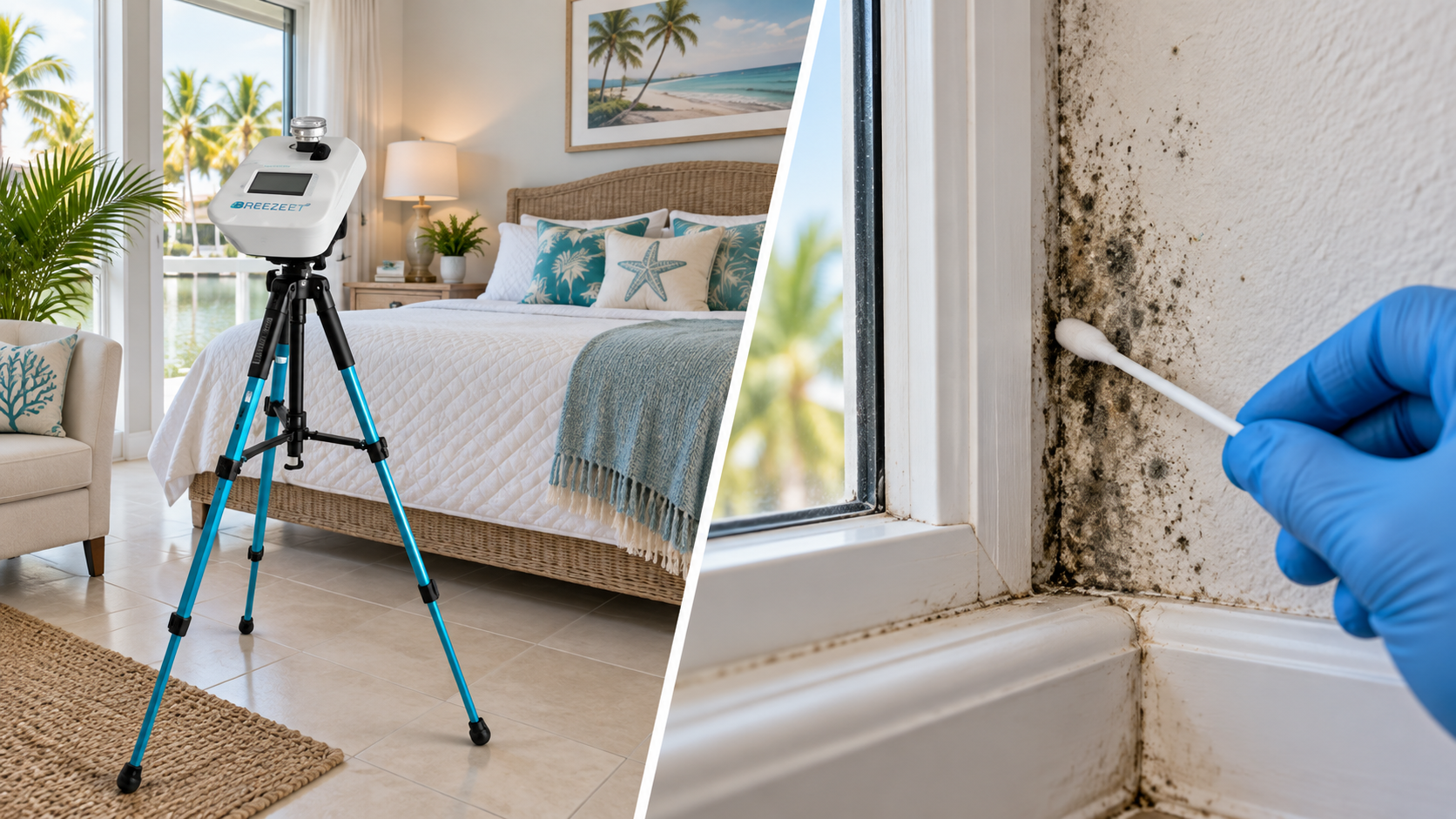
Air sampling and surface sampling are two different methods used during professional mold testing, and each provides a different type of information about conditions inside a property.
Air sampling evaluates airborne mold spores, while surface sampling collects material directly from a specific area of suspected growth or contamination. One method is not automatically better than the other. The appropriate testing approach depends on what is being investigated, where the concern is located, and what the professional assessment reveals.
For South Florida property owners, testing decisions may also be influenced by water damage, hidden moisture, musty odors, visible growth, or concerns about indoor air quality. A professional Indoor Mold Testing evaluation can help determine whether air sampling, surface sampling, or a combination of methods is appropriate for the property.
In this guide, we’ll explain how air and surface mold sampling differ, what each method can and cannot tell you, when each may be recommended, and how the results fit into a broader mold assessment.
What Is Mold Air Sampling?
Mold air sampling is a testing method used to evaluate airborne mold spores in a specific area at the time the sample is collected. The sample is typically sent to a laboratory, where the types and concentrations of mold spores can be identified and compared with other indoor or outdoor samples.
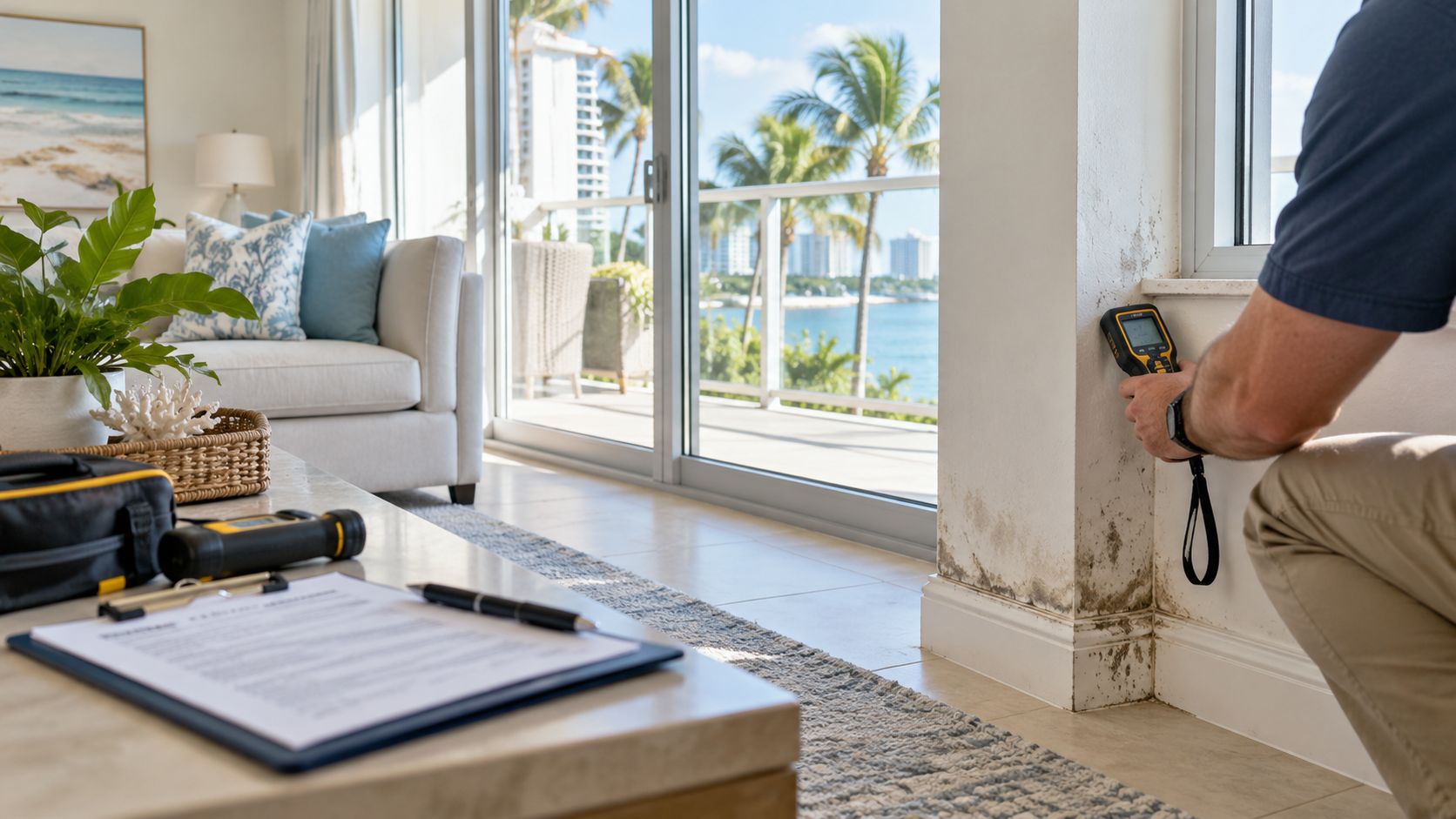
Air sampling can be useful when visible conditions do not tell the full story, especially when there are musty odors, previous water damage, hidden moisture concerns, or questions about Air Quality Testing.
When Mold Air Sampling May Be Recommended
Air sampling may be considered when:
- There is a persistent musty odor but no visible mold.
- The property has experienced leaks, flooding, roof damage, or other moisture problems.
- Different rooms or areas of the property need to be compared.
- There are concerns about airborne mold or indoor air quality.
- A Mold Assessment Services evaluation suggests that additional testing would provide useful information.
Mold air sampling does not identify the exact location of hidden mold by itself, but it can provide valuable information when the results are interpreted together with moisture findings, visible conditions, and the overall property assessment.
What Is Surface Sampling for Mold?
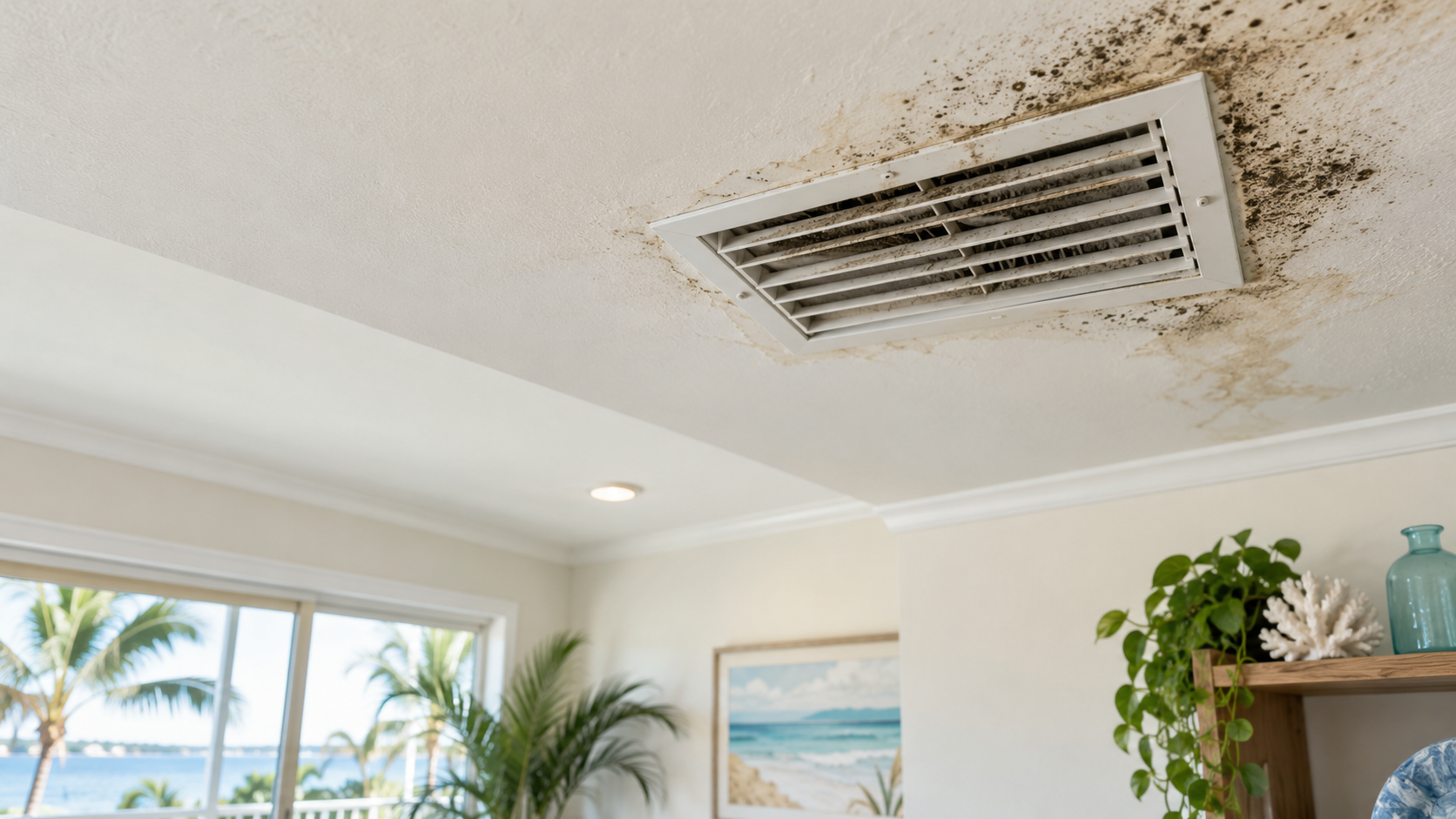
Surface sampling is a mold testing method used to collect material directly from a specific area where mold growth or contamination is suspected. Unlike air sampling, which evaluates airborne spores, surface sampling focuses on what is physically present on a wall, ceiling, piece of furniture, building material, or other targeted surface.
It can be especially useful when there is visible growth, discoloration, or a specific area that needs closer evaluation as part of Indoor Mold Testing.
When Surface Sampling May Be Recommended
Surface sampling may be considered when:
- Visible growth is present and additional information is needed about what is on the surface.
- A specific stain, patch, or material needs to be evaluated more closely.
- The concern is localized rather than spread throughout the indoor air.
- Air sampling alone may not provide enough information about a particular area.
- A Mold Assessment Services evaluation identifies a surface that warrants direct sampling.
Surface sampling can provide useful information about a specific location, but it does not show what is happening throughout the entire property. The results are most meaningful when they are interpreted alongside air samples, moisture findings, visible conditions, and the overall assessment.
Air Sampling vs. Surface Sampling: What’s the Difference?
Air sampling and surface sampling are both used during professional mold testing, but they answer different questions. Air sampling evaluates mold spores present in the air at the time of testing, while surface sampling evaluates material collected directly from a specific area of concern.
Neither method is automatically better than the other. The right choice depends on what the inspector is trying to learn about the property and the conditions found during the assessment.
Key Differences Between Air and Surface Sampling
- Air sampling helps evaluate airborne mold spores in a room or area.
- Surface sampling focuses on a specific material, stain, or visible growth.
- Air samples can be compared between rooms or against an outdoor reference sample.
- Surface samples can provide more targeted information about a particular location.
- Both methods may be used together when a broader picture of the property is needed.
- A professional Indoor Mold Testing evaluation can help determine which method is appropriate based on the property conditions.
The most useful mold testing approach is the one that matches the specific concern being investigated. In some cases, that may mean air sampling, surface sampling, or a combination of both alongside moisture evaluation and a broader Mold Assessment Services review.
When Should Air and Surface Sampling Be Used Together?
Air and surface sampling may be used together when one testing method alone would not provide enough information about the mold concern. Combining both can help evaluate what is present in the air while also examining a specific visible or suspected area more closely.
This approach may be especially useful when the property has both airborne concerns and a clearly identifiable surface that warrants direct testing.
Situations Where Both Sampling Methods May Help
- There is visible mold growth along with concerns about airborne spores.
- A musty odor is present, but only one area shows visible discoloration or growth.
- Different rooms need to be compared while a specific surface also requires evaluation.
- Water damage or hidden moisture may have affected both building materials and indoor air conditions.
- A professional Mold Assessment Services evaluation identifies multiple areas that require different types of sampling.
Using both methods can provide a more complete picture of the property when the testing plan is based on the actual conditions found during the assessment. In some cases, Indoor Mold Testing may include both air and surface sampling as part of a broader investigation.
What Can Mold Air and Surface Sampling Tell You?
Mold sampling can provide useful information about the types of mold present and the conditions inside a property, but the results need to be interpreted in context. Neither air sampling nor surface sampling should be treated as a standalone answer to every mold concern.
The value comes from combining the laboratory results with what is happening physically inside the property.
What the Results Can Help Show
- Air sampling can show which mold spores were detected in the air at the time of testing.
- Surface sampling can provide information about material collected from a specific area of concern.
- Multiple samples can help show whether one room or area differs from another.
- Outdoor samples may provide a reference point for interpreting indoor air results.
- Moisture findings can help explain why certain areas may be showing elevated or unusual mold conditions.
- A professional Mold Assessment Services evaluation can help connect the sampling results with visible growth, water damage, musty odors, and other property conditions.
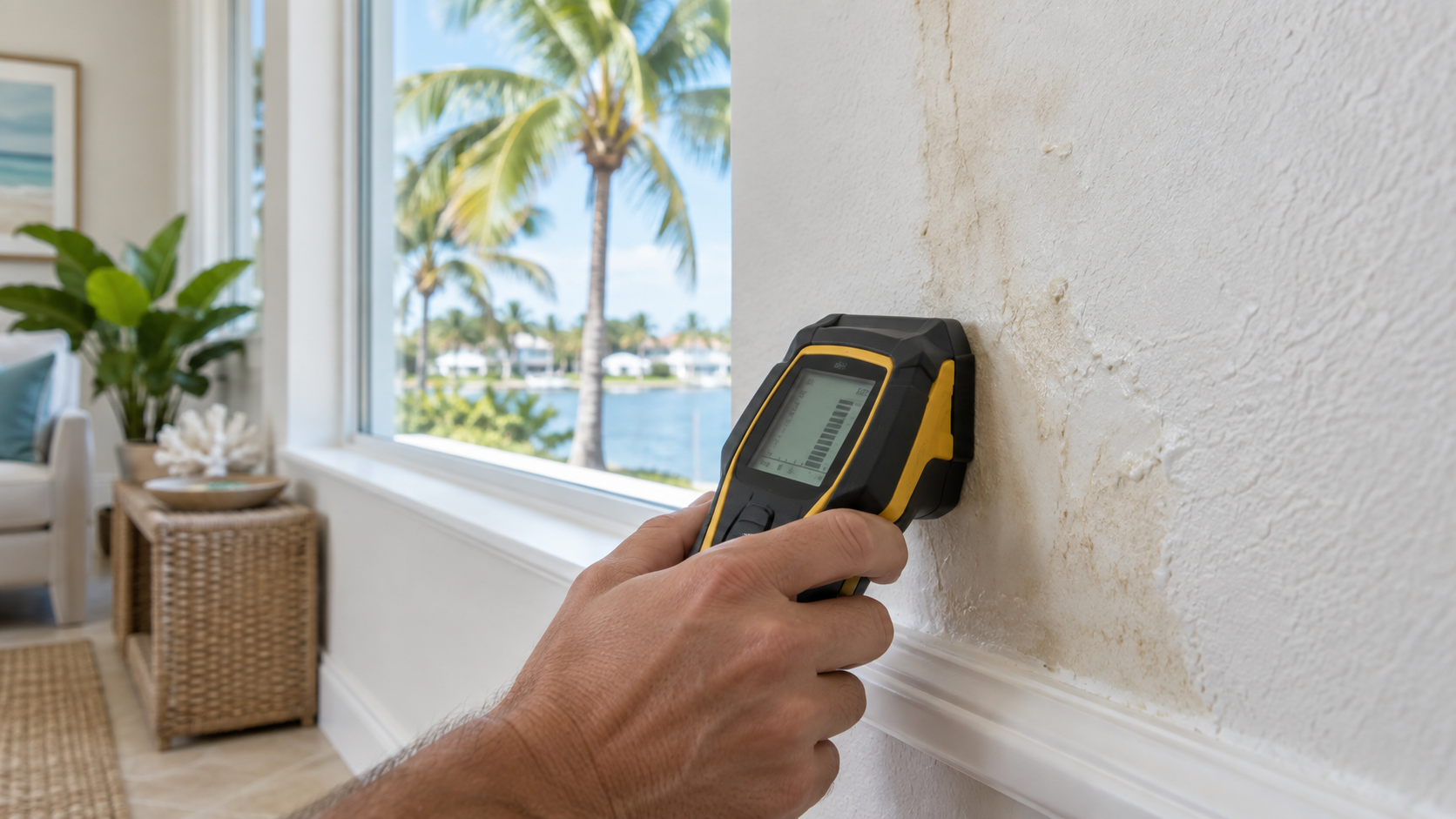
Sampling results are most useful when they are interpreted as part of a broader investigation. If moisture is contributing to the problem, Moisture Mapping & Readings may also help identify areas that require closer evaluation.
What Are the Limitations of Mold Sampling?
Mold sampling can provide useful information, but it also has limitations. A test captures conditions from a specific place and time, so the results should be interpreted alongside the physical condition of the property rather than treated as a complete diagnosis by themselves.
Air and surface samples are most useful when they are part of a broader assessment that considers moisture, water damage, visible growth, odors, and the history of the property.
What Mold Sampling Cannot Tell You by Itself
- A single air sample cannot show every mold condition throughout an entire property.
- Surface sampling only represents the specific area that was tested.
- Testing does not automatically identify the exact moisture source causing mold growth.
- Low airborne counts do not always rule out hidden or localized mold.
- High counts do not, by themselves, explain the full extent or source of the problem.
- A professional Mold Assessment Services evaluation can help place the laboratory results into context with the conditions found inside the property.
When hidden moisture is suspected, Moisture Mapping & Readings can provide additional information that sampling alone may not reveal.
Mold testing is most valuable when it answers a specific question and is combined with the rest of the property evaluation.
How Are Mold Sampling Results Interpreted?
Mold sampling results are interpreted by looking at the laboratory findings together with the conditions observed inside the property. The numbers and mold types on a report are not usually meaningful on their own without context from the assessment.
The interpretation may consider where each sample was collected, whether mold was visible, whether moisture was present, and how indoor samples compare with outdoor or control samples.
What Professionals Look at When Reviewing Results
- The types of mold identified in each sample.
- The concentration of airborne spores in indoor samples.
- How indoor air results compare with an outdoor reference sample.
- Whether one room or area differs significantly from another.
- Whether the sample results match visible growth, water damage, or musty odors.
- Whether moisture findings help explain the laboratory results.
- Whether a broader Mold Assessment Services evaluation supports the same concerns shown in the test results.
The goal is to understand the pattern of findings rather than focus on one isolated number. When moisture is part of the problem, Moisture Mapping & Readings can help provide the additional context needed to understand why certain areas may be showing elevated or unusual results.
Mold sampling is most useful when the laboratory data, moisture findings, and physical condition of the property are reviewed together.
When Is Mold Sampling Most Useful?
Mold sampling is most useful when it helps answer a specific question about conditions inside the property. Testing is generally more informative when it follows a professional assessment rather than being used as a stand-alone screening tool.
The decision to sample should be based on what the inspector is trying to confirm, compare, or document.
Situations Where Sampling May Provide Helpful Information
- There is a musty odor but no visible source of mold.
- Visible growth is present and additional information about the affected area is needed.
- Different rooms or areas of the property need to be compared.
- There has been water damage or hidden moisture that may have contributed to mold growth.
- Indoor air quality is a concern and airborne mold conditions need to be evaluated.
- Documentation is needed before or after remediation.
- A professional Indoor Mold Testing plan is needed to determine whether air sampling, surface sampling, or both are appropriate.
Sampling works best when the reason for testing is clear and the results can be interpreted alongside the rest of the property assessment. If moisture is part of the concern, Moisture Mapping & Readings can help provide context that laboratory results alone may not show.
Frequently Asked Questions About Air and Surface Mold Sampling
Air and surface sampling can answer different questions about mold conditions inside a property. These FAQs help clarify when each method may be useful and how the results fit into a broader professional assessment.
Is air sampling better than surface sampling?
Not necessarily. Air sampling evaluates airborne mold spores, while surface sampling focuses on a specific area or material. The better method depends on the concern being investigated and the conditions found during the property assessment.
Can mold air sampling find hidden mold?
Air sampling may provide clues that hidden mold is present, especially when indoor spore levels differ from outdoor or other indoor samples. However, it does not identify the exact location of hidden growth by itself.
What does surface sampling tell you?
Surface sampling provides information about mold collected from a specific area. It can be useful when visible growth, staining, or a particular building material needs closer evaluation.
Do I need both air and surface sampling?
Not always. Some properties may only require one method, while others may benefit from both. A professional Indoor Mold Testing evaluation can help determine which approach is appropriate.
Can air samples be compared with outdoor mold levels?
Yes. Outdoor samples are often used as a reference when interpreting indoor air samples. The comparison can help provide context for the mold types and concentrations detected inside the property.
Does mold sampling show how serious the problem is?
Sampling can provide useful information, but the results should be interpreted alongside visible conditions, moisture findings, water-damage history, and the overall Mold Assessment Services evaluation.
Can moisture problems affect mold sampling results?
Yes. Elevated moisture can contribute to mold growth and may help explain why certain areas show unusual or elevated findings. Moisture Mapping & Readings can provide additional context when moisture is suspected.
Is mold sampling useful after remediation?
It can be. Depending on the remediation protocol and project requirements, Post-Remediation Verification may include air or surface sampling to help evaluate conditions after remediation is complete.
Choosing the Right Mold Sampling Method
Air sampling and surface sampling each provide different information, and neither method should be treated as automatically better than the other. The most useful testing approach depends on the condition of the property, the reason for testing, and what the professional assessment reveals.
When mold concerns involve musty odors, visible growth, water damage, or hidden moisture, a broader Mold Assessment Services evaluation can help determine whether Indoor Mold Testing, air sampling, surface sampling, or a combination of methods is appropriate.
Schedule Professional Mold Testing in South Florida
Holistic Environmental Solutions provides professional mold assessment, mold testing, air quality testing, and moisture evaluation services throughout Miami-Dade, Broward, Palm Beach, and Monroe counties. Our team can evaluate the conditions inside your property and recommend the testing approach that best fits the concern being investigated.
Call (786) 580-9374 or schedule through our online contact form to receive 10% off your inspection when you book through the website. We’ll help you understand what type of testing may be appropriate and what the results mean for your property.
About Holistic Environmental Solutions
Holistic Environmental Solutions provides independent mold assessment and environmental testing services throughout South Florida, including Mold Assessment Services, Indoor Mold Testing, Air Quality Testing, Moisture Mapping & Readings, Remediation Protocols, and Post-Remediation Verification. Our team serves Miami-Dade, Broward, Palm Beach, and Monroe counties, helping property owners better understand mold, moisture, and indoor air quality concerns with clear, objective findings.
Florida Licensed Mold-Related Services Assessor #MRSA5496
Recent Posts