
Returning to Your Florida Vacation Home? How to Check for Hidden Moisture and Mold

You unlock your Florida vacation home after several months away. The rooms look tidy, but the air smells stale, a cabinet feels damp, or a faint stain has appeared near an air-conditioning vent. Is this ordinary closed-up-house odor, or a sign that moisture has been building up while nobody was home?
Before settling in, check indoor humidity, plumbing fixtures, air-conditioning equipment, ceilings, windows, cabinets, and other areas where water can collect. Look for stains, condensation, soft materials, and persistent musty odors. These observations do not prove mold is present, but they help you decide whether a moisture inspection or professional mold assessment is appropriate.
In South Florida, a home can experience humid conditions and unnoticed leaks even when it has not been occupied. The goal is not to assume the worst. It is to identify water problems early and make informed decisions about next steps.
Why Can a Vacant Florida Home Develop Moisture Problems?
An empty home still experiences outdoor humidity, temperature changes, plumbing failures, roof leaks, and air-conditioning issues. Less frequent visits also mean that a dripping supply line or a blocked condensate drain may go unnoticed for longer than it would in an occupied property.
The U.S. Environmental Protection Agency identifies moisture control as the key to preventing indoor mold growth. It recommends keeping indoor relative humidity below 60%, ideally between 30% and 50% when practical. Florida conditions and equipment settings may make maintaining that range a continuing maintenance task rather than a one-time adjustment.
Air Conditioning and Indoor Humidity
Air conditioning helps cool and dehumidify a home, but the system must be appropriately operated and maintained. Condensate drain problems, standing water in a drain pan, or inadequate humidity control can contribute to damp conditions. A thermostat setting alone does not tell you what humidity levels have been throughout the house.
Check the available humidity readings or logs, then arrange HVAC service if there is an equipment problem. Avoid shutting off a system or changing settings blindly when the property needs humidity control.
Leaks That Continue While Nobody Is Home
A slow leak under a sink, around a water heater, behind a toilet, or beneath an appliance can affect cabinets and adjacent materials. Roof and window leaks may become apparent only after storms. If you see active water, address the source promptly through the appropriate repair professional before considering inspection or testing.
Your First-Day Florida Vacation Home Moisture Checklist
You do not need to tear into walls to perform an initial walkthrough. Start with accessible surfaces, note anything unusual, and take photos so you can compare conditions or share them with a professional. Do not disturb suspected mold or open a wet electrical enclosure.
- Check indoor relative humidity and look for condensation on windows or supply vents.
- Look beneath sinks and around toilets, tubs, appliances, and the water heater for fresh stains or swelling.
- Inspect ceilings, exterior-wall corners, closets, and window frames for discoloration or peeling finishes.
- Notice persistent musty odors, especially when entering a room or opening a cabinet.
- Look for warped flooring, soft baseboards, bubbling paint, and deteriorated drywall.
- Review any property-manager notes about storms, plumbing issues, and HVAC maintenance during your absence.
A clean visual inspection is reassuring, but it cannot prove that every wall cavity or floor assembly is dry. Similarly, one musty smell is not a laboratory diagnosis. The findings should guide further evaluation rather than replace it.
Where Does Hidden Moisture Commonly Appear in Seasonal Homes?
The location of a potential problem often points toward its likely source. A stain below a window after wind-driven rain has a different history from swelling beneath a kitchen sink. Observe the pattern and timing instead of guessing from appearance alone.
Cabinets, Plumbing Walls, and Appliances
Look for swollen cabinet bottoms, staining near pipe penetrations, and deterioration around dishwashers, refrigerators with water lines, and laundry equipment. Materials may retain moisture after a visible puddle is gone, especially if the leak was prolonged.
Closets, Exterior Walls, and Windows
Poor air circulation and condensation can contribute to localized dampness, while cracks or failed seals may allow rainwater intrusion. Pay attention to walls behind stored boxes, furniture placed tightly against exterior walls, and window sills showing recurring staining.
Ceilings, Air-Conditioning Areas, and Flooring
Staining near ceiling vents, around HVAC closets, or below roof penetrations warrants investigation. Warped flooring or lifting trim can suggest a past or ongoing water event, although damage can have more than one cause. Record affected locations and request qualified evaluation when the source is uncertain.
How Can You Tell the Difference Between Stale Air and a Moisture Concern?
A home closed for months may smell different when you first open it. That does not automatically mean there is mold. The more meaningful signals are persistent or localized mustiness, visible water damage, unusually high humidity, repeated condensation, or evidence of an unresolved leak.
An odor that remains after normal occupancy and appropriate ventilation deserves attention, especially when paired with staining or damp materials. Use the observations described in our guide to
signs that may warrant a mold inspection to decide what information would help an assessor evaluate the property.
When Should You Consider Moisture Mapping?
Professional moisture mapping can be useful when a property has a known leak, unexplained dampness, suspicious stains, or an unclear water-damage boundary. It documents moisture readings at selected locations and helps assess whether additional investigation or drying may be needed.
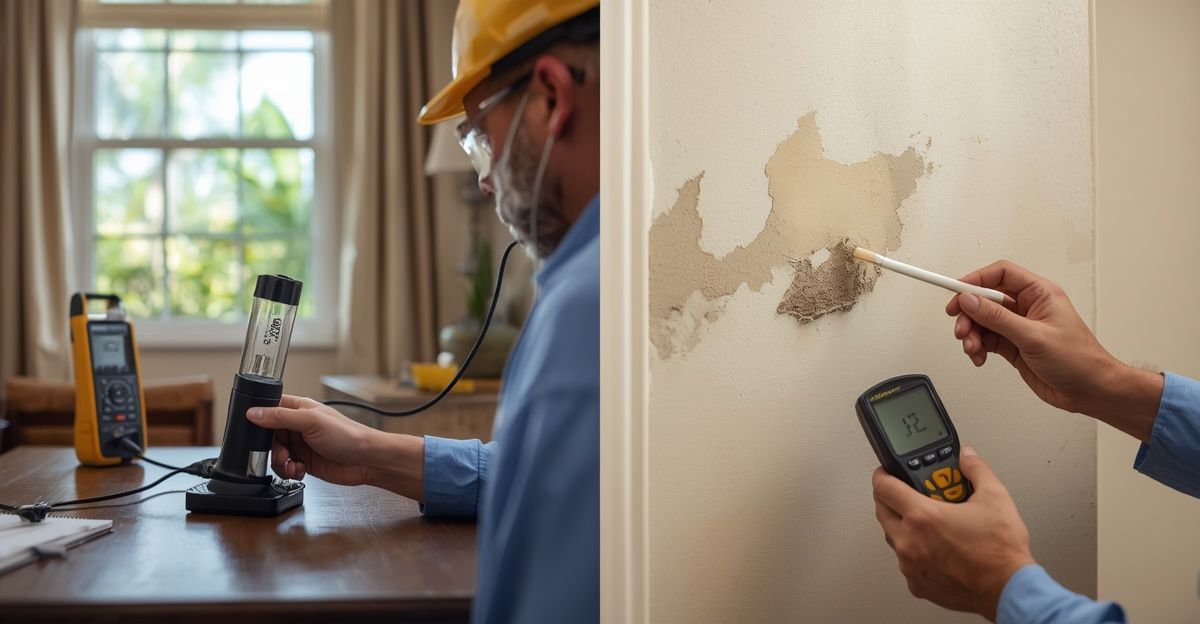
Holistic Environmental Solutions offers moisture mapping services using professional moisture-measurement tools and thermal imaging as part of its moisture evaluations. Thermal cameras show temperature patterns, not mold itself, and suspicious patterns may need checking with appropriate moisture instruments. Readings must be interpreted in relation to material type, surrounding conditions, and the property history.
For example, if a cabinet base is swollen but the surface feels dry, an assessor may examine adjacent areas to identify whether elevated moisture remains. Moisture mapping is not a substitute for fixing leaks, opening inaccessible assemblies when necessary, or professional restoration work.
When Is a Professional Mold Assessment or Testing Appropriate?
A professional mold assessment may be useful when you find visible suspect growth, persistent mustiness, recurring leaks, or conditions you cannot confidently explain. The assessor evaluates the property and determines whether sampling would add meaningful information; not every home needs an air or surface test.
Holistic Environmental Solutions provides independent professional mold assessment and indoor air quality testing. It does not perform mold remediation, which keeps its evaluation separate from cleanup work. A professional mold assessment can help connect the building history, observed conditions, and appropriate next steps.
If your concern is about airborne conditions rather than a specific leak, indoor air quality testing may be relevant in certain circumstances. Results should always be interpreted alongside the property inspection and moisture history, not treated as a stand-alone guarantee that a home is mold-free.
What Should You Do if You Find Water Damage on Arrival?
Address the water source first. If a leak is active, contact the appropriate plumber, HVAC contractor, roofer, or water-damage restoration professional. Keep people away from unsafe electrical conditions, potentially unstable materials, or extensive suspected mold.
- Photograph visible staining and wet areas before conditions change.
- Stop or repair the water source using qualified help.
- Arrange prompt drying or restoration for affected materials.
- Document the room, surfaces, odor, and known timeline for any assessor.
- Consider moisture mapping if water may have traveled into concealed or adjacent areas.
- Consider mold assessment when visible growth, persistent mustiness, or a concerning history warrants further evaluation.
The EPA advises addressing water problems promptly and drying wet materials within roughly 24 to 48 hours when possible to reduce mold-growth risk. That is a prevention guideline, not a promise that every material is safe after a set number of hours. For a leak-specific decision guide, see our plumbing-leak moisture mapping versus mold testing guide.
How Can Seasonal Homeowners Reduce Moisture Risks While Away?
The best plan starts before departure and continues during the vacant months. Regular checks can identify changes sooner, although no checklist eliminates the possibility of a hidden failure.
Arrange Periodic Property Checks
Ask a trusted local caretaker or property manager to check accessible plumbing areas, the thermostat and humidity readings, signs of roof or window intrusion, and any unusual odors. Give them clear instructions for reporting findings and contacting repair professionals promptly.
Maintain HVAC and Drainage Systems
Schedule appropriate air-conditioning maintenance and have condensate drains evaluated when necessary. Ensure roof drainage and known exterior water-entry issues are addressed before leaving. Follow qualified HVAC advice for humidity settings appropriate to the home.
Keep a Simple Property History
Save records of previous leaks, repairs, drying work, humidity concerns, and inspections. Dates and photographs can help professionals distinguish an old stain from a developing condition and avoid repeating unnecessary work.
Frequently Asked Questions About Hidden Moisture in Florida Vacation Homes
Returning seasonal residents often wonder what is normal after a home sits empty and what deserves a closer look. These answers explain when to monitor conditions, when to arrange repairs, and when an independent moisture or mold assessment may be appropriate.
Can mold develop in a Florida home while nobody is living there?
Yes. Mold can grow in unoccupied buildings if moisture is present and conditions support growth. Plumbing leaks, condensation, rain intrusion, and high indoor humidity can occur without daily occupancy. The absence of residents does not prevent moisture problems, but vacancy alone is not evidence that mold exists.
What humidity level should I maintain in a vacant Florida house?
The EPA recommends indoor relative humidity below 60%, ideally between 30% and 50% when practical. Exact HVAC settings depend on the building and equipment, so consult a qualified contractor about the best operating approach. Use humidity measurements rather than relying only on thermostat temperature.
Does a musty smell always mean there is mold?
No. A musty odor can raise concern, but smell alone cannot confirm mold or identify its source. If the odor persists, is localized, or appears with staining, dampness, or previous leaks, a professional assessment may help determine whether additional investigation is appropriate.
Can a mold inspector check behind walls without opening them?
An inspector can evaluate accessible surfaces and use tools to identify areas warranting further attention. Moisture meters and thermal imaging can help screen suspicious conditions, but they cannot conclusively characterize every concealed cavity. Some situations may require additional access by an appropriate professional.
Should I get a mold test before sleeping in my vacation home?
Not automatically. A home without suspicious conditions does not necessarily require routine mold sampling. If you encounter visible growth, persistent mustiness, water damage, or other concerns, an independent assessment can help determine whether testing would provide useful information before you resume normal occupancy.
Can air conditioning cause mold problems while I am away?
Air-conditioning equipment can contribute to moisture concerns when condensate drains, pans, controls, or humidity management are not working properly. This does not mean the AC system is necessarily the source of mold. Have equipment issues evaluated and address any damp materials or suspected growth separately.
What is the difference between moisture mapping and mold testing?
Moisture mapping evaluates and documents moisture conditions in selected building materials. Mold testing examines samples when additional information about suspected mold is warranted. They answer different questions and may be used together depending on the property findings. Neither procedure replaces repairing an active water source.
Can I prevent all mold by leaving a dehumidifier running?
No. Dehumidification may help control indoor humidity, but equipment can fail and it cannot stop a plumbing or roof leak. Preventive maintenance, suitable HVAC operation, regular checks, prompt repairs, and moisture control work together to reduce risk. No single device guarantees a mold-free building.
What should I do if I find a water stain when returning to Florida?
Photograph the stain and check for obvious active water without disturbing unsafe materials. Arrange repairs for any ongoing leak. If the source, age, or extent of the damage is uncertain, a moisture inspection may help determine whether nearby materials warrant further investigation.
Where can I schedule an independent mold or moisture inspection in South Florida?
Holistic Environmental Solutions provides professional moisture mapping and independent mold assessment services in its listed South Florida service areas. Explain the property history, any visible signs, and when the home was last occupied so the team can help identify an appropriate evaluation. Begin with Holistic Environmental Solutions inspection scheduling.
Come Home With Answers, Not Unanswered Moisture Concerns
Your Florida vacation home should be a place to enjoy, not a mystery to investigate after every visit. A practical first-day walkthrough, accurate maintenance records, and timely repairs help you respond to moisture concerns before they become more complicated.
If you return to persistent mustiness, unexplained stains, or possible hidden moisture, Holistic Environmental Solutions can help assess the conditions through independent moisture and mold evaluation. Start with
Holistic Environmental Solutions inspection scheduling, describe what you have noticed, and take the next step with clearer information about your property.
About Holistic Environmental Solutions
Holistic Environmental Solutions provides independent mold assessment and environmental testing services throughout South Florida, including Mold Assessment Services, Indoor Mold Testing, Air Quality Testing, Moisture Mapping & Readings, Remediation Protocols, and Post-Remediation Verification. Our team serves Miami-Dade, Broward, Palm Beach, and Monroe counties, helping property owners better understand mold, moisture, and indoor air quality concerns with clear, objective findings.
Florida Licensed Mold-Related Services Assessor #MRSA5496
Recent Posts