
Mold vs. Mildew: How to Tell the Difference in Your South Florida Home
Mold and mildew are often used interchangeably, but they are not always the same thing. Both can develop in damp environments, and both may appear on walls, ceilings, bathrooms, windows, or other areas where moisture is present. For South Florida homeowners, high humidity, condensation, plumbing leaks, and water intrusion can make these concerns especially common.
The challenge is that appearance alone does not always tell you exactly what you are dealing with. Surface discoloration may look like mildew, while recurring growth, musty odors, or moisture behind walls may point to a larger mold concern.
In this guide, we’ll explain the difference between mold and mildew, what each may look like, where they commonly develop, and when it may be time to consider a professional Mold Assessment Services evaluation or Indoor Mold Testing for your South Florida home.
What Is the Difference Between Mold and Mildew?
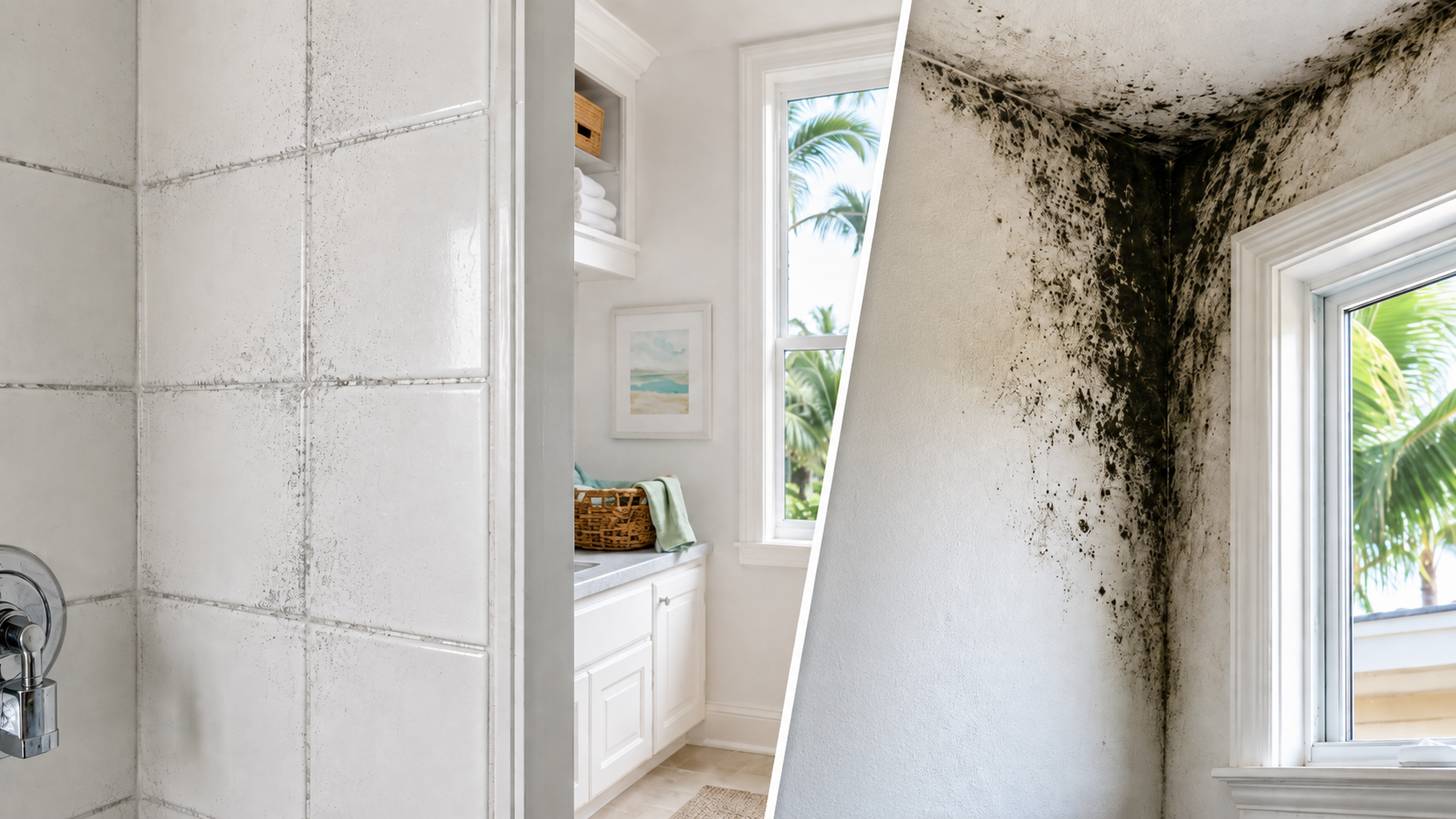
Mold and mildew are both types of fungal growth that can develop in damp or humid environments, but they are often described differently based on how they appear and where they grow. Mildew is commonly used to describe lighter, surface-level growth, while mold may appear in a wider range of colors and can sometimes develop deeper within porous materials.
Some common differences include:
- Appearance. Mildew is often described as white, gray, or powdery, while mold may appear black, green, brown, or other colors.
- Growth pattern. Mildew is often associated with surface growth, while mold may develop on or within materials such as drywall, wood, insulation, or flooring.
- Moisture conditions. Both can develop where moisture is present, including bathrooms, kitchens, windows, HVAC areas, and locations affected by leaks or water intrusion.
- Extent of the problem. A small surface area may be easier to address, while recurring growth, hidden moisture, or widespread mold concerns may require a more detailed evaluation.
Because appearance alone may not tell you the full extent of the issue, a professional Mold Assessment Services evaluation can help determine whether additional inspection, moisture investigation, or testing may be appropriate.
Where Do Mold and Mildew Commonly Grow?
Mold and mildew are most likely to develop in areas where moisture, humidity, or poor ventilation allow surfaces and building materials to stay damp. In South Florida homes, these conditions can be especially common because of year-round humidity, frequent rain, air-conditioning use, and occasional water intrusion.
Common areas where mold or mildew may appear include:
- Bathrooms. Showers, grout, ceilings, and areas around tubs or sinks can remain damp and support surface growth.
- Kitchens. Leaks under sinks, condensation, and moisture around appliances can create favorable conditions.
- Windows and exterior walls. Condensation, damaged seals, or wind-driven rain can lead to recurring moisture around openings.
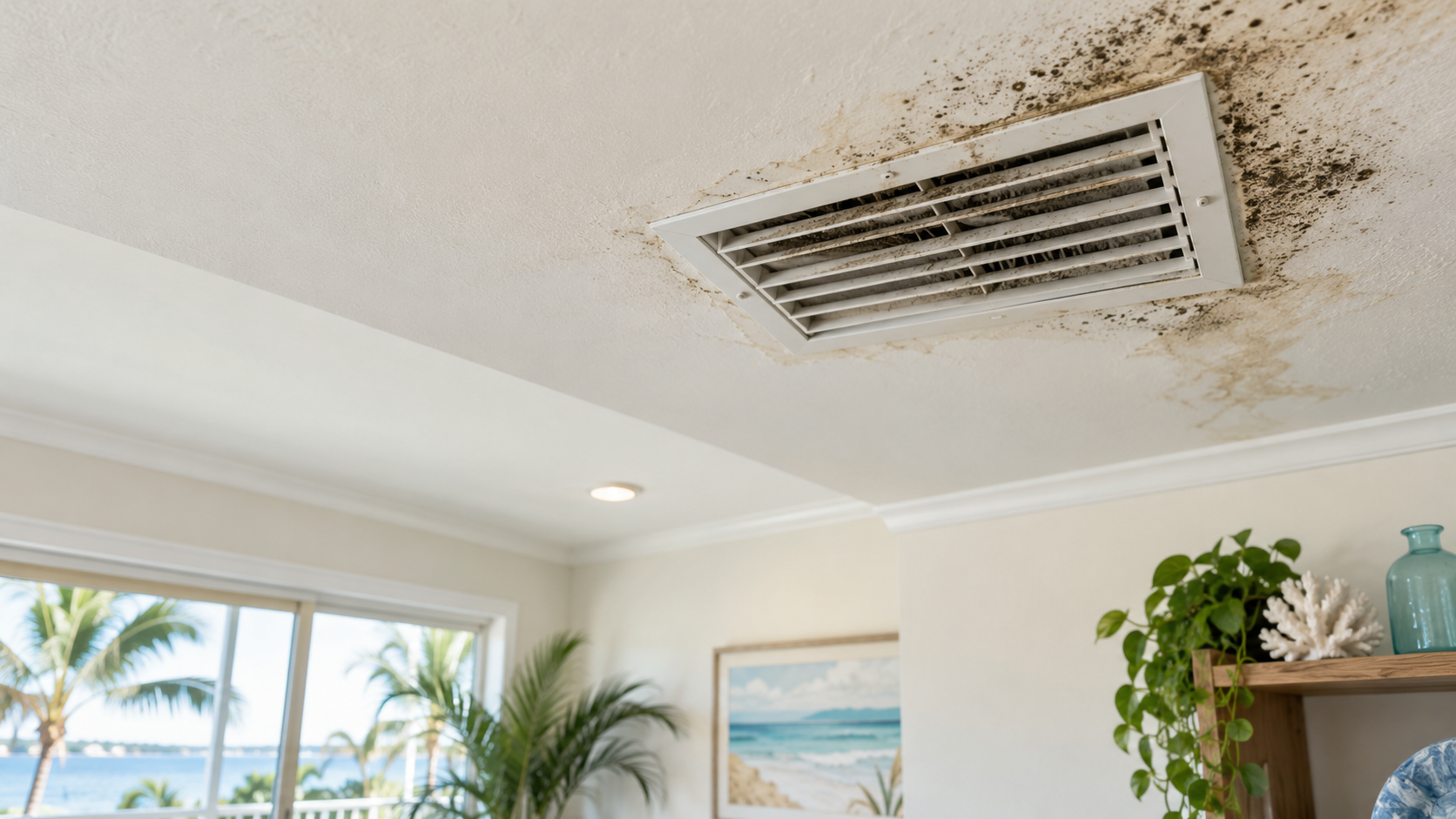
- HVAC systems. Condensation, drainage issues, and elevated humidity may affect areas around air-conditioning equipment and vents.
- Closets and enclosed spaces. Limited airflow combined with humidity can contribute to damp conditions on walls, clothing, or stored materials.
- Areas affected by leaks or water damage. Roof leaks, plumbing problems, and flooding can allow moisture to move behind walls or beneath flooring.
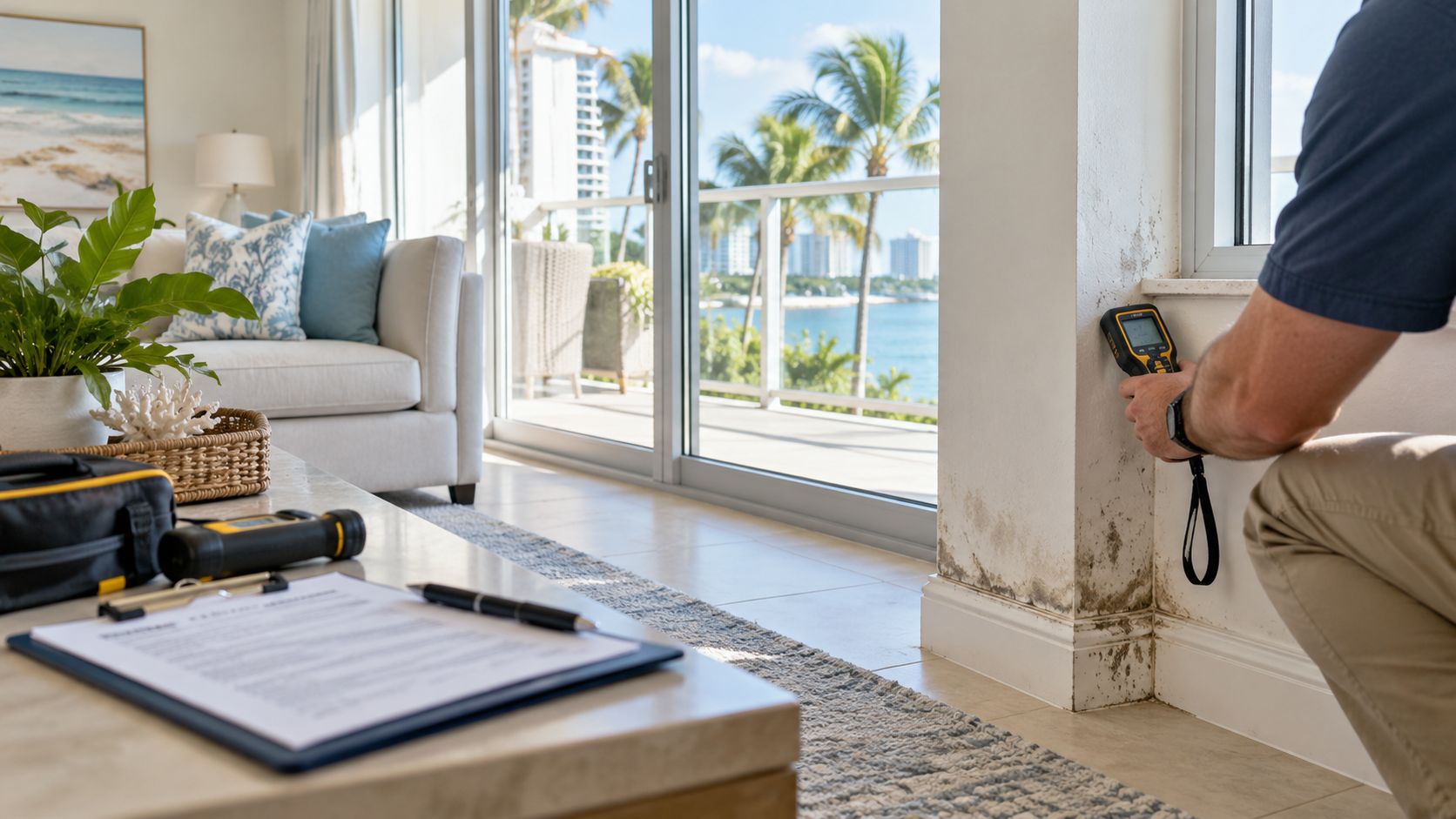
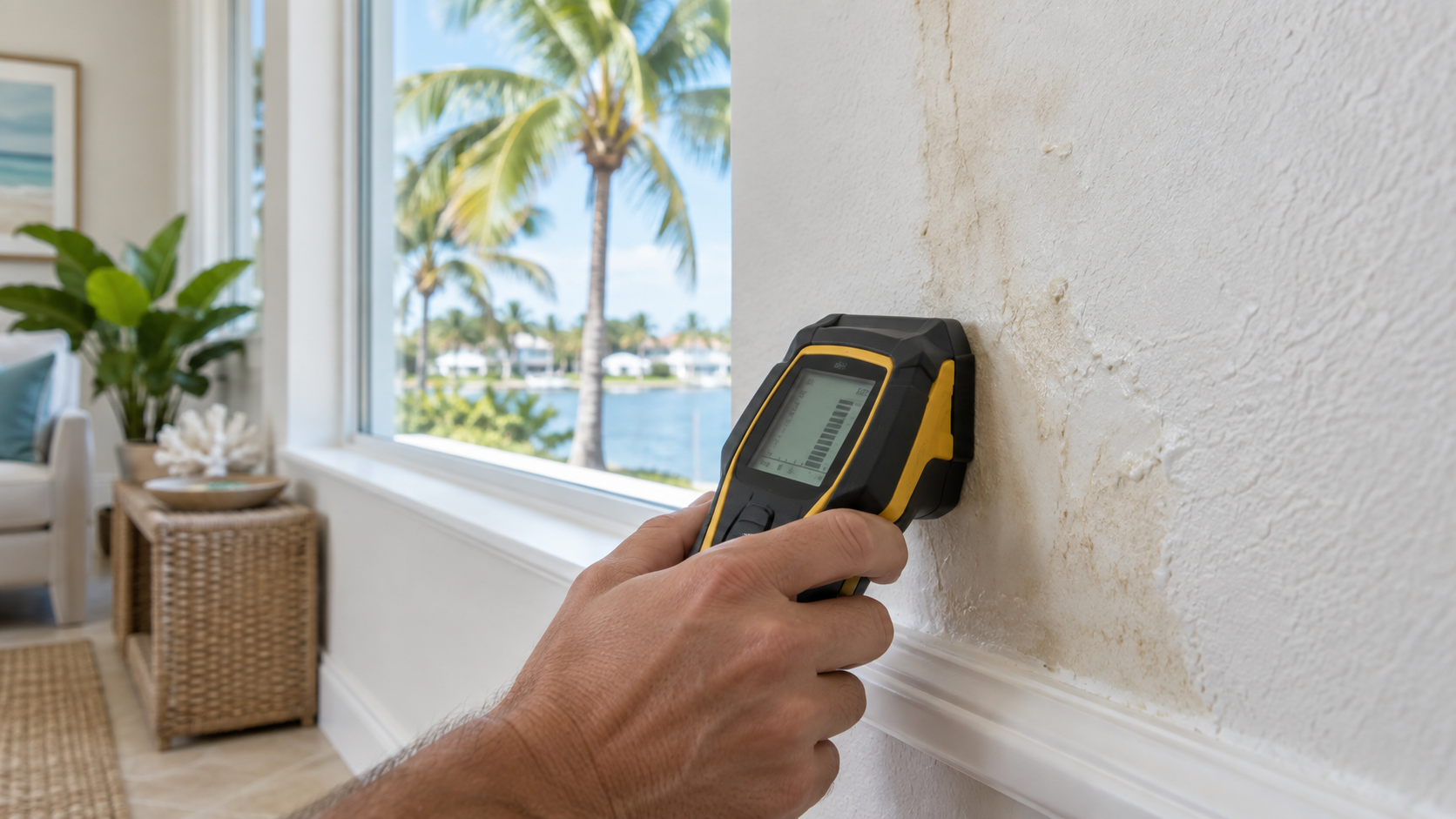
If growth keeps returning or you suspect moisture may be present beyond the visible surface, Moisture Mapping & Readings can help identify areas with elevated moisture that may require further investigation.
How Can You Tell If It’s Mold or Mildew?
The appearance of mold and mildew can vary, which is why it is not always possible to identify the problem based on color or texture alone. Still, there are a few visual and environmental clues that may help you understand what you are seeing.
Look for signs such as:
- Powdery or flat surface growth. Mildew is often described as lighter-colored and more superficial, especially on damp surfaces.
- Dark, patchy, or spreading growth. Mold may appear black, green, brown, or other colors and can sometimes spread across porous materials.
- Musty odors. A persistent musty smell may indicate moisture or mold growth, even when the affected area is not immediately visible.
- Recurring growth after cleaning. If discoloration or growth continues to return, an underlying moisture problem may still be present.
- Damage to building materials. Staining, bubbling paint, soft drywall, or warped flooring can point to a deeper moisture concern rather than a simple surface issue.
If you are unsure whether the growth is mold or mildew, or if the problem keeps returning, a professional Indoor Mold Testing service may provide additional information about the conditions inside your home.
Why Moisture Is the Real Problem Behind Mold and Mildew
Whether you are dealing with mold, mildew, or another type of surface growth, excess moisture is usually the condition that allows the problem to develop. Cleaning the visible area may improve the appearance temporarily, but if the moisture source remains, the growth may return.
Common moisture sources include:
- High indoor humidity. South Florida’s humid climate can contribute to condensation and damp conditions inside the home.
- Roof or window leaks. Water intrusion from heavy rain or damaged seals can affect walls, ceilings, and surrounding materials.
- Plumbing leaks. Slow leaks behind walls, under sinks, or near fixtures can create hidden moisture problems.
- HVAC condensation. Air-conditioning systems can contribute to moisture when drainage or condensation issues are present.
- Previous water damage. Moisture may remain trapped inside drywall, flooring, insulation, or cabinetry even after visible water has dried.
If you suspect moisture is contributing to recurring mold or mildew, Moisture Mapping & Readings can help identify areas with elevated moisture levels and provide a clearer picture of where additional investigation may be needed.
When Should You Consider Professional Mold Testing?
A small amount of surface mildew may not always require professional testing, but there are situations where a more detailed evaluation can be helpful. If the source or extent of the growth is unclear, professional mold testing may provide additional information about conditions inside the property.
Consider testing when:
- Growth keeps returning after cleaning. Recurring mold or mildew may indicate that an underlying moisture problem has not been resolved.
- There is a persistent musty odor. Ongoing odors without an obvious source may point to hidden moisture or mold growth.
- Your home has experienced water damage. Roof leaks, plumbing problems, flooding, or storm-related water intrusion can create conditions where mold may develop.
- The affected area is larger or spreading. Widespread growth may warrant a professional evaluation rather than relying on appearance alone.
- You suspect hidden mold. Mold may develop behind walls, beneath flooring, around HVAC systems, or in other concealed areas.
A professional Indoor Mold Testing service can help provide additional information when mold is suspected, while a Mold Assessment Services evaluation can help identify visible concerns, moisture conditions, and areas that may require further investigation.
What Happens If Mold Is Found?
If a professional assessment or testing confirms a mold concern, the next step is understanding what is causing the problem and how the affected area should be addressed. The response can vary depending on the extent of the growth, the materials involved, and whether an active moisture source is still present.
Next steps may include:
- Correcting the moisture source. Roof leaks, plumbing problems, condensation, or water intrusion should be addressed so the conditions contributing to mold growth do not continue.
- Developing a remediation plan. If remediation is needed, Remediation Protocols can provide a documented scope of work outlining the affected areas and recommended procedures.
- Completing the remediation. A qualified remediation company can follow the established protocol to address affected materials and areas.
- Verifying the completed work. After remediation, Post-Remediation Verification may be performed to evaluate the treated area and determine whether the established clearance criteria have been met.
Addressing both the mold and the underlying moisture issue can help reduce the likelihood of the same problem returning after cleanup.
Frequently Asked Questions About Mold vs. Mildew
Mold and mildew can look similar, especially when they develop in damp areas of the home. These common questions can help South Florida homeowners better understand the difference, what warning signs to watch for, and when professional evaluation may be appropriate.
Is mildew a type of mold?
Mildew is commonly used to describe certain types of surface fungal growth, often appearing lighter in color and developing on damp surfaces. Mold can appear in a wider range of colors and may grow on or within porous building materials.
Can mildew turn into mold?
Mildew does not simply “turn into” mold, but both can develop under similar moisture conditions. If excess moisture continues, additional fungal growth may develop in the same area or spread to nearby materials.
Is black mildew the same as black mold?
Not necessarily. Dark-colored surface growth cannot be reliably identified by appearance alone. If you are unsure what type of growth is present, professional Indoor Mold Testing may provide additional information.
Why does mold or mildew keep coming back after cleaning?
Recurring growth often indicates that the moisture source has not been fully addressed. High humidity, plumbing leaks, condensation, roof leaks, or hidden water intrusion may allow the same conditions to return. Moisture Mapping & Readings can help identify elevated moisture in areas that may require further investigation.
Can mold or mildew grow behind walls?
Yes. Moisture from leaks, condensation, or water intrusion can affect wall cavities and other concealed materials. Mold growth behind walls may not become obvious until there are musty odors, staining, damaged materials, or other signs of a moisture problem.
Should I have my home tested if I am unsure whether it is mold or mildew?
Professional testing may be helpful when growth is recurring, spreading, associated with water damage, or difficult to identify. A Mold Assessment Services evaluation can also help determine whether additional mold testing or moisture investigation may be appropriate.
Is mold or mildew more common in South Florida?
Both can develop easily in warm, humid environments. South Florida’s year-round humidity, heavy rainfall, plumbing leaks, condensation, and frequent air-conditioning use can create moisture conditions that support fungal growth inside homes and businesses.
Schedule a Professional Mold Assessment in South Florida
If you are unsure whether you are dealing with mold, mildew, hidden moisture, or a recurring water-related issue, a professional assessment can help provide clearer information about the condition of your property.
Holistic Environmental Solutions provides Mold Assessment Services, Indoor Mold Testing, and Moisture Mapping & Readings throughout Miami-Dade, Broward, Palm Beach, and Monroe counties. Our team can evaluate visible concerns, moisture conditions, and areas that may require additional testing or investigation.
Call (786) 580-9374 or fill out our online contact form to receive 10% off your inspection when you schedule through the website. Schedule a professional mold assessment in South Florida and get the information you need to determine the appropriate next steps for your home.
About Holistic Environmental Solutions
Holistic Environmental Solutions provides independent mold assessment and environmental testing services throughout South Florida, including Mold Assessment Services, Indoor Mold Testing, Air Quality Testing, Moisture Mapping & Readings, Remediation Protocols, and Post-Remediation Verification. Our team serves Miami-Dade, Broward, Palm Beach, and Monroe counties, helping property owners better understand mold, moisture, and indoor air quality concerns with clear, objective findings.
Florida Licensed Mold-Related Services Assessor #MRSA5496
Recent Posts