
Does Lysol Kill Mold? What South Florida Homeowners Should Know Before Cleaning
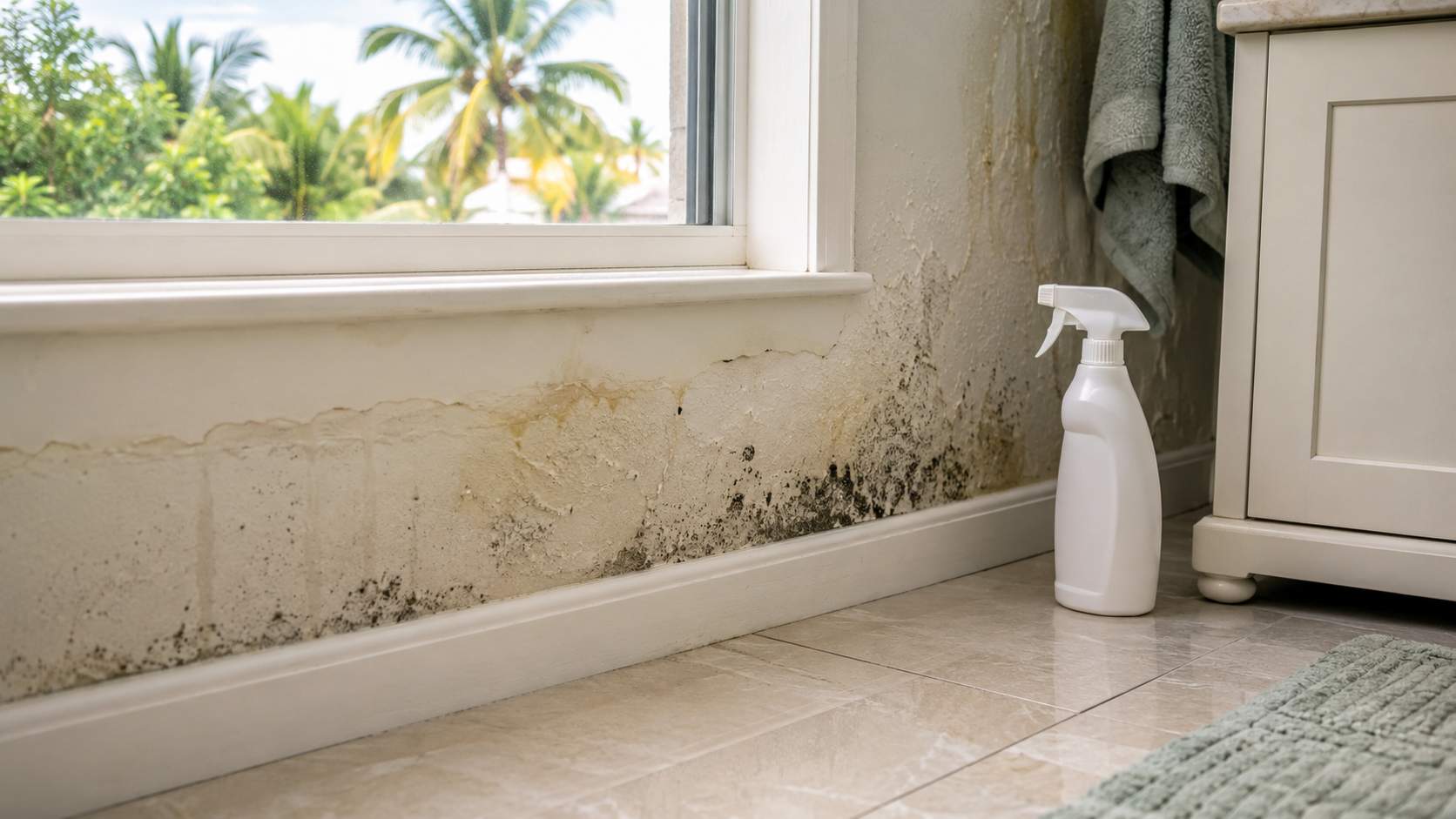
When mold appears on a wall, ceiling, bathroom surface, or around a window, one of the first questions many homeowners ask is whether a household disinfectant such as Lysol can simply be sprayed on the area and solve the problem. In some situations, cleaning a small surface may improve what you can see, but visible mold is often only one part of a larger moisture-related issue.
In South Florida, high humidity, plumbing leaks, roof problems, condensation, storm-related water intrusion, and frequent air-conditioning use can create conditions where mold develops on or within building materials. If the underlying moisture source is not identified and corrected, mold may return even after the visible surface has been cleaned.
It is also important to understand that different materials respond differently to moisture and cleaning. Mold on a hard, nonporous surface is not the same situation as growth affecting drywall, wood, insulation, cabinetry, or other porous materials where moisture may have moved deeper into the structure.
In this guide, we’ll take a closer look at whether Lysol can kill mold, why surface cleaning may not resolve an underlying mold problem, which warning signs suggest moisture may be hidden, when DIY cleaning may not be enough, and when a professional Mold Assessment Services evaluation, Indoor Mold Testing, or Moisture Mapping & Readings may be appropriate for your South Florida home.
Does Lysol Actually Kill Mold?
Lysol products are designed primarily as disinfectants, and some formulations may help reduce certain microorganisms on hard, nonporous surfaces when used according to the product label. However, that does not mean spraying Lysol on visible mold will necessarily solve the underlying problem.
The bigger issue is that mold growth is usually connected to moisture. If mold is growing because of a leak, condensation, high humidity, or hidden water intrusion, cleaning the visible surface may only address what is easiest to see.
A few important things to keep in mind:
- Surface cleaning is not the same as solving the source. If excess moisture remains, mold may return even after the area looks cleaner.
- Porous materials are different from hard surfaces. Drywall, wood, insulation, fabrics, and other absorbent materials can hold moisture and may be more difficult to address with a surface disinfectant alone.
- Visible mold may not show the full extent of the issue. Growth can sometimes extend behind walls, beneath flooring, or into other concealed areas.
- Recurring mold deserves closer attention. If the same area keeps coming back after cleaning, that may be a sign that the underlying moisture condition has not been corrected.
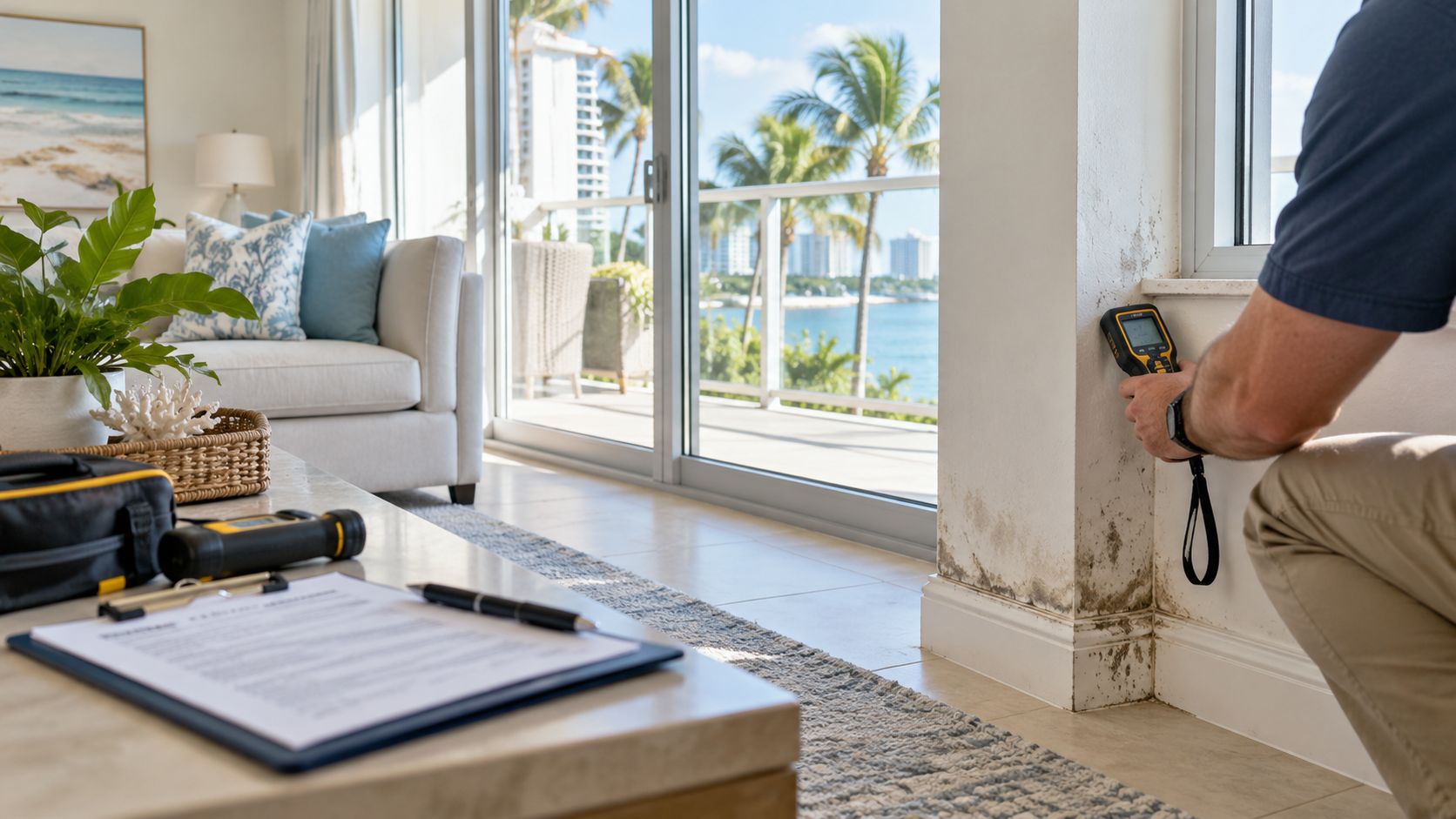
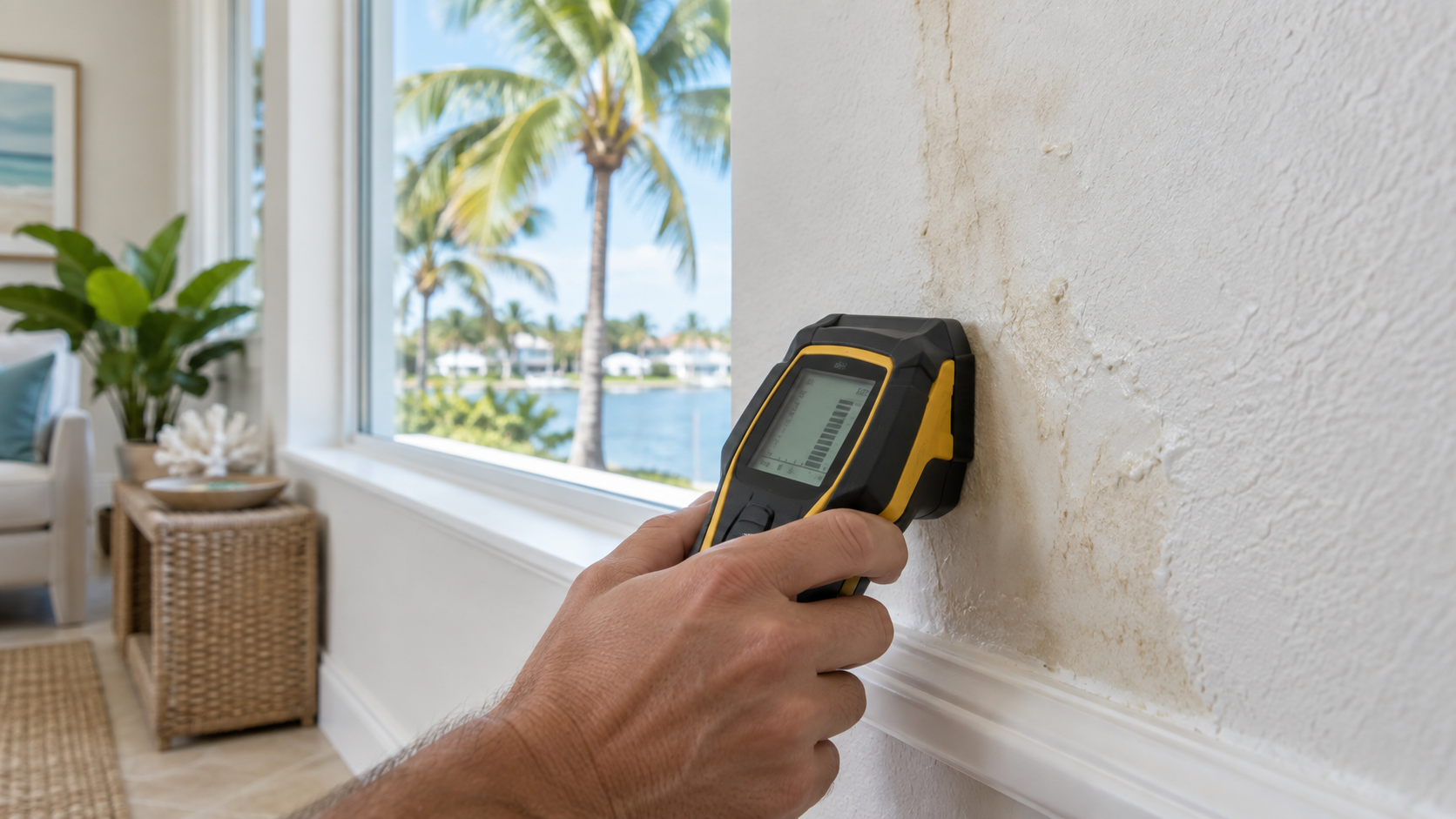
For South Florida homeowners, this is especially important because year-round humidity and frequent moisture events can make it easier for mold problems to persist. If the source of the moisture is unclear, Moisture Mapping & Readings can help identify areas with elevated moisture that may require further investigation.
Why Mold Often Comes Back After Cleaning
When mold returns after being wiped, sprayed, or scrubbed away, the problem is usually not the cleaning product itself. Recurring mold often points to moisture that is still present somewhere in the area.
Common reasons mold may return include:
- An unresolved leak. Plumbing leaks, roof leaks, or water intrusion can continue feeding moisture into walls, ceilings, flooring, or cabinetry.
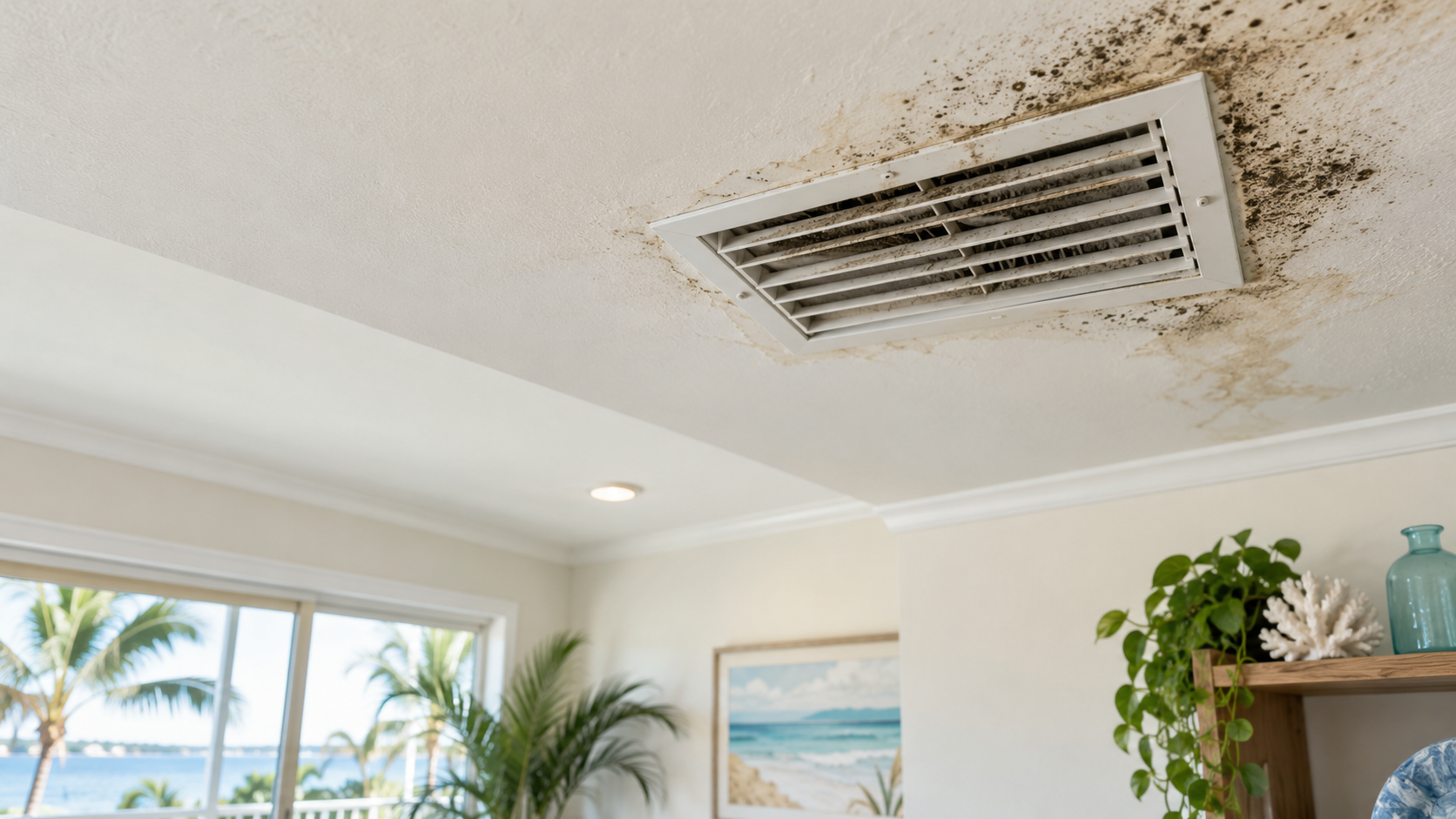
- High indoor humidity. South Florida’s humid climate can create damp conditions that allow mold to reappear, especially in bathrooms, closets, around windows, and near HVAC systems.
- Condensation. Moisture can collect on cooler surfaces, around vents, windows, and air-conditioning components.
- Hidden moisture inside building materials. Drywall, wood, insulation, and flooring may remain damp even when the surface appears dry.
- The affected material is porous. Mold growth may extend below the surface of absorbent materials, making surface cleaning alone less effective.
- The original moisture source was never identified. If the cause of the problem is unclear, repeated cleaning may only temporarily improve the appearance.
If mold continues returning in the same area, a professional Mold Assessment Services evaluation can help look for the underlying conditions contributing to the problem. When hidden moisture is suspected, Moisture Mapping & Readings may also help identify areas that require closer investigation.
Can You Use Lysol on Moldy Walls, Drywall, or Wood?
The material affected by mold matters just as much as the cleaning product being used. A disinfectant may perform differently on a hard, nonporous surface than it does on porous building materials that can absorb moisture and support mold growth below the surface.
Mold on Painted Walls
If the affected area is limited to a hard, intact painted surface, cleaning may improve the visible appearance. However, recurring staining, bubbling paint, soft drywall, or a musty odor can indicate that moisture may be present behind the finished surface.
Mold on Drywall
Drywall is porous and can absorb moisture quickly. If water has entered the material, mold growth may extend deeper than what can be seen from the room. Spraying the surface does not necessarily address moisture inside the drywall or wall cavity.
Mold on Wood
Wood can also absorb moisture, particularly when leaks, flooding, or high humidity remain unresolved. Surface growth may sometimes be visible while moisture remains within or behind the material. The extent of the issue depends on the condition of the wood and how long it has been exposed to moisture.
Mold on Tile, Glass, or Other Hard Surfaces
Hard, nonporous surfaces are generally easier to clean than drywall, insulation, unfinished wood, or other absorbent materials. Even so, recurring mold on these surfaces may still point to condensation, humidity, plumbing leaks, or another moisture source nearby.
If mold is affecting porous materials or appears to extend beyond the visible surface, professional Mold Assessment Services can help evaluate the affected area. Moisture Mapping & Readings may also help determine whether elevated moisture is present behind or around the material.
When DIY Mold Cleaning May Not Be Enough
There are situations where surface cleaning may not be the best next step, especially when the mold concern appears to involve more than a small, isolated area. If the source of the moisture is unclear or the growth keeps returning, additional evaluation may be needed before deciding how to address it.
You may want to consider a professional mold assessment when:
- The mold keeps coming back. Recurring growth can indicate that moisture is still present or that the affected area extends beyond the surface.
- There is a persistent musty odor. Odors without an obvious source may point to hidden mold or moisture inside walls, flooring, or other concealed areas.
- The area was affected by water damage. Leaks, flooding, or storm-related water intrusion can allow moisture to spread beyond the visibly affected area.
- Porous materials are involved. Drywall, insulation, wood, carpeting, and other absorbent materials can hold moisture and may require closer evaluation.
- The affected area is spreading. Growth that continues expanding may indicate a broader moisture or mold issue.
- You are unsure what you are looking at. A professional Mold Assessment Services evaluation can help determine whether additional inspection, moisture investigation, or Indoor Mold Testing may be appropriate.
The goal is not simply to remove what is visible. Understanding why the mold developed and whether moisture remains inside the property can help determine the most appropriate next step.
Should You Test for Mold Before Cleaning It?
Mold testing is not always necessary before cleaning a small, isolated surface, but there are situations where testing can provide useful information before the area is disturbed. This is especially true when the source of the problem is unclear, the mold keeps returning, or there are concerns about hidden growth.
Professional testing may be worth considering when:
- There is visible mold in multiple areas. Widespread growth can make it harder to determine the full extent of the problem through a visual check alone.
- You smell mold but cannot see it. A persistent musty odor may indicate hidden growth or moisture in a concealed area.
- There has been significant water damage. Flooding, plumbing leaks, or roof problems can allow moisture to spread behind walls or beneath flooring.
- You are preparing for remediation. Testing may provide additional information about indoor conditions before a remediation plan is developed.
- You want documentation of the conditions inside the property. Professional Indoor Mold Testing can provide laboratory-based information when a more detailed evaluation is needed.
A Mold Assessment Services evaluation can help determine whether testing is appropriate and whether moisture investigation should be part of the process before cleanup begins.
Why Cleaning Mold Without Fixing the Moisture Source Can Fail
One of the biggest mistakes homeowners can make is treating mold as only a surface problem. Even when visible growth is removed, the conditions that allowed it to develop may still be present behind the surface.
If the moisture source is not corrected, mold may continue to return because:
- Leaks may still be active. Plumbing, roofing, or window leaks can continue introducing moisture into the same area.
- Humidity may remain too high. Elevated indoor humidity can create damp conditions that support recurring mold growth.
- Moisture may be trapped inside materials. Drywall, wood, insulation, and flooring can hold moisture even when the surface looks dry.
- Condensation may continue forming. HVAC systems, windows, and cool surfaces can develop recurring condensation in South Florida homes.
- The affected area may extend farther than expected. What appears to be a small surface issue may be connected to a larger area of hidden moisture or mold growth.
When the source of the problem is unclear, Moisture Mapping & Readings can help identify areas with elevated moisture levels that may require further investigation. A professional Mold Assessment Services evaluation can also help determine whether additional testing, remediation planning, or other next steps may be appropriate.
What Should You Do If Mold Keeps Returning?
If mold continues to reappear after cleaning, the next step should be understanding why the area remains favorable for mold growth. Repeatedly spraying or wiping the same surface may improve its appearance temporarily, but recurring growth often indicates an unresolved moisture condition.
A more complete approach may include:
- Checking for leaks or water intrusion. Plumbing, roofing, windows, or exterior openings may be allowing moisture into the area.
- Evaluating indoor humidity. Persistent high humidity can contribute to condensation and recurring mold growth.
- Inspecting surrounding materials. Moisture may extend behind walls, beneath flooring, or into nearby building materials even when the visible area seems small.
- Using moisture readings when appropriate. Moisture Mapping & Readings can help identify areas with elevated moisture that may require closer investigation.
- Considering professional mold testing. If the source or extent of the mold concern is unclear, Indoor Mold Testing may provide additional information about conditions inside the property.
If professional remediation is eventually needed, Remediation Protocols can provide a documented scope of work outlining the affected areas and recommended procedures for addressing the problem.
Frequently Asked Questions About Using Lysol on Mold
Homeowners often have questions about whether household disinfectants are enough to handle mold and when a recurring problem may require professional evaluation. Below are answers to some of the most common questions.
Does Lysol kill black mold?
Some Lysol disinfectant products may reduce certain microorganisms on hard, nonporous surfaces when used according to the product label. However, spraying visible black mold does not necessarily address hidden moisture, porous materials, or mold growth that extends beyond the surface.
Can Lysol prevent mold from coming back?
Not if the underlying moisture source remains. Mold may return when leaks, condensation, high humidity, or water intrusion continue creating damp conditions. Moisture Mapping & Readings can help identify elevated moisture when the source is unclear.
Is it safe to spray Lysol on drywall with mold?
Drywall is porous and can absorb moisture, so surface treatment alone may not address growth or moisture within the material. If drywall is soft, stained, damaged, or repeatedly developing mold, a professional Mold Assessment Services evaluation may be appropriate.
Does Lysol remove mold from wood?
A surface disinfectant may affect visible growth on some finished surfaces, but wood can absorb moisture and mold may extend below the surface. The condition of the wood, moisture source, and extent of growth should all be considered before deciding how to address it.
Why does mold keep growing in the same place?
Recurring mold often points to an unresolved moisture condition such as a plumbing leak, roof leak, condensation, high humidity, or hidden water intrusion. Cleaning the surface without correcting the source may only provide temporary results.
Should I get mold testing if cleaning does not work?
Professional Indoor Mold Testing may be useful when mold keeps returning, there are persistent musty odors, previous water damage is involved, or the extent of the problem is unclear. A professional assessment can help determine whether testing is appropriate.
Can mold be growing behind a wall even if I only see a small spot?
Yes. Moisture can travel into wall cavities and affect areas beyond what is visible from inside the room. Moisture readings or thermal imaging may help identify areas that require further investigation.
When should I stop cleaning mold myself and call a professional?
Consider professional evaluation when mold is recurring, spreading, associated with significant water damage, affecting porous materials, producing persistent odors, or when you are unsure how far the problem extends.
Schedule a Professional Mold Assessment in South Florida
If mold keeps returning after cleaning, there is a persistent musty odor, or you suspect hidden moisture or water damage, a professional assessment can help determine what may be contributing to the problem.
Holistic Environmental Solutions provides Mold Assessment Services, Indoor Mold Testing, and Moisture Mapping & Readings throughout Miami-Dade, Broward, Palm Beach, and Monroe counties. Our team can evaluate visible mold concerns, moisture conditions, and areas that may require additional testing or investigation.
Call (786) 580-9374 or fill out our online contact form to receive 10% off your inspection when you schedule through the website. Get a clearer understanding of the conditions inside your property and the appropriate next steps before a recurring mold problem becomes more extensive.
About Holistic Environmental Solutions
Holistic Environmental Solutions provides independent mold assessment and environmental testing services throughout South Florida, including Mold Assessment Services, Indoor Mold Testing, Air Quality Testing, Moisture Mapping & Readings, Remediation Protocols, and Post-Remediation Verification. Our team serves Miami-Dade, Broward, Palm Beach, and Monroe counties, helping property owners better understand mold, moisture, and indoor air quality concerns with clear, objective findings.
Florida Licensed Mold-Related Services Assessor #MRSA5496
Recent Posts